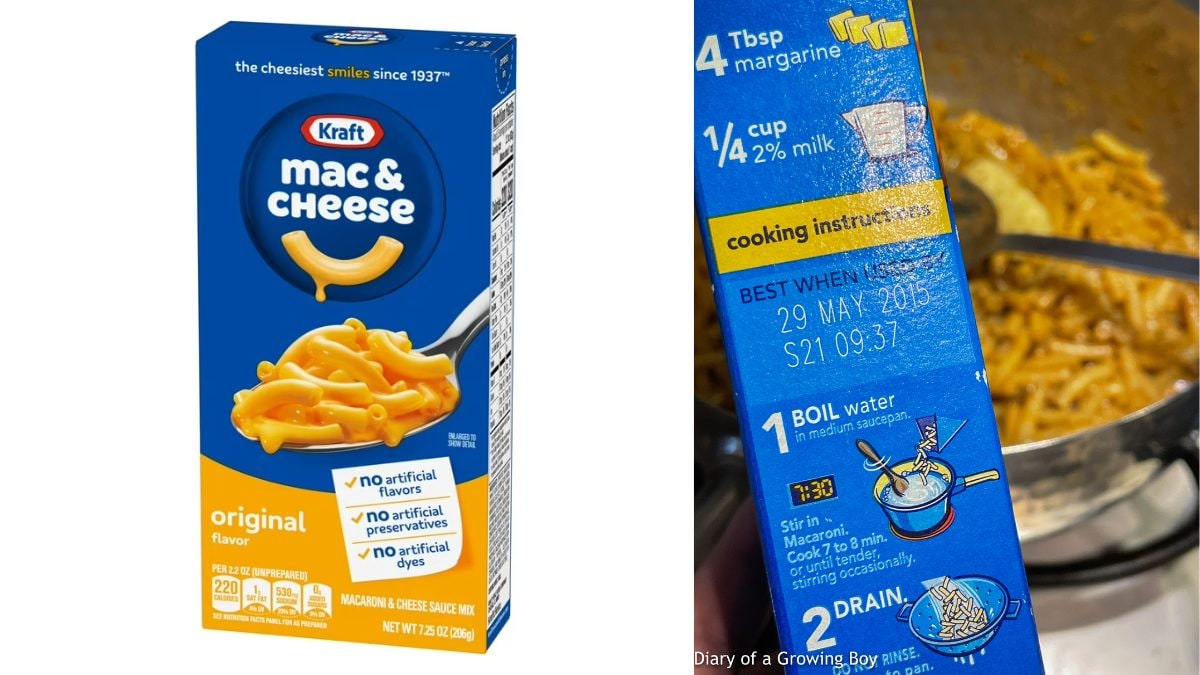
It is a universal late-night kitchen scenario: the cravings hit, you open up your pantry, and tucked away in the very back corner behind the baking supplies is an iconic, bright blue box of Kraft Macaroni & Cheese. It is cheap, nostalgic, and the ultimate low-effort comfort food. But as you flip the box over to inspect the cardboard flap, your excitement drops. The stamped date on the bottom tells you the box crossed its threshold several months ago. Suddenly, you are faced with a high-stakes choice. Do you risk cooking it anyway, or will eating expired cheese powder lead to a painful midnight disaster?
Because boxed macaroni and cheese is a heavily processed, highly dehydrated shelf-stable product, it operates under completely different food safety rules than fresh dairy or meat. To save your late-night snack—and avoid a trip to the trash can—you just need to understand the science of shelf life and know exactly what to look for when you crack open that cardboard seal.
Best-By Dates vs. Food Safety: The 12-Month Rule
To successfully navigate your pantry, the first thing to understand is that the date stamped on a box of Kraft mac and cheese is almost never a safety deadline. It is a "Best-By" or "Best-Used-By" date. Manufacturers use this timestamp to communicate quality, not safety. It represents the window in which Kraft guarantees the pasta will have the ideal texture and the neon-orange cheese powder will boast its peak, signature sharp flavor. Once that date passes, the food doesn't suddenly become toxic or magically spoil overnight.
As long as the cardboard packaging remains completely sealed, undamaged, and kept in a cool, dry environment, an unopened box of instant mac and cheese can easily last for a full year past its printed best-by date without posing any threat to your health.
How to Inspect an Overaged Box
While a box that is six months past its prime is highly likely to be perfectly safe, you shouldn't just dump it blindly into a pot of boiling water. Before you cook, open the box and use your senses to perform a quick three-part quality control check.
1. Inspect the Dry Macaroni for Moisture and Pests
Because the noodles are completely dry, they are naturally inhospitable to mold and bacteria. However, because the outer box is made of simple cardboard, it isn't completely airtight. If the box was stored in a damp basement or a humid cabinet, ambient moisture can creep inside. Check the noodles to ensure they aren't sticky, clumped together, or displaying any fine gray or white mold spores. Additionally, keep an eye out for pantry weevils—tiny, harmless but deeply unappetizing beetles that love to infiltrate unsealed dry grains.
2. Check the Cheese Powder for Oxidation
The silver foil pouch holding the cheese sauce mix is the true vulnerability of the box. Over a long period, oxygen can slowly permeate the pouch, causing the fats and dairy solids inside to oxidize. Tear open the packet and look at the powder. Fresh Kraft cheese powder is loose, fine, and a vibrant, bright orange color. If the powder has hardened into a single solid brick, or if the color has shifted to a dull, dark brownish-yellow, the structural quality has significantly waned.
3. The Sniff and Taste Test
Your nose will instantly tell you if the cheese packet has crossed the line from "old" to "spoiled." Take a brief sniff of the powder. If it smells like typical dehydrated cheddar, you are completely clear to proceed. However, if you detect a sharp sour smell, a metallic tang, or a stale, soapy aroma, the natural fats in the dairy powder have gone rancid. While eating rancid fat rarely causes severe foodborne illness, it tastes remarkably bitter and unpleasant, meaning it will completely ruin your meal.

The Countdown Timer for Cooked Leftovers
The rules of shelf life change drastically the moment you introduce wet ingredients to the equation. Once you boil the pasta, drain the water, and stir in your fresh butter and milk, you have officially converted a shelf-stable box into a highly perishable fresh dairy dish.
If you find yourself with an abundance of Mac and Cheese that you can't finish in one sitting, transfer the leftovers into an airtight glass or plastic container and place it in the refrigerator within two hours of cooking.
According to food safety standards, cooked macaroni and cheese will remain safe and delicious in the fridge for 3 to 5 days. When reheating your leftovers, add a tiny splash of fresh milk or a pat of butter before microwaving to reconstitute the starch bonds and prevent the cheese sauce from turning dry, chalky, and granular.
;Resize,width=767;)
