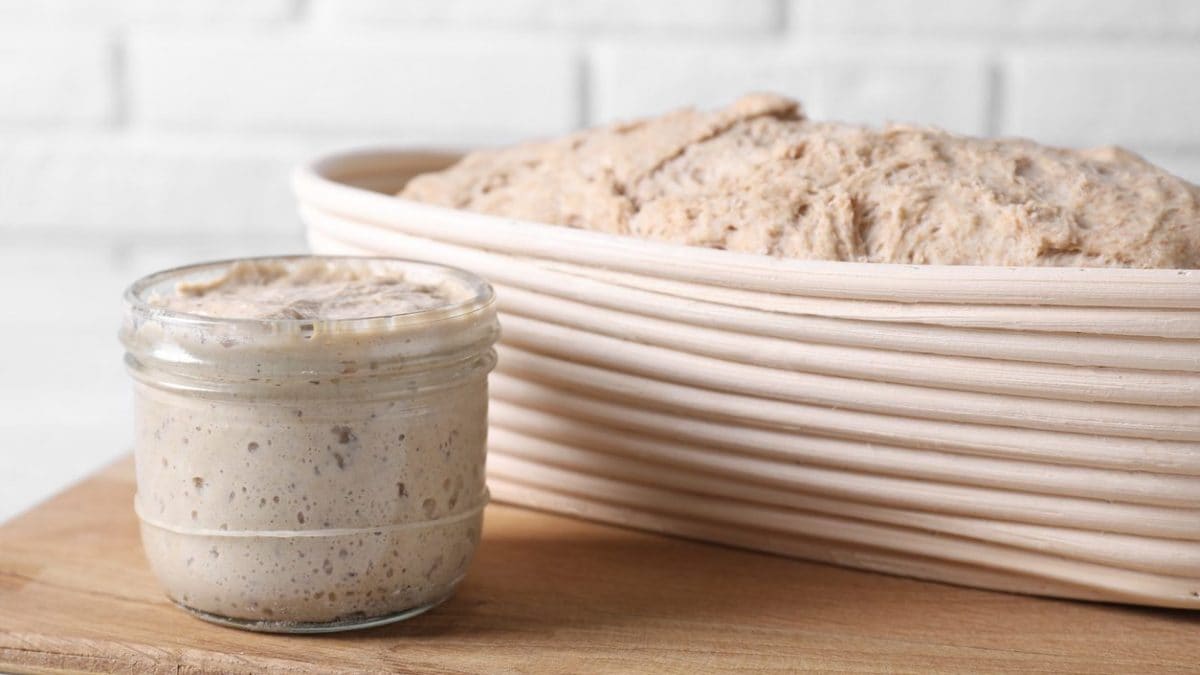
In the world of gastronomy, there are many legends and stories passed down from generation to generation: some of these, however, unfortunately have no scientific basis. Among these, one that remains popular revolves around sourdough starter and its ability to improve with time and age. Well, we want to tell you right away that this isn't the case: sourdough starter's ability to impart a certain flavor or aroma depends on how it's stored, not on its age, and we'll explain why in this article.
What is Sourdough Starter, Really?
Before delving into the explanation, it's important to understand what sourdough is. This fascinating term refers to a sort of ecosystem of microorganisms, made up of a community of lactic acid bacteria, yeasts— including the most famous Saccharomyces cerevisiae, but not only, as some studies point out —and other small organisms resulting from the union of flour and water. It's not, therefore, a single organism that remains alive for an infinite amount of time: rather, we can imagine it as a community composed of many tiny inhabitants that live, replicate, transform, and replace each other over time. This means that a yeast created 100 years ago will not be inhabited by the same microorganisms it was when it first started, but by others that will have replaced them in the meantime.

Furthermore, the microorganisms present in the sourdough starter adapt to the conditions in which they grow. A sort of natural selection therefore takes place, determined by various factors, such as the steps taken for refreshing, the flour used, and the amount of water. In simpler terms, the organisms present in the dough do not all have the same strength and the same ability to survive: those that can live best with that flour, that amount of water, at that temperature, and in that domestic environment continue to thrive. Those less suited, however, diminish or disappear. Consequently, even if a sourdough starter was created over a century ago, it will no longer be the same, because its internal composition tends to change over time.
Old Vs. Young Sourdough Starter
We can sense that you're now thinking that that bread you tried made with a sixteen-generation-old sourdough starter was better, more aromatic, with a light, pleasant acidity, and so on… and we believe you, of course. Because it may be true that an older starter yields a better result than a younger one: we're sorry to tell you, however, that this doesn't depend on age. In fact, the difference yeast can make to the final result varies mainly based on three parameters.
The first factor concerns the characteristics of the various microorganisms present in the yeast. As already mentioned, yeasts and lactic acid bacteria coexist harmoniously in the starter, each contributing specific aromas, a certain level of acidity, and a particular structure to the bread. This does not depend on age, but on its inhabitants: two yeasts of the same age can still produce very different results, as they are not composed of the same microorganisms. Another factor to consider is the activity of these microorganisms. During fermentation, they produce certain substances such as acids and aromatic compounds: the better and more capable the community is at working in synergy, the more it tends to generate complex and recognizable aromas. In this case too, therefore, what is decisive is the behavior of the organisms, not whether the yeast is one month old or fifty years old.

Finally, managing the starter is essential —that is, the flour used, the amount of water, the frequency of refreshments, and the temperature. All of these elements significantly influence the final result, meaning that, regardless of age, poorly managed yeast can yield a mediocre result. Likewise, a young sourdough starter, if carefully cared for, can yield bread with exceptional characteristics. A well-stabilized starter tends to produce a more complex flavor profile, reacts predictably, rising regularly, developing consistent and balanced aromas, and allowing the baker to control the process. However, this doesn't automatically mean that the resulting bread will always be perfect or the best ever. A good result depends on the goal you want to achieve: if you want a bread with a strong acidity, a starter with certain characteristics will be suitable, but it won't be the case if I'm looking for a more delicate and balanced bread.
A Constant Dialogue Between Yeast, Places and People
In conclusion, it's clear that the way sourdough starter changes over time depends not only on its age but also on how its "inhabitants" are created and where they come from. Some interesting studies have shown that the population of a starter is often a reflection of its surroundings. Analyzing yeast in four different bakeries, it was observed that the bacteria present within it derive not only from the flour and the air, but even from the walls of the laboratory, the mixers, and the containers in which it is stored. The researchers also discovered that it's not just the environment that influences the yeast, but the sourdough starter itself that shapes the microbiota of the laboratory in which it lives, spreading its microorganisms into the outside world. This further reinforces the idea of sourdough starter as a living ecosystem that is in constant dialogue with the place and the people who use it, whether young or old.

;Resize,width=767;)
