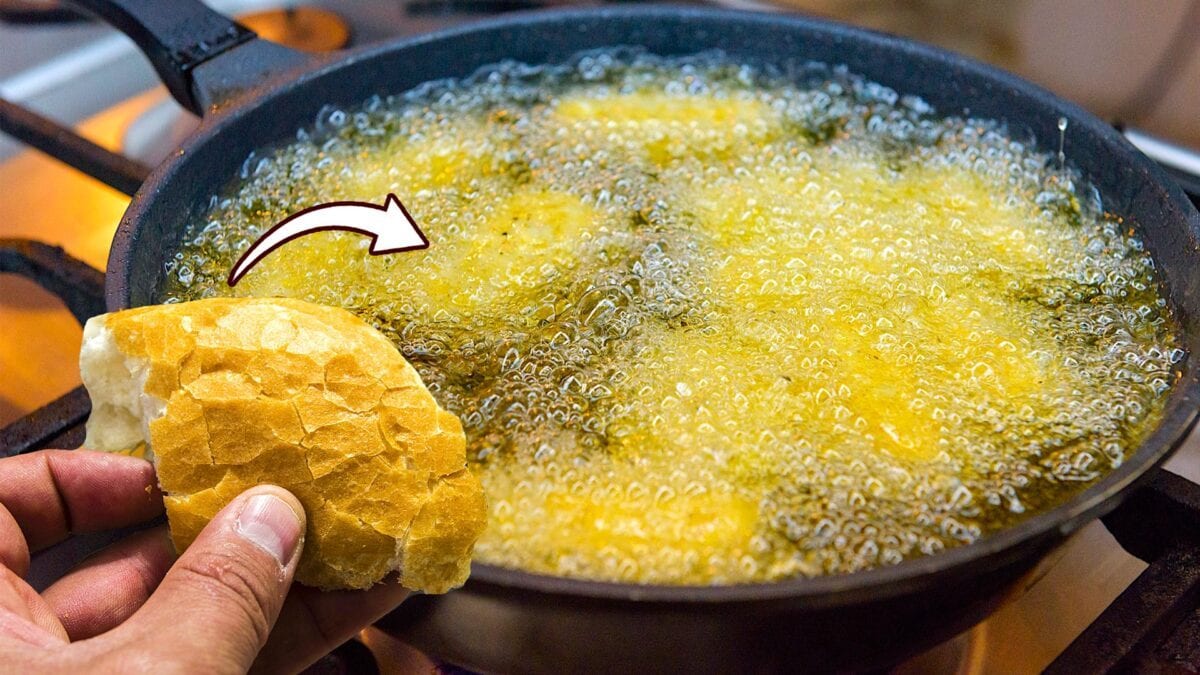
Is the frying oil too hot? Add a piece of bread and the temperature drops. Or: is the oil foamy? Always throw in some stale bread to clean it up. These are household tips that are often heard (or read) as tricks for achieving amazing results. But does adding a piece of bread to boiling oil really work, or is it just a false myth passed down in the kitchen?
Why Does Frying Oil Foam?
When frying, it's common to notice bubbles on the surface that take on the appearance of a clear foam. This is a frequent phenomenon that occurs for a variety of reasons: frying, in fact, is one of those cooking techniques that appears simple, but actually hides some pitfalls.
Foam appears for three main reasons: the immersion of foods with a high water content (which evaporates violently and creates an emulsion of bubbles), the presence of burnt flour or batter residues, or the use of oil that is now exhausted and degraded by the heat.
Does Soaking Stale Bread in Oil Work?
Let's be clear: stale bread doesn't act as either an oil stabilizer or a purifier. It's a practice with no scientific basis, associated with those "grandmother's remedies" passed down from generation to generation that sometimes prove effective and other times are part of a certain folklore that retains its charm. A small piece of bread thrown into oil doesn't prevent foaming, doesn't lower the temperature, or even clean the oil: it may absorb a little residual moisture or retain some impurities, but it can't be considered an ally for filtering.
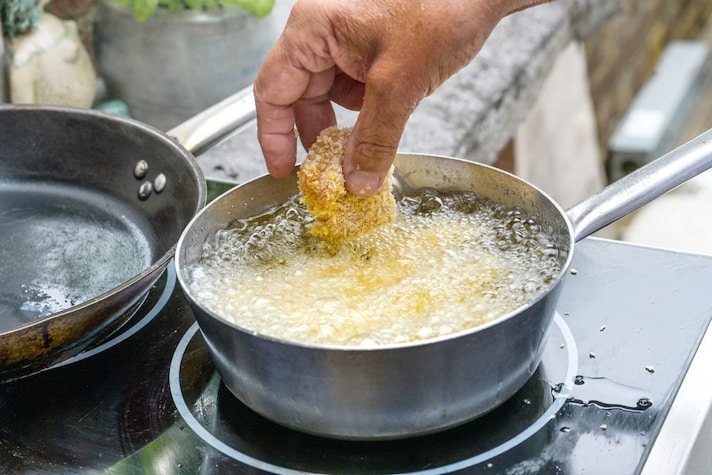
At most, using a little breadcrumbs remains a household trick when you don't have a thermometer and need to know if the oil has reached the optimal temperature: drop a piece of breadcrumbs in and watch if they sizzle, browning in a few seconds (then you can start frying) or if, on the contrary, they soak up the liquid and sink, a sign that the oil is still cold.
How to Fry Without Foam and Get a Crispy Result
It's no coincidence that frying is a cooking method often described as a true art. The end result must be light, crispy on the outside and soft on the inside, whether it's French fries, fritters, tempura, or fish and chips. However, we've all experienced greasy, soggy, heavy, and unappetizing food. When you want to try your hand at frying, there are some precautions to take before, during, and after the process to complete the mission successfully.
- Pat food dry with paper towels or a tea towel to remove excess water.
- Choose the right type of oil , as not all are suited to the high temperatures required for this technique. Among the most suitable are peanut and sunflower oil, which have a stable consistency and don't burn. Extra virgin olive oil also has a high smoke point, but we don't recommend it due to its intense flavor and cost.
- Do not mix the oil with another type and do not use new and used oil together, or the frying will not be uniform.
- Fry at a temperature between 320°F/160°C and 355°F180°C, keeping it constant.
- Add a little food at a time, as too many pieces together can cause temperature changes.
- Do not stir food continuously, as this could cause excessive flour, breading or batter residue to be released into the oil.
- If you notice large amounts of impurities between one frying session and another, remove them with a slotted spoon.
- Drain the fried food carefully and place it on a rack or on special paper towels: traditional absorbent paper towels absorb water quickly, softening the food.
- Don't reuse the same oil multiple times. Let it cool, filter it through a sieve, and store it. However, when it's cloudy, you're dealing with used oil, which has lost its original properties and is no longer effective. It should be disposed of at designated collection centers and not poured down the sink or toilet, as it pollutes the environment.

