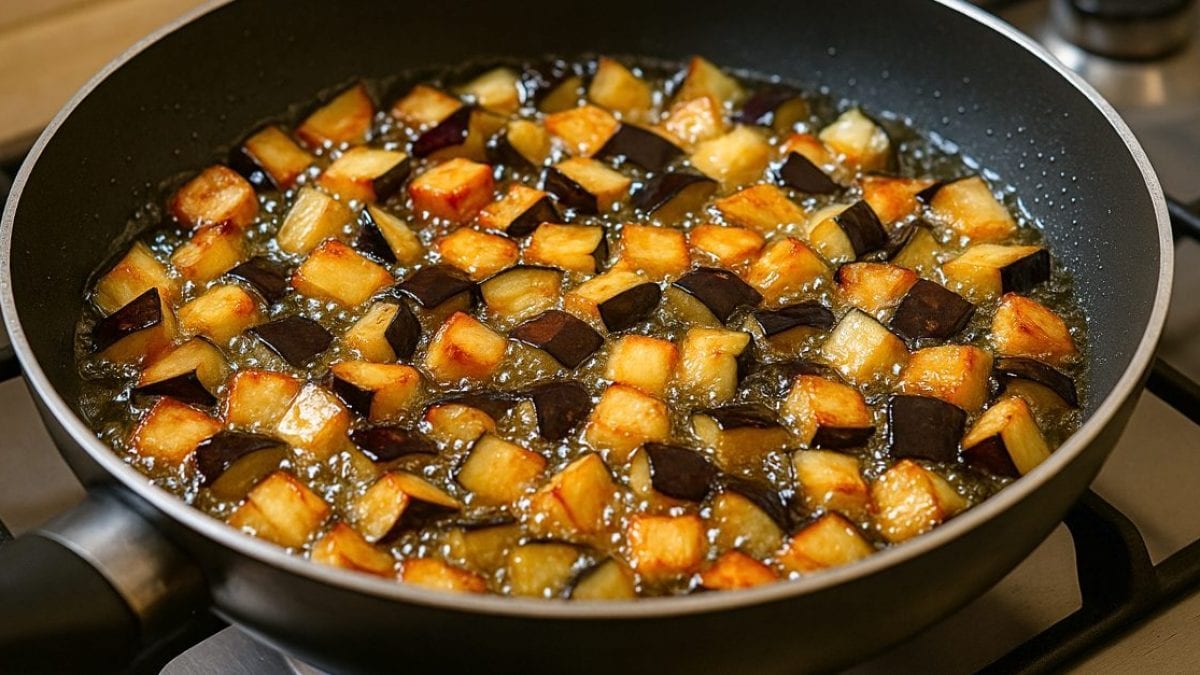
We don't know who you are or where you're from, but we're sure that for you too, fried food is one of the quintessential comfort foods. Considered by many to be unhealthy and therefore to be avoided, it's actually a pleasure we can enjoy from time to time with complete peace of mind. But how do you achieve perfect fried food? One of the most popular methods is deep frying: it involves completely immersing the food in a fat, usually oil, resulting in a golden-brown, crispy outside and soft inside.
Since the food must be completely covered in oil, unlike pan-frying, it's recommended to use a deep fryer for this type of cooking. But if you don't have one, don't despair: in this article, we'll give you 10 tips on how to achieve perfect, crispy deep-frying at home, using a regular pan.
1. Use The Right Pan
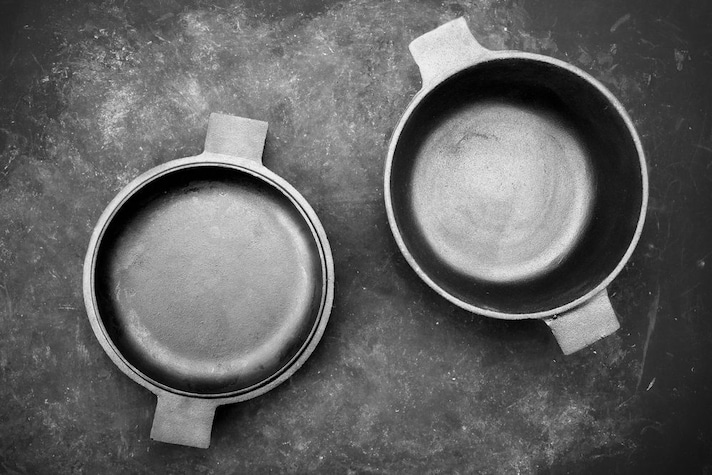
Let's start with the basics: what features should the pot have? Simple, it must be deep and sturdy. We recommend the classic Dutch oven because it's heavy (thus maintaining a constant high temperature) and has high sides that prevent oil from splashing everywhere.
2. Choose The Best Oil

While the pan is important, the choice of oil is clearly no less so. Generally speaking, oils with a high smoke point are best for frying: among these, we find peanut oil (445°F/230°C) and extra virgin olive oil (392°F/200°C). Corn oil, on the other hand, reaches its smoke point at 320-355°F/160-180°C, and sunflower oil at 340°F/170°C. Therefore, for perfect results, we recommend peanut oil or, at most, extra virgin olive oil, which, however, will give a more mineral flavor to your fried foods (it also tends to degrade more quickly at high temperatures than other, more refined oils). Finally, there is high oleic sunflower oil, which has a higher smoke point (between 428-446°F/220–230°C, depending on refining) and is more stable and suitable for frying than its "classic" namesake.
A small clarification: the smoke point varies greatly depending on the quality and refinement; for example, that of extra virgin olive oil can range between 320/160 and 410°F/210°C. Contrary to popular belief, more refined oils have a higher smoke point. This happens because many unstable components, such as small impurities, plant residues, free fatty acids, and other natural substances that tend to burn easily, are eliminated during the refining process. The result is a cleaner, more stable oil that can better withstand heat, making it perfect for frying.
3. Measure The Right Amount of Oil
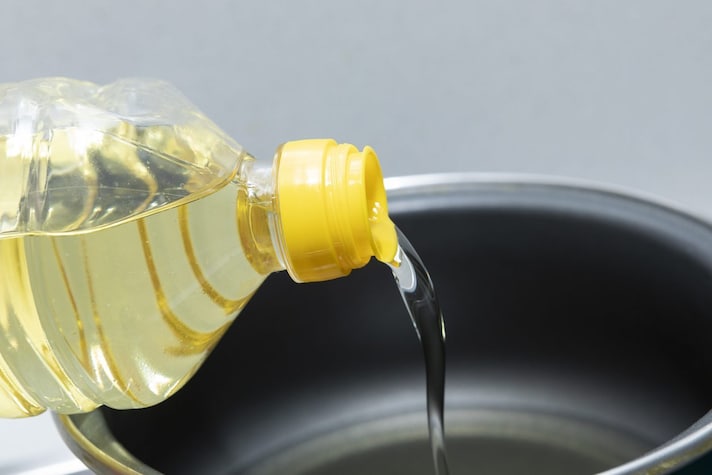
As mentioned, for a successful deep frying, the food must be completely immersed in the oil. This means using a generous amount, but not too much: it's essential to leave at least 5 centimeters of space at the top, because once the food is added, the oil could easily spill out of the pan.
4. Check The Temperature
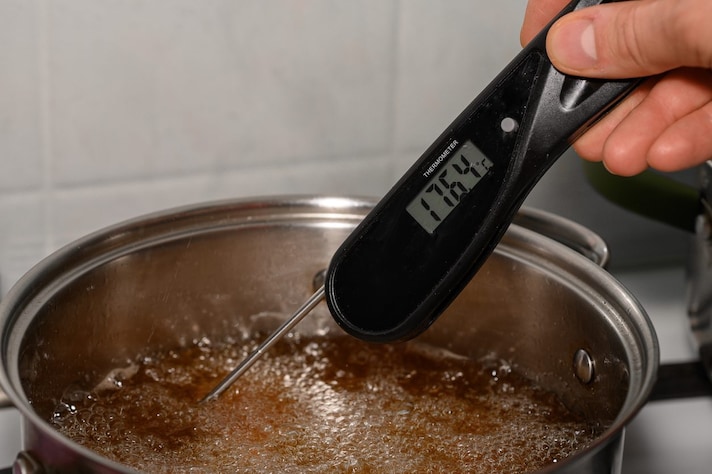
Besides the smoke point, another essential element is bringing the oil to the right temperature. To achieve crispy, dry fried food, the oil temperature must range between 330°F/165°C and 365°F/185°C: this is because if the oil is too cold, the food will tend to absorb too much, resulting in soft and greasy food, while if it is too hot, it will release potentially harmful volatile substances and the fried food could also burn. Remember, however, that some foods (like vegetables or desserts) require lower temperatures, while others (like croquettes or meat) benefit from higher temperatures (355-375°F/180–190°C).
5. Use a Thermometer
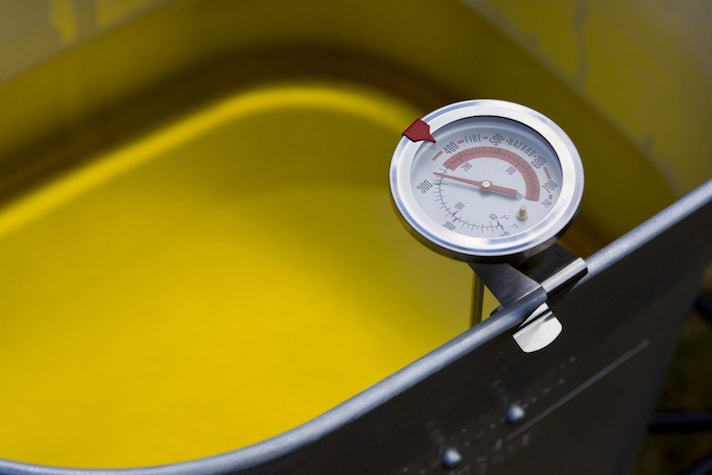
If we've said that for excellent frying, it's important that the oil is at the right temperature, it goes without saying that to measure it, it's essential to use a frying thermometer, even better if it has a clip so you can constantly monitor the temperature and avoid sudden changes. If you don't have a frying thermometer, you can also use a candy thermometer. If you don't have either of these tools, you can use two simple techniques:
- Breadcrumb method: After waiting a few minutes for the oil to heat, drop a small piece of bread into the oil. If it sinks to the bottom, the oil is still cold. If it immediately turns black, the oil is too hot. If it begins to brown, it's reached the right temperature.
- Toothpick method: In this case, we recommend using a long toothpick, like the one used for skewers, to avoid burns. If, once immersed in the hot oil, small bubbles form around it, it means the oil has reached the required temperature; if nothing happens, it's still too cold.
6. Pay Attention to The Breading
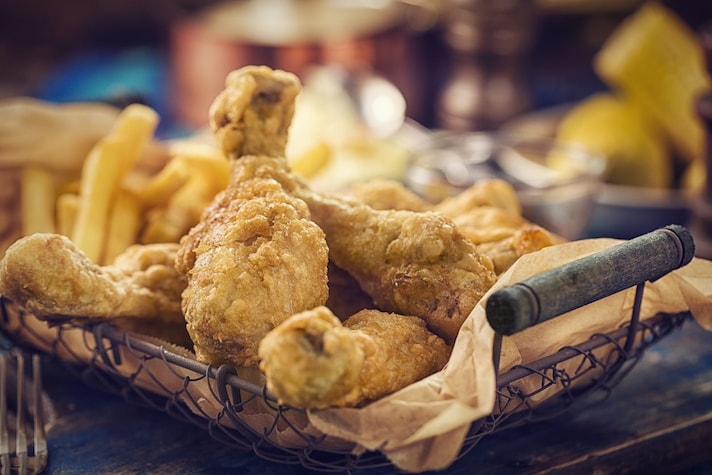
As we know, one of the most important aspects of frying is the breading, which must be firm, crispy, and dry. To ensure perfect breading, a few small tricks are essential: before cooking, it's important to let the breaded food rest, so that the excess oil drains off and the breading solidifies. Resting time is also necessary after frying: leave the food on a rack for a few minutes so that the excess oil drips off and isn't absorbed.
7. Don't Use a Fork
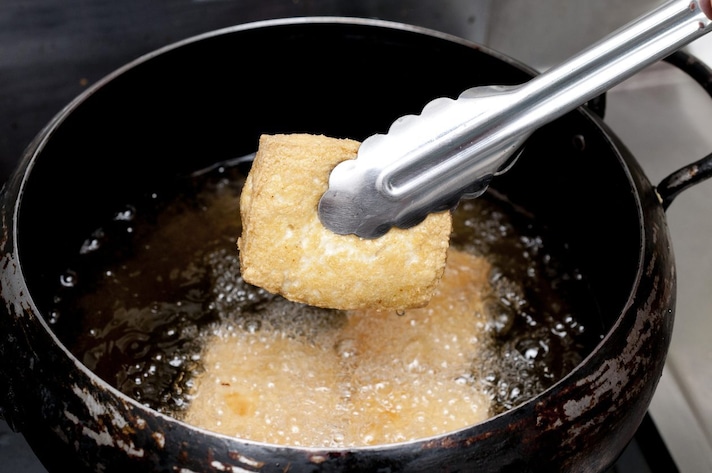
Perhaps a minor detail for some, but the cutlery used to stir food is actually an element that shouldn't be underestimated. In fact, it's recommended not to use a fork, as it could pierce the food, which would risk drying it out and possibly causing splashes due to spilled liquids. Tongs, on the other hand, are an excellent solution as they provide a good grip on the food in the pan and, furthermore, being longer than a fork, they also help prevent burns.
8. Don't Fry Too Many Pieces at a Time
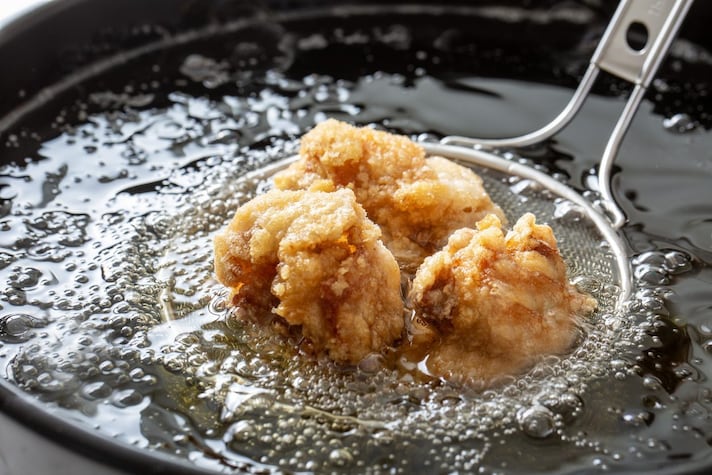
As we all know, cooking requires patience and time: deep frying is no exception. One of the most important rules for achieving perfect fried food is to cook a few pieces at a time, about three or four, depending on the size of your pan. This is because frying everything at once risks undercooked or excessively greasy food, and also risks lowering the temperature.
9. Let the Food Dry
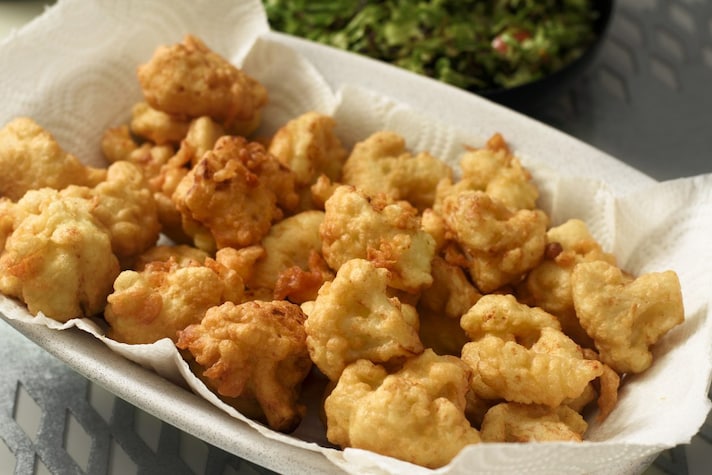
One of the biggest fears when frying is burning yourself due to excessive oil splashes: so what can you do to avoid it? You need to dry the food thoroughly before placing it in the boiling oil: remove excess water with paper towels before frying or breading. In the latter case, it's important to let the food rest even after breading, so that the breading has time to dry (about 15-20 minutes will be sufficient). Furthermore, after cooking, it's necessary to place the food on paper towels or absorbent paper to remove excess oil.
10. Dispose of Used Oil Correctly
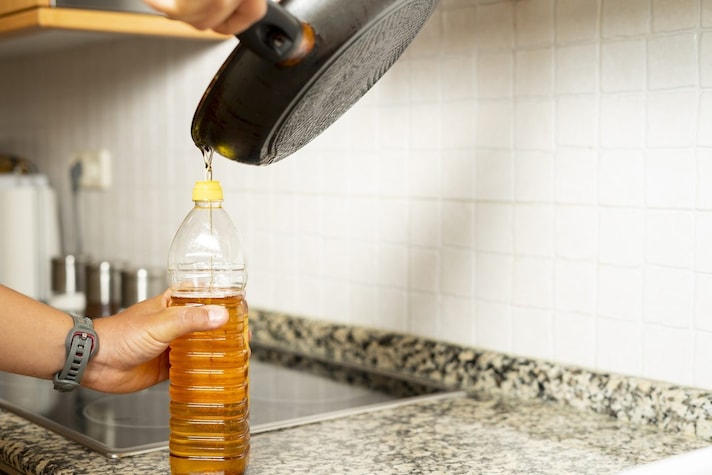
Probably one of the most widespread and underestimated sources of household pollution, disposing of used oil is a crucial practice that shouldn't be overlooked. First, because improper disposal has an incredibly negative impact on the environment, and second, it could risk clogging pipes. It's therefore important not to flush it down the toilet or sink, but to let it cool, pour it into a bottle, and take it to the nearest recycling center, following the regulations of your municipality.
;Resize,width=767;)
