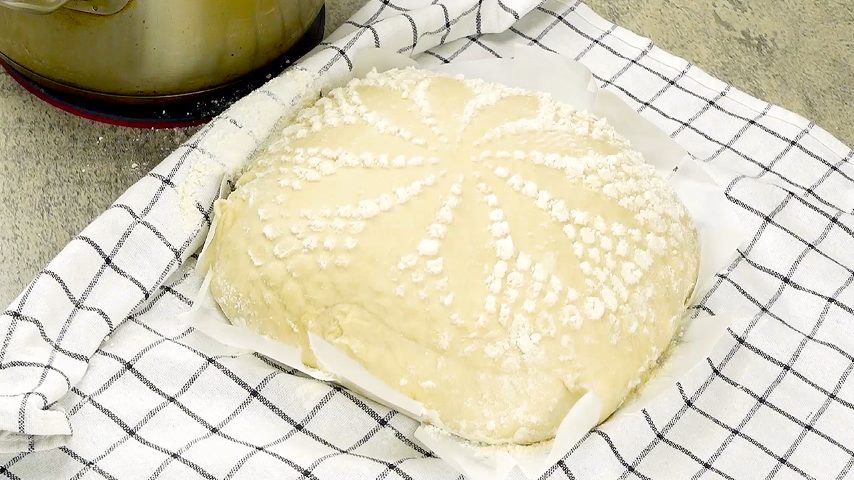
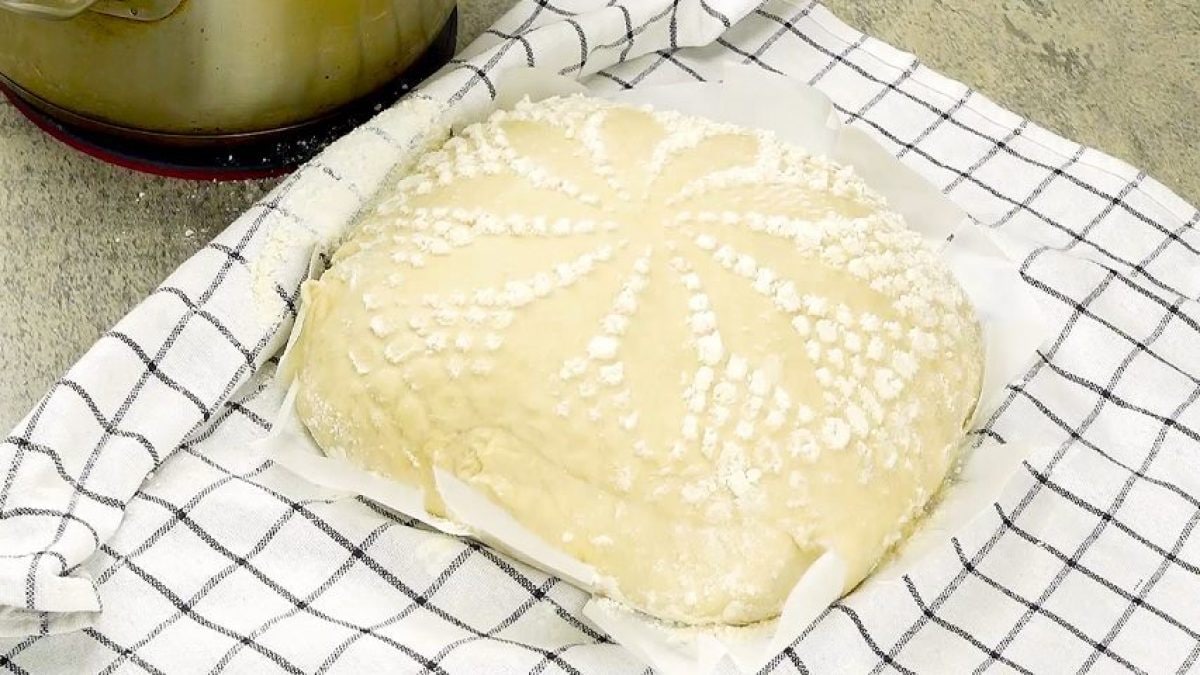
Bread has a funny way of making people feel accomplished. Mix a few ingredients, wait patiently, and suddenly your kitchen smells like a tiny bakery. This doily-stamped artisan bread takes that satisfaction one step further, it gives you a loaf that not only tastes incredible but also has a decorative finish.
This recipe is just made with water, flour, yeast, and salt. The dough rises slowly, rests overnight in the fridge, and then gets shaped and baked in a hot covered pot. It can be served as a side for soups, salads, pasta nights, or cheese boards.
What Is Doily-Stamped Bread?
Doily-stamped bread is an artisan-style bread decorated using a lace doily to create a delicate flour pattern on top before baking. This style of bread borrows from traditional European rustic loaves, often baked in Dutch ovens or covered pots. These breads are known for their crisp crust, open crumb, and deep flavor created through slow fermentation.
Pro Tips for the Best Doily Bread
- That one-hour room temperature rise helps the yeast wake up and get to work. Let it happen fully so your dough gets the lift it deserves.
- Refrigerating the dough improves both flavor and texture. It’s the slow, patient step that turns basic bread into bakery-level bread.
- Flour the cloth generously, and this is not the time to be shy. A well-floured cloth prevents sticking and saves you from the heartbreak of dough drama later.
- A dry doily works best for creating a sharp flour pattern. If it’s damp or sticky, the design can turn into abstract art.
Frequently Asked Questions
Do I Need a Dutch Oven for This Recipe?
Any oven-safe pot with a lid that can handle high heat will work. Cast iron is fantastic, but it’s not the only option. The important part is the lid, because it traps steam and helps create that crusty exterior everyone gets excited about.
Why Does the Dough Need to Rest for 24 Hours?
That overnight refrigeration gives the dough time to develop deeper flavor and better structure. Fast bread is fine, but slow bread has stories to tell. It also makes the dough easier to handle and improves the final texture, giving you that airy interior and beautiful rise.
What Type of Flour Works Best?
Regular all-purpose flour is okay, which is great news for your grocery budget. Bread flour can also be used if you want extra chewiness. Avoid heavily self-rising flour since the recipe depends on yeast for structure and rise.
Can I Add Herbs or Cheese to the Dough?
Rosemary, thyme, grated parmesan, olives, or roasted garlic are great options. Just keep additions moderate so the dough structure stays balanced.
Can I Use a Paper Doily?
No, please don’t. Paper and high heat are not a friendship worth testing. Use the paper doily only for shaping and flour patterning before baking, then remove it completely before the bread goes into the oven.
How to Store Leftovers
Once the bread has cooled completely, store it at room temperature in a paper bag, bread box, or wrapped loosely in a clean kitchen towel. Avoid sealing it immediately in plastic, which can soften the crust. You can also freeze it in an airtight container or freezer bag.
Ingredients
How to Make Doily-Stamped Bread
;Resize,width=712;)
Pour the water into a bowl, mix in the fresh yeast, and let it sit for a few minutes.
Pour the water into a bowl, mix in the fresh yeast, and let it sit for a few minutes.
;Resize,width=712;)
Mix flour and salt in another bowl.
Mix flour and salt in another bowl.
;Resize,width=712;)
Pour the yeast water into the flour mixture and begin mixing slowly until a rough dough forms.
Pour the yeast water into the flour mixture and begin mixing slowly until a rough dough forms.
;Resize,width=712;)
Cover the bowl tightly with cling film and poke a few small holes in the top. Leave it at room temperature for 1 hour, transfer the dough to the refrigerator, and let it rest for 24 hours.
Cover the bowl tightly with cling film and poke a few small holes in the top. Leave it at room temperature for 1 hour, transfer the dough to the refrigerator, and let it rest for 24 hours.
;Resize,width=712;)
Place a circular piece of parchment paper on a cloth, cut the edges, and cover with flour.
Place a circular piece of parchment paper on a cloth, cut the edges, and cover with flour.
;Resize,width=712;)
Remove the dough and gently roll it out. Fold it into 5 parts to create structure and shape.
Remove the dough and gently roll it out. Fold it into 5 parts to create structure and shape.
;Resize,width=712;)
Place the dough over your floured surface.
Place the dough over your floured surface.
;Resize,width=712;)
Set the doily over the dough, dust more flour on top, then cover everything with the cloth and let it rest for 2 hours.
Set the doily over the dough, dust more flour on top, then cover everything with the cloth and let it rest for 2 hours.
;Resize,width=712;)
Place your oven-safe pot with its lid into the oven, preheat to 190°C (374°F), and remove the doily from the top.
Place your oven-safe pot with its lid into the oven, preheat to 190°C (374°F), and remove the doily from the top.
;Resize,width=712;)
Carefully place the dough into the hot pot.
Carefully place the dough into the hot pot.
;Resize,width=712;)
Cover the pot with the lid and bake for 30 minutes at 190°C (374°F). Remove the lid and bake for another 15 minutes at the same temperature.
Cover the pot with the lid and bake for 30 minutes at 190°C (374°F). Remove the lid and bake for another 15 minutes at the same temperature.
;Resize,width=712;)
Remove the bread from the pot and let it cool before slicing.
Remove the bread from the pot and let it cool before slicing.
;Resize,width=712;)
Enjoy!
Enjoy!
;Resize,width=767;)
