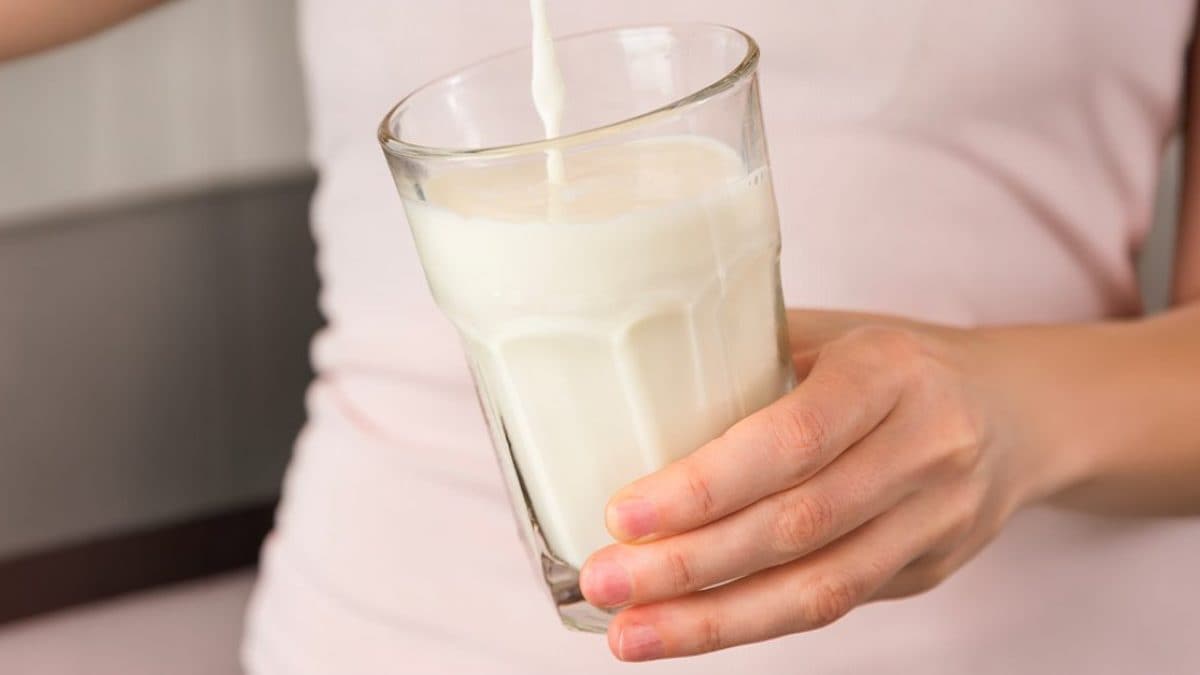
As precious as it is rare, donkey's milk is a true luxury product, not only for its decidedly expensive price (average cost ranging between 16 and 20 dollars) but also for its incredible wealth of beneficial properties. Particularly prized for its easy digestibility and for being the animal milk most similar to breast milk from a nutritional standpoint, donkey's milk has been famous since ancient times for its incredible cosmetic benefits, especially for the skin: legend has it that donkey's milk was Queen Cleopatra's beauty secret, as she used to fill entire tubs with it and then immerse herself in it to bathe.
Hydrating and capable of regenerating the skin, donkey milk is also an excellent food: rich in proteins, vitamins, probiotics, and omega-3 fatty acids, donkey milk promotes intestinal activity and health, helps maintain hormonal balance, and helps fight the onset and development of mild forms of osteoporosis. High in lactose and low in fat, this milk is also recommended for those who are intolerant or allergic to cow's milk proteins (obviously not suitable for those who are lactose intolerant).

Despite its growing popularity, it's still not easy to find commercially: you can only find it in shops specializing in organic and natural products or by going directly to the source at farms or farmers' markets, and it's not exactly affordable. This is because donkeys produce a relatively limited amount of milk compared to other animals, making the product rarer and more expensive. A true "white gold," it's worth exploring and using whenever possible.
What is Donkey Milk?
Donkey's milk is the milk produced by female donkeys while nursing their foals. It is particularly rare and expensive because donkeys produce minimal quantities (about 1 liter/day) and only for a limited period (6-7 months) after giving birth. Among the many varieties of milk, donkey's milk is undoubtedly the most similar to breast milk in composition and nutritional profile. For this reason, especially before the appearance of formula on the market, it was considered the best alternative for infants who could not be breastfed. Even today, in some cases, it can be given to children with food allergies to cow's milk proteins.
The history of donkey milk is ancient, primarily known as a legendary beauty elixir for the skin: the most famous story is that of Cleopatra, who, according to myth, used donkey milk in beneficial compresses and baths that kept her skin soft, youthful, and radiant. It seems that Poppaea, second wife of Emperor Nero, also made extensive use of it to eliminate wrinkles and make her skin softer and whiter, which is why she traveled with large herds of donkeys. Later in the centuries, other testimonies report that Pauline, sister of Napoleon Bonaparte, used donkey milk to preserve the beauty of her skin.
Over the course of history, donkey's milk has become known for its other properties, beyond just its skincare benefits: we know that the famous Madame de Pompadour, for example, used it to strengthen her immune system. The nutritional profile of donkey's milk, in fact, is a true panacea in many ways, rich in lactose, calcium, and omega-3. And what's more, it's truly delicious: those who try it for the first time are surprised by its natural sweetness, not cloying but very smooth on the palate.
Donkey Milk's Properties and Benefits
Rich in protein, vitamins, and omega-3 and omega-6 fatty acids, donkey milk is a low-calorie food, containing just 46 kcal per 100 grams. Helpful for protecting and stimulating the intestinal system and the entire digestive tract, donkey milk has an excellent nutritional profile: it is known for its high digestibility and its ability to promote calcium absorption thanks to its high lactose content, which amounts to over 6%. It has a low fat content, ranging from 0.3% to 1.8%, but at the same time is rich in "good" polyunsaturated fats that protect against heart disease, and in probiotics, microorganisms that rebalance the intestinal flora. Completing the package is a particularly rich source of vitamins, minerals, and antioxidants. Here are all the benefits donkey milk provides to the body.
1. Great Source of Calcium
Doctors often prescribe donkey milk to the elderly, particularly debilitated patients, or those with osteoporosis-related problems: this type of milk, in fact, has a high calcium content, the intake of which is essential for promoting bone health. Furthermore, donkey milk is also rich in other important minerals such as magnesium, phosphorus, potassium, iron, and zinc, and above all, it has the advantage of having a high lactose content. This very substance facilitates calcium absorption and promotes bone mineralization, making it useful for preventing osteoporosis and combating mild forms of the disease.
2. High Digestibility
The combination of a low fat content, a low percentage of casein, the protein that most often causes allergies and intolerances, and a composition generally more similar to that of breast milk, make donkey milk much more digestible than cow's milk: it has a tolerability of over 80%, making it an excellent substitute for those who have difficulty digesting cow's milk; it is still used today to control forms of cow's milk allergy in infants and adults. However, those who are intolerant to lactose, the milk sugar, should be careful, as donkey milk is particularly high in it and could cause problems.
3. Helps With Cholesterol and The Cardiovascular System
Donkey's milk contains several essential components that support cardiovascular health and control blood cholesterol levels. In particular, mineral salts and omega-3 and omega-6 fatty acids help keep "bad" cholesterol low and "good" cholesterol stable. This provides general support to the entire cardiovascular and arterial systems, promoting their proper functioning.
4. Strengthening the Immune System
Donkey's milk, when consumed regularly, is a valuable aid in strengthening the immune system: the lactoferrin and lysozyme it contains have antibacterial and antimicrobial properties, both killing bacteria directly and preventing their growth and multiplication. Added to this is a high concentration of vitamin C, essential for improving the immune system and the body's defense response, and vitamin D, a key element in strengthening resistance to infections.
5. Antioxidant Properties
Several scientific studies have demonstrated that donkey milk may play a role in preventing certain chronic diseases resulting from premature cellular aging. Donkey milk contains a series of antioxidants and phenolic compounds, including vitamin E, which are essential for combating oxidative stress and the action of free radicals, both of which cause cellular aging and subsequent chronic dysfunction or cardiovascular disease.
6. Cosmetic Use
It's impossible not to mention the reason donkey milk has become famous: its cosmetic uses. It's not just a legend; this product is a true beauty elixir thanks to its components, a blend of proteins, vitamins, minerals, and antioxidants that are a panacea for facial skin. It's very common, in fact, to find donkey milk as an ingredient in creams and treatments designed to prevent skin aging, smooth wrinkles, hydrate, and soothe inflamed skin, but also in body moisturizers and hand soap formulations. Donkey milk is also often used in hair care products, particularly to improve hair health in terms of hydration, nutrition, and shine.
Contraindications
Donkey's milk has no particular contraindications, precisely because it's the milk most similar to human milk and therefore the one that causes the least problems, even for those who are allergic or intolerant to cow's milk. The situation is different if your intolerance is related to lactose: donkey's milk contains a particularly high concentration of it, so it may be best to avoid it to avoid problems. It's best to avoid donkey's milk if you suffer from diabetes, as its high sugar content can raise blood sugar levels.
How to Consume And Use Donkey's Milk in Cooking
The simplest way to consume donkey milk is just like you would cow's milk: a nice glass in the morning, hot or cold, to start the day with the right energy. It's suitable for everyone, even those on a diet or with obesity-related problems, because it has a very low fat content (0.3-1.8%). Beyond its traditional use as a breakfast beverage, donkey milk is a versatile product and very easy to use in the kitchen. You just need to be careful with the quantities, as this milk has a particularly sweet taste (and is quite expensive).

How do you use donkey milk as an ingredient? You can basically use it like you would cow's milk: it's perfect for smoothies, milkshakes, and hot chocolates, and because of its composition, it works particularly well in puddings, custards, desserts, and delicate baked goods that don't require a strong flavor, such as small, fragrant milk rolls or incredibly soft milk focaccia. You can also use donkey milk to make cakes and biscuits, but prefer recipes with low-temperature cooking to avoid altering its properties. Because it's very sweet, it's less commonly used in savory recipes, but you can try adding it to sauces or soups to add a sweet, delicate touch.
There are also cheeses made from donkey milk, but these are a very niche and expensive production, as well as particularly complicated: the donkey produces very little milk during its pregnancies, and its milk has a particular composition that makes traditional enzymatic coagulation inefficient. All this results in a rather high selling price, ranging from $465 to $1,739 per kilo, dizzying costs due precisely to the rarity of the raw material and the difficulty of producing the cheese. Despite this, there are producers who manage to produce small quantities of donkey cheese. Particularly well-known are Pula, a donkey cheese produced in Serbia which, to obtain a single wheel, requires about 25 liters of milk, and Asinino Reggiano, produced in Italy.
;Resize,width=767;)
