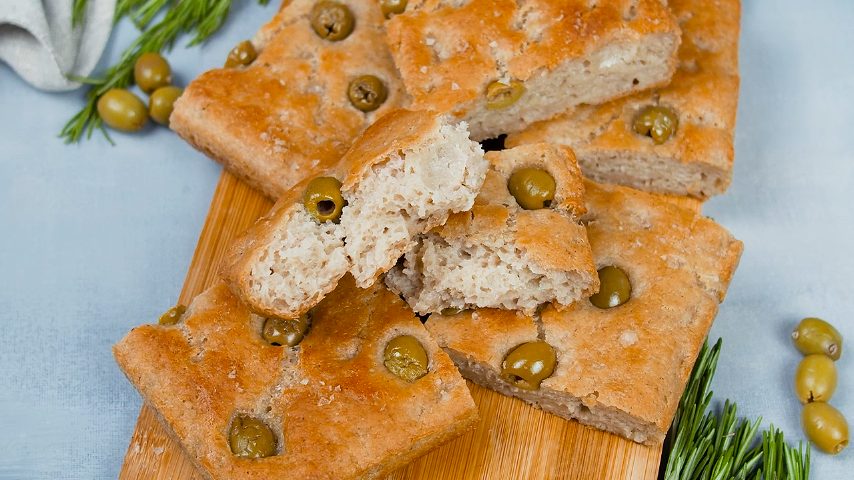
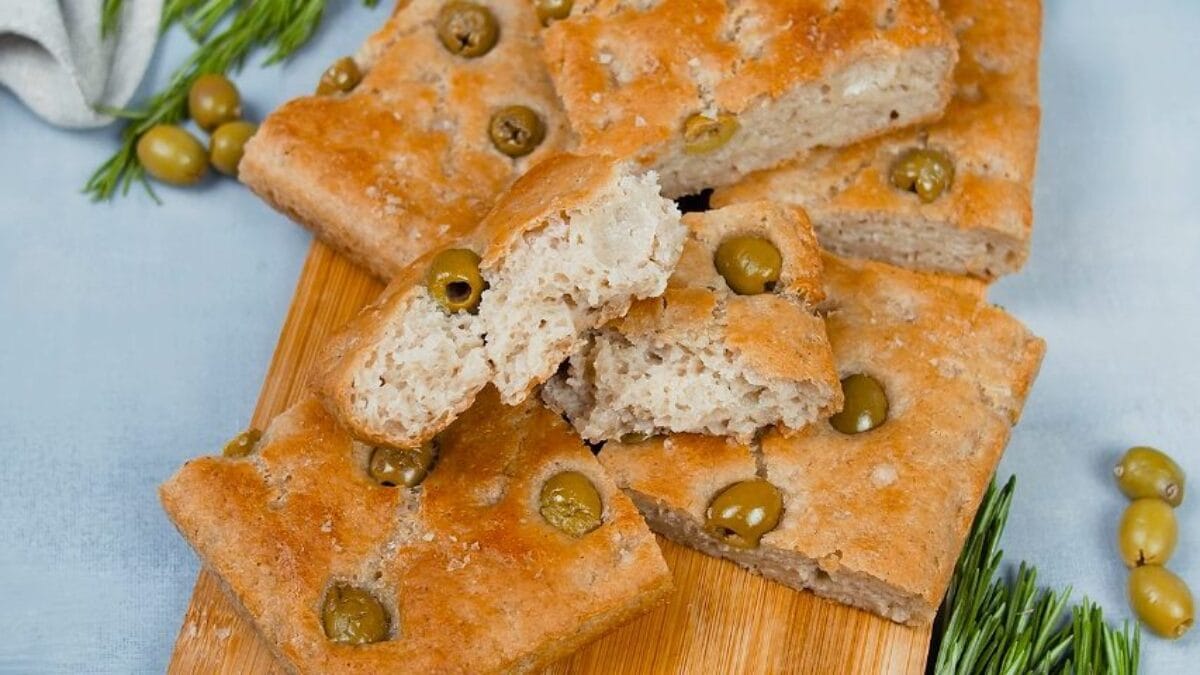
Gluten-free focaccia proves that a few carefully chosen ingredients can create a bread with character, texture, and plenty of charm. Made with a combination of potato starch, rice flour, tapioca starch, pea protein, and psyllium husks, this recipe creates a dough that rises beautifully while staying soft and enjoyable.
Unlike many gluten-free breads that can feel complicated or require a long list of unusual ingredients, this focaccia keeps things simple. The process involves mixing the dry ingredients, adding water and olive oil, allowing the dough time to rise, topping it with olives and coarse salt, and baking. The result is a homemade bread that works wonderfully as an appetizer, a side dish for soups and salads, a lunch companion, or even the star of a casual meal.
What is Gluten-Free Focaccia?
Focaccia is a traditional Italian flatbread that has been enjoyed for centuries. The name comes from the Latin word “focus,” meaning hearth or fireplace, because early versions were baked near the heat of a fire.
Traditional focaccia is usually made with wheat flour, yeast, olive oil, and salt. Over time, bakers around the world have adapted the recipe to suit dietary preferences. Gluten-free focaccia is one of these modern adaptations, replacing wheat flour with carefully balanced starches and binders.
Pro Tips for The Best Gluten-Free Focaccia
- Gluten-free baking depends heavily on balance. Small changes in flour or starch quantities can affect the final texture, so measuring ingredients accurately helps the dough perform properly.
- The dough will not behave like traditional wheat dough. It should become sticky and well combined rather than smooth and stretchy. Proper mixing ensures all ingredients are evenly distributed.
- Olive oil contributes flavor and helps create a pleasant texture. A good-quality oil can make a noticeable difference in the finished focaccia.
- Gluten-free dough is softer than regular bread dough, so avoid forcing it into the pan. Use lightly oiled hands or a spatula to spread it evenly.
Frequently Asked Questions
Does gluten-free focaccia taste like traditional focaccia?
Gluten-free focaccia has its own unique texture and flavor while still capturing the main qualities people enjoy about focaccia. It has a soft interior and a pleasant olive oil flavor.
Why does gluten-free dough feel sticky?
Gluten-free dough often has a different consistency because it lacks gluten, the protein responsible for elasticity in traditional bread dough. The stickiness in this recipe is expected.
Can I add other toppings to gluten-free focaccia?
Yes, gluten-free focaccia can be customized with many toppings. Herbs, roasted vegetables, onions, or different types of seeds can add extra flavor.
Can I freeze gluten-free focaccia?
Allow it to cool completely before wrapping it tightly and placing it in a freezer-safe container. When ready to eat, thaw it at room temperature and warm it gently before serving.
How to Store Any Leftovers
Place it in an airtight container or wrap it tightly to prevent moisture loss. At room temperature, it can usually be enjoyed for a short period, while refrigeration can extend its shelf life.
Ingredients
How to Make Gluten-Free Focaccia

Add potato starch, rice flour, tapioca starch, pea protein, psyllium husks, yeast, sugar into a large bowl, and mix.
Add potato starch, rice flour, tapioca starch, pea protein, psyllium husks, yeast, sugar into a large bowl, and mix.

Pour the olive oil and lukewarm water into the dry mixture. Using a mixer fitted with a dough hook attachment, work the mixture until it becomes a sticky dough.
Pour the olive oil and lukewarm water into the dry mixture. Using a mixer fitted with a dough hook attachment, work the mixture until it becomes a sticky dough.

Transfer the dough into an oiled bowl, cover it with plastic wrap, and let it rest for one hour.
Transfer the dough into an oiled bowl, cover it with plastic wrap, and let it rest for one hour.

Grease a baking pan with olive oil, transfer the dough into the pan, and stretch it until it fills the entire surface. Place green olives on top, sprinkle with coarse salt, and let it rise for an hour.
Grease a baking pan with olive oil, transfer the dough into the pan, and stretch it until it fills the entire surface. Place green olives on top, sprinkle with coarse salt, and let it rise for an hour.

Bake at 160°C/320°F for 20 minutes. After that, increase the oven temperature to 190°C/374°F and continue baking for another 10 minutes. Enjoy!
Bake at 160°C/320°F for 20 minutes. After that, increase the oven temperature to 190°C/374°F and continue baking for another 10 minutes. Enjoy!
;Resize,width=767;)
