When you think of a Mediterranean breakfast, the most common image is coffee and a croissant. But in Catalonia, there's a tradition that breaks all the mold: esmorzar de forquilla, literally "fork breakfast." It's a hearty, cooked morning meal, with dishes that are more reminiscent of lunch than breakfast. Originating in the countryside and at popular markets, it's now enjoying a new lease of life, also as a distinctive alternative to the international brunch.
What is Esmorzar de Forquilla?
The esmorzar de forquilla originated in the 19th century as a response to the needs of workers: farmers, fishermen, and artisans began work at dawn and, by mid-morning, needed a substantial meal to recharge their batteries. It wasn't a snack, but a proper, complete meal, to be consumed slowly and in company, accompanied by a glass of wine or beer. The name itself tells the story: not a "light" breakfast to be consumed on the fly, but one made with a knife and fork, hot, cooked dishes.
In the early decades of the 20th century, Barcelona's Born Market and Raval neighborhood were famous for their taverns, crowded with dockers and workers who, starting in the morning, would sit down to eat tripe, guisados (stews), and sausages, all while drinking directly from the typical porró (a glass of wine). Even today, it's not uncommon to find older people ordering a botifarra with beans instead of a cappuccino at 10 a.m. A scene that speaks to the persistence of this tradition.
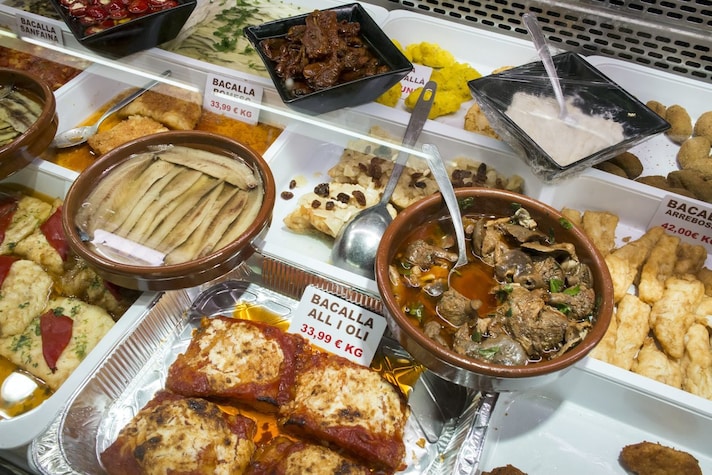
Esmorzar Forquilla's Typical Dishes
L'esmorzar stands out for its rich and high-calorie menu. It doesn't feature sweets or biscuits, but traditional Catalan dishes. Here are the main ones:
1. Botifarra amb Mongetes
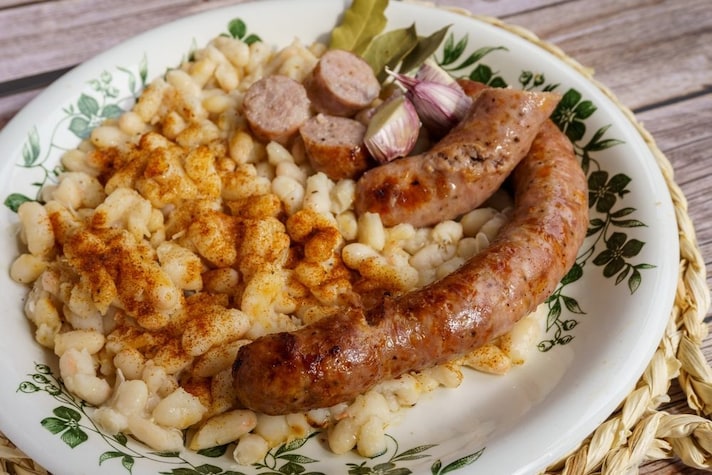
It's perhaps the most iconic dish of the esmorzar. Botifarra is a thick, flavorful Catalan sausage made with spiced pork and grilled or pan-fried. It's served with mongetes seques, small local white beans sautéed in oil and garlic. The combination of fatty meat and nutritious legumes embodies the rural spirit of the esmorzar: simple, rustic, and hearty.
2. Cap i Pota
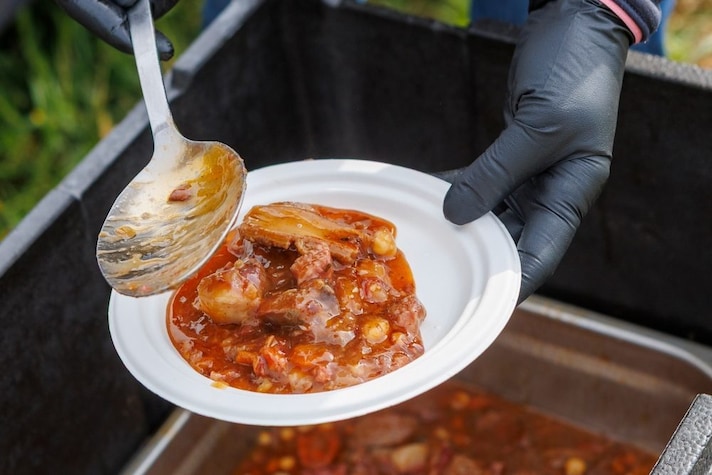
This stew takes its name from its main ingredients: veal "cap" (head) and "pota" (leg). It's a peasant dish, in which every part of the animal was used. The meat is slowly cooked with tomato, onion, and spices until it reaches a tender, gelatinous consistency. The result is a rich dish, with strong flavors and deeply rooted in folk tradition.
3. Fricandò
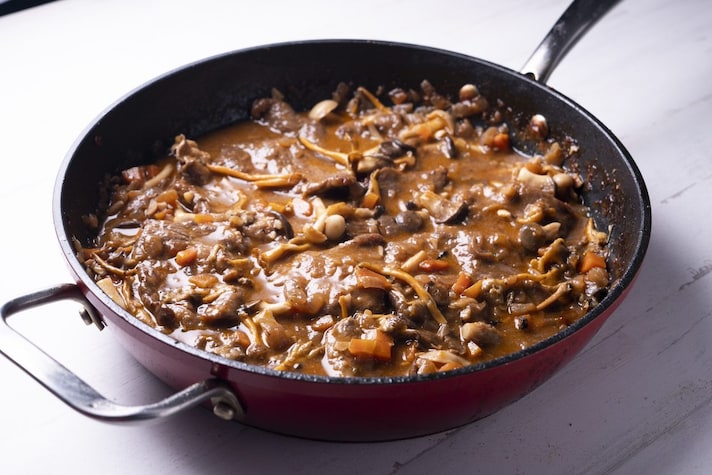
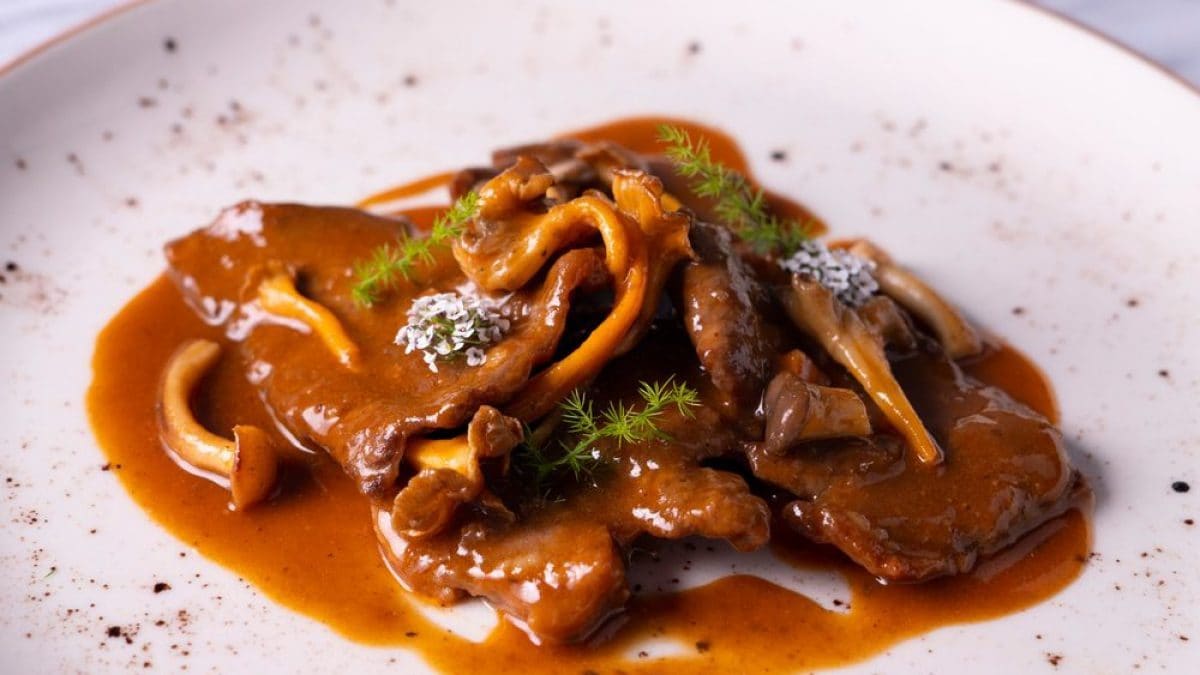
Considered the most refined of the esmorzar dishes, it's a thinly sliced veal stew cooked in a rich onion and white wine sauce. What makes it special are the typical Catalan mushrooms, such as moixernons or rovellons, which lend an earthy, autumnal aroma. It's often served on Sundays or holidays, when the esmorzar becomes even more convivial.
4. Catalan-Style Tripe
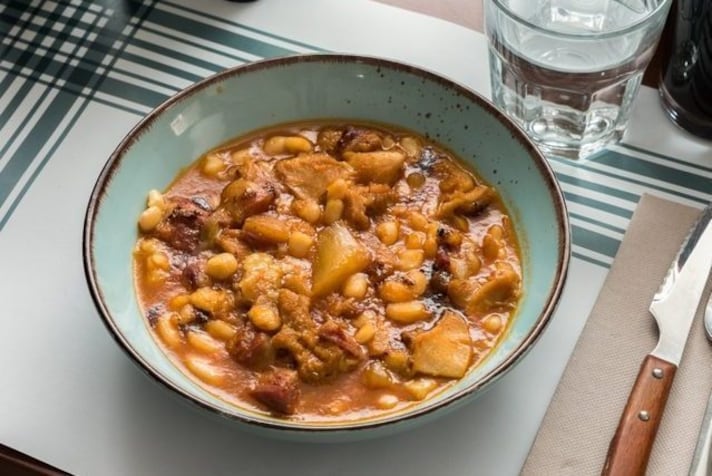
Tripe a la Catalan is a must: offal, especially tripe, has been part of popular Catalan cuisine for centuries. The esmorzar version involves a long cooking process with tomato, onion, carrots, and spices, until it reaches a soft consistency and a thick sauce. It's a divisive dish: for some, it's a childhood and family memory, for others, a bold discovery with a bold flavor.
5. Cod With Samfaina
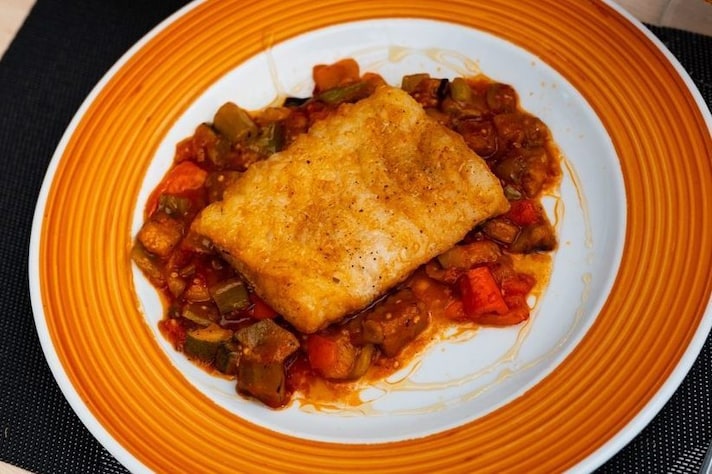
Cod, once imported from Northern Europe and now firmly rooted in Catalan cuisine, is the star of many esmorzars. In this version, it's served with samfaina, a Catalan ratatouille of eggplant, zucchini, peppers, and tomato, slowly cooked until it becomes almost like a savory jam. The contrast between the delicate fish and the rich vegetables makes this dish a perfect balance.
6. Fried Eggs With Bacon or Chorizo
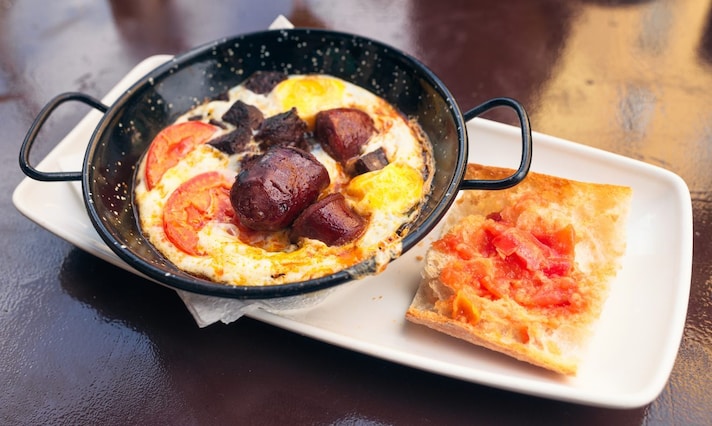
They're the simplest and most immediate option, but no less delicious. The eggs are fried in olive oil, often served with crispy bacon or slices of chorizo, the famous Spanish smoked sausage. The dish is almost always accompanied by pa amb tomàquet, toasted bread rubbed with fresh tomato and seasoned with oil and salt, which becomes the perfect base for scooping up the yolk.
All this is often washed down with a glass of red wine, cava (Catalan sparkling wine) or beer: a detail that underlines how esmorzar is closer to lunch than to a modern breakfast.
The Return of Esmorzar, Catalan's Answer to Brunch
In recent years, thanks to overtourism and the quest for authenticity, the esmorzar de forquilla has become popular again. More and more bars and restaurants are offering it as an authentic local experience, an alternative to the Anglo-Saxon brunch that has invaded European cities.
Brunch combines sweet and savory with an international twist; esmorzar, on the other hand, responds with local roots, rustic dishes, and conviviality. It's a way to rediscover Catalan identity through food, and at the same time, a magnet for those seeking authentic culinary experiences.
Today, young Catalans are rediscovering it, especially on weekends, turning it into a social ritual, a bit like brunch but with a deeply traditional feel.
Where to Try Esmorzar Today, in Barcelona and Catalonia
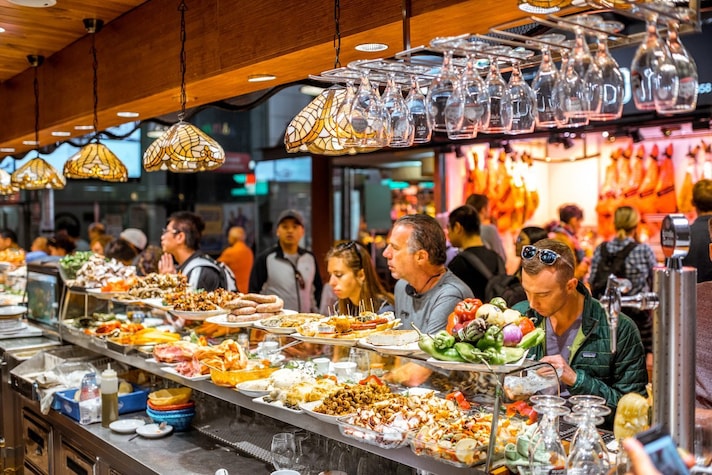
Those who want to taste a true esmorzar de forquilla are spoiled for choice. In Barcelona, in the Gràcia neighborhood, two places have become references: Cal Boter, known for its home-style Catalan cuisine, and La Pubilla, which offers hearty dishes from the morning. In the historic markets, however, legendary places stand out like El Quim de la Boqueria and the famous Bar Pinotxo, both in the Boqueria Market, where eggs with mushrooms, cod, and guisados are served from the early hours of the morning.
For those seeking an authentic atmosphere, Can Vilaró, right across from the Mercat de Sant Antoni, is a must-see. It's considered one of the "homelands" of esmorzar, a traditional stew. By the sea, Cova Fumada in Barceloneta is perfect for an esmorzar featuring fish and seafood.
And it doesn't end there: even outside Barcelona, in the towns of Catalonia, bars and taverns continue to keep this tradition alive, offering a breakfast that is a true dive into local gastronomic history.
;Resize,width=767;)
