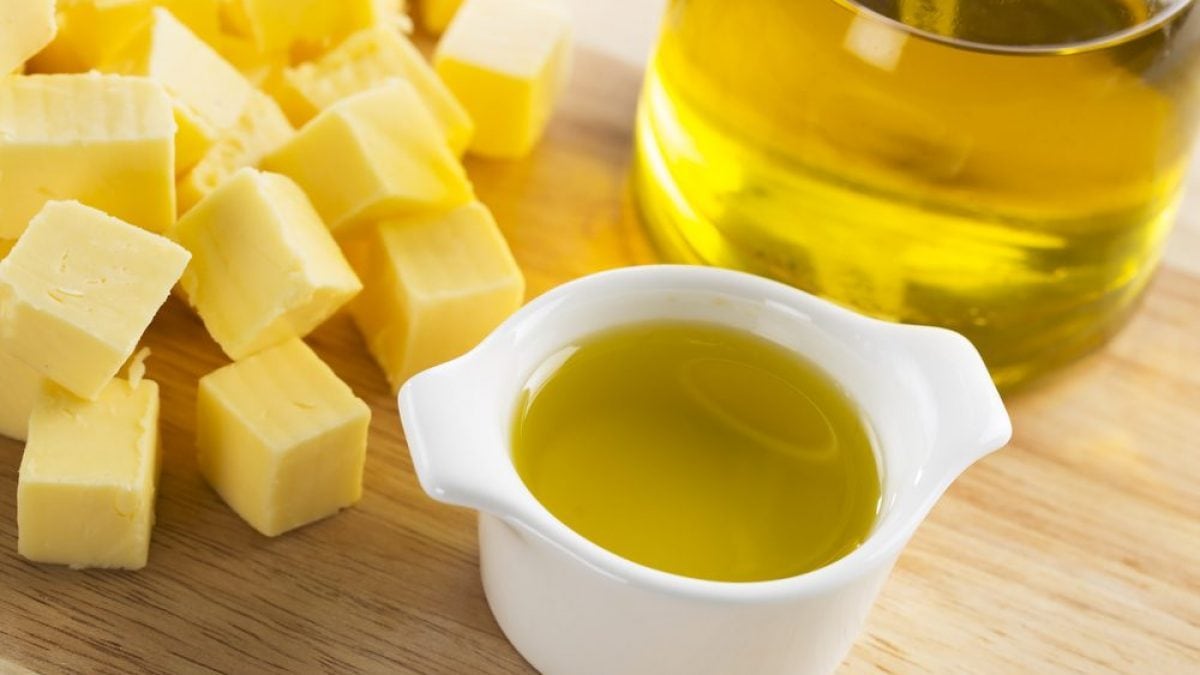
We use them to season dishes, to cook foods, to give different consistencies, textures and flavors to doughs: we are talking about fats, present in many kitchen preparations. There is not just one type and, for this reason, we tend to wonder which is the most suitable to use in a given recipe, to enhance flavor and aroma, but also to meet health needs, seeking a balance between pleasure of the palate and well-being. The fats we have available for cooking are essentially of two types: those of animal origin, such as butter – but also lard, bacon fat etc. – and vegetable fats, for example olive oil, preferably extra virgin, or seed oil (such as peanut and sunflower), or the various solid alternatives available for those following a vegan or vegetarian diet, such as soy butter or coconut butter, which are natural products. A third option is to rely on margarine: it's a butter substitute that doesn't exist naturally, the result of a chemical process that involves the addition of additives (such as colorants to give it a yellow color) and often uses low-quality raw materials. Given the wide range of options available, it might not be worth considering. Let's take a detailed look at the three most commonly used fats, their differences, and the characteristics that make one better than the other in savory and sweet dishes.
Oil, Butter and Margarine: What Are The Differences?
Olive oil is obtained by pressing olives, and its excellence is represented by extra virgin olive oil, one of the symbols of the Mediterranean diet. Why is it considered the best ally for health? The credit goes to its composition: 99% fat, of which almost all (up to 90%) are polyunsaturated and monounsaturated fatty acids, or those commonly defined as "good" ones. Furthermore, that missing 1% contains substances rich in properties, including polyphenols (with antioxidant function), vitamins, and mineral salts.

Butter is a highly nutritious food that comes from the mechanical processing of milk, and is therefore of animal origin. Like oil, it contains a high percentage of lipids, around 85%, but differs from the previous ones in that more than half is saturated fatty acids, which can contribute to the increase of bad cholesterol in the blood: the rest is protein, water, and mineral salts. There is not just one type of butter on the market: to choose quality butter, choose the one made from centrifugal cream (meaning the cream is centrifuged immediately after the milk has been milked), or the clarified one, which has had the water and casein removed, resulting in a 99% fat content and is more digestible.
Margarine, finally, is made through an emulsion of vegetable oils (seeds, peanuts, rapeseed) and water that solidifies through a hydrogenation process, which favors the formation of trans fats, potentially harmful as they contribute to raising levels of bad cholesterol and developing substances harmful to the body during cooking at high temperatures.

Which One Should You Use in Savory Recipes?
Extra virgin olive oil is the best oil to use as a condiment in everyday life, as it adds flavor and aroma to foods without any side effects, especially when consumed raw, thus maintaining its organoleptic and nutritional properties intact. As for butter, however, being high in calories, it is better to use it in specific preparations that require its presence, otherwise the recipe will turn out poorly: as a dip for gnocchi and ravioli, a garnish in tufts for flans, or as a traditional fat in regional dishes. Speaking of frying: classic butter is not ideal for frying, as it has a low smoke point (between 248°F/120°C and 320°F/160°C), so when heated to high temperatures (around 340°F/170°C) it releases toxic substances, such as acrolein, an irritant and listed by the AIRC among the potentially carcinogenic agents. Extra virgin olive oil, on the other hand, begins to degrade between 355°F/180°C and 390°F/200°C, proving to be a good choice. The best solution for dishes that require frying in butter is to use clarified butter, which has the same smoke point as EVOO and can be easily made at home.

Which is The Best Choice for Desserts?
In pastry making, fats are a very important element, as they have multiple functions: they help create the desired consistency, add aroma and complexity to the flavor, and are essential for preservation. Generally speaking, it can be said that butter in desserts gives greater softness and roundness, while extra virgin olive oil is suitable for those who prefer lighter, crispier desserts. So much so that it can be substituted for the former by simply subtracting 20% of the amount used (e.g., 100 g of butter is equivalent to 80 g of oil). This way, you avoid the risk of obtaining the opposite effect, i.e., a greasy and heavy cake. Choose a delicate extra virgin olive oil, which will not affect a neutral dough. It might be a little more complicated to make classic shortcrust pastry with oil, as it is precisely its butteriness that makes it so crumbly, just as it is difficult to try your hand at a choux pastry, where the fat creates the swollen and hollow structure inside: to find the perfect balance with the oil you will have to proceed by trial and error, or, if you have margarine, this is the right time to give it a try.
;Resize,width=767;)
