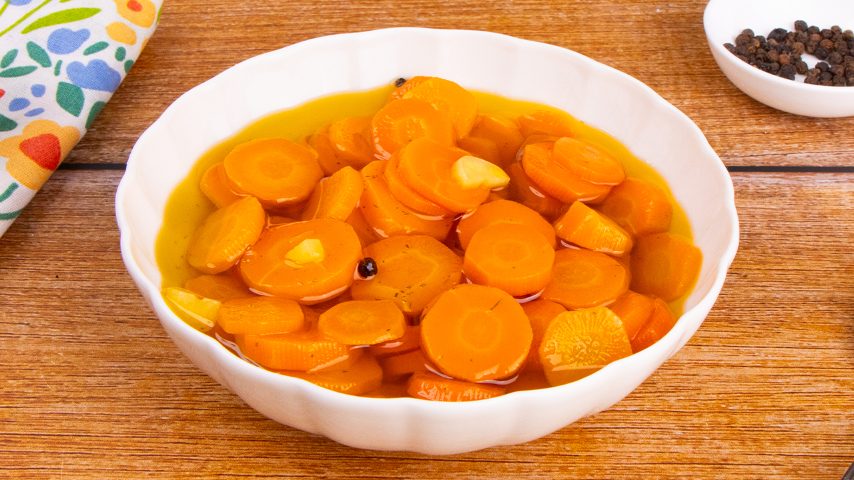
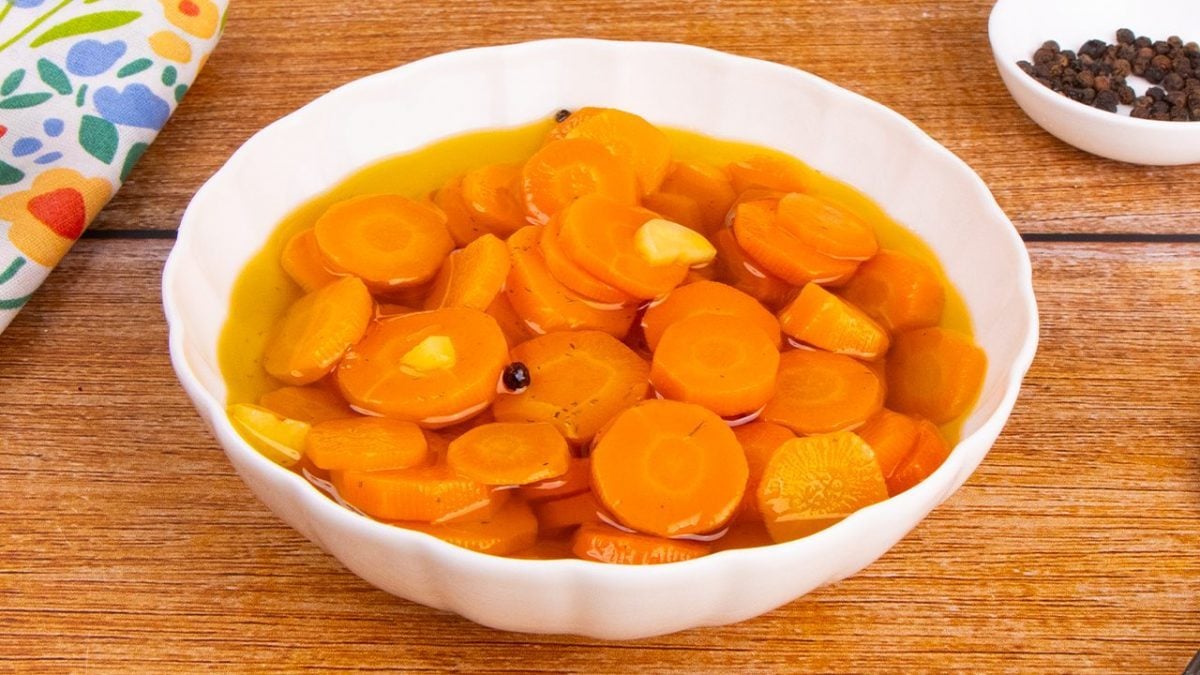
Carrots in Oil are a colorful, flavorful vegetable preserve made with carrots briefly cooked in a water-and-vinegar mixture, then seasoned with garlic, dill, peppercorns, and extra virgin olive oil.
The carrots remain pleasantly firm while absorbing plenty of aromatic flavor from the herbs and seasonings. Their natural sweetness also creates a delicious contrast with sharp vinegar and fruity olive oil.
Serve these marinated carrots as part of an antipasto platter, with cheeses and cured meats, alongside grilled dishes, or simply with crusty bread.
Why Everyone Will Love This Recipe
These carrots are simple but packed with flavor. Boiling them briefly with vinegar gives them a pleasantly tangy taste, while garlic, dill, and peppercorns add freshness and aroma. Extra virgin olive oil rounds everything out with a smooth, rich finish.
They are also extremely versatile. Serve them as an appetizer, spoon them alongside a sandwich, add them to a salad, or include them on a Mediterranean-inspired grazing board.
Another advantage is that they can be prepared ahead. A short rest in the refrigerator gives the seasonings time to mingle and makes the carrots even more flavorful.
What Are Carrots in Oil?
Carrots in Oil are inspired by the Italian tradition of vegetables prepared sott'olio, literally meaning “under oil.”Preserving vegetables in oil has long been part of Mediterranean cooking, where seasonal produce such as eggplants, peppers, mushrooms, zucchini, and artichokes is often paired with vinegar, herbs, garlic, and olive oil.
Historically, preservation techniques helped extend the availability of seasonal foods. Modern food-safety knowledge, however, makes an important distinction between traditional preparation and tested shelf-stable canning.
Cooking Tips
- Cut the carrots into pieces of similar size so they soften evenly while retaining a pleasant bite.
- Use firm, fresh carrots because they maintain their texture better than older carrots that have already started becoming soft.
- Choose white wine vinegar with a clearly stated acidity if possible because vinegar strength can vary between products.
- Avoid overcooking the carrots because they should remain structured enough to hold their shape once mixed with the oil and seasonings.
- Dry the carrots extremely thoroughly after draining because excess water dilutes the dressing and can negatively affect both flavor and keeping quality.
- Use clean, dry utensils and containers because good kitchen hygiene is particularly important when preparing vegetables that will be covered with oil.
- Slice or crush the garlic only with clean utensils and keep the finished mixture refrigerated because fresh garlic submerged in oil requires careful temperature control.
- Make sure the carrots are coated with oil for flavor, but do not interpret the oil layer as a preservation barrier because oil itself does not make low-acid vegetables safe at room temperature.
- Let the carrots chill for a few hours before serving if time allows because a short refrigerated rest helps the dill, peppercorns, garlic, vinegar, and olive oil flavors come together.
Frequently Asked Questions
Can I Cut the Carrots Into Rounds Instead of Sticks?
Yes. Both shapes work well. Thin rounds absorb the seasonings quickly and are convenient for antipasto platters, while thicker sticks retain more crunch and are especially easy to serve as finger food.
Can I Use Other Herbs Instead of Dill?
Absolutely. Parsley, thyme, oregano, mint, or a small amount of rosemary can all work. Dill gives the carrots a fresh and distinctive aroma, but changing the herb is an easy way to adapt the recipe to whatever you are serving.
Can I Add Chili?
Yes. A few chili flakes or a small piece of fresh chili can give the carrots a pleasant spicy kick. Start with a modest amount so the heat does not overpower the sweet carrots and aromatic olive oil.
Can I Use Another Type of Vinegar?
A standard white wine vinegar is a good choice because its flavor is relatively clean. Other vinegars can change both flavor and acidity.
What Can I Serve With Carrots in Oil?
They work beautifully with bread, focaccia, cheeses, olives, roasted meats, sandwiches, and antipasto platters. You can also chop them and add them to grain salads or serve them beside grilled vegetables.
Why Do the Carrots Need to Dry Completely?
Drying removes surface water left after boiling, which helps the oil and seasonings cling more effectively. It also prevents unnecessary water from being trapped in the jar, giving the finished carrots a better texture and cleaner flavor.
How to Store
Store Carrots in Oil in a clean airtight container in the refrigerator at 40°F (4°C) or below. For this homemade version, use the carrots within 3 days.
How to Freeze
Freezing the finished oil-packed carrots is not the preferred option because their texture may become considerably softer after thawing.
Ingredients
How to Make Carrots in Oil
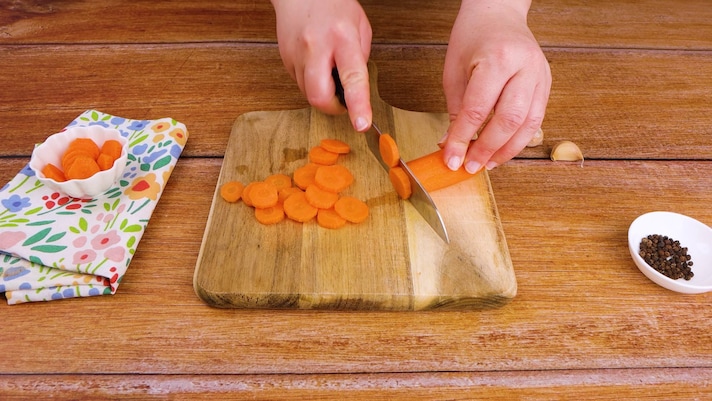
To prepare carrots in oil, first trim the carrots, then peel them and cut them into slices.
To prepare carrots in oil, first trim the carrots, then peel them and cut them into slices.
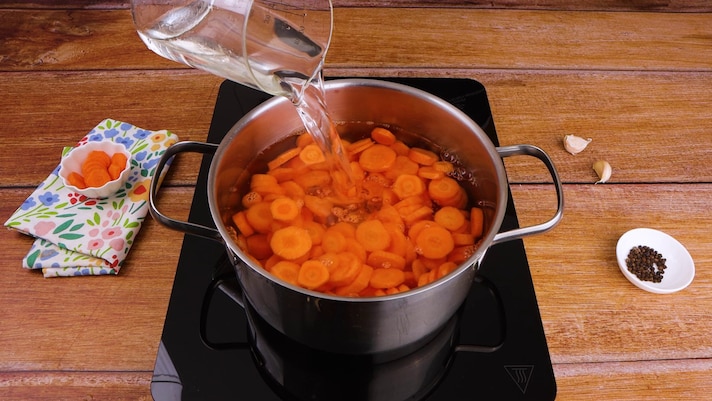
Collect the carrots in a large pot and pour equal quantities of water and vinegar, then let it simmer on the heat for 15 minutes.
Collect the carrots in a large pot and pour equal quantities of water and vinegar, then let it simmer on the heat for 15 minutes.
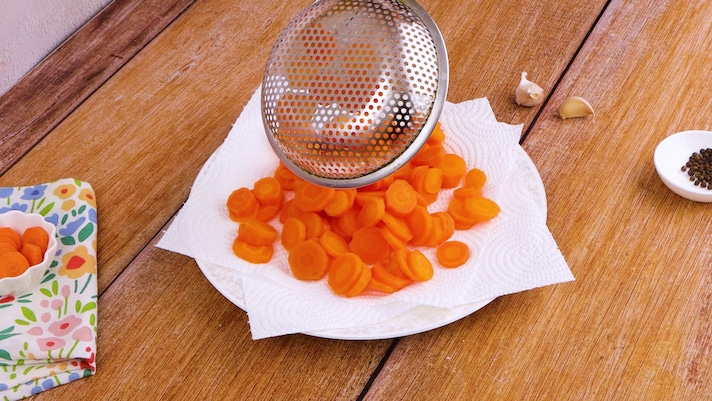
Once the cooking time is up, drain the carrots and leave them to dry on kitchen paper.
Once the cooking time is up, drain the carrots and leave them to dry on kitchen paper.
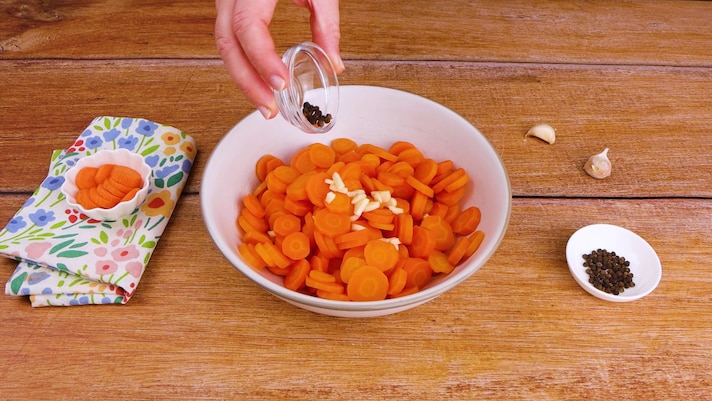
Then transfer the vegetables into a bowl, season with the sliced garlic and flavor with a little peppercorns and a few sprigs of chopped dill.
Then transfer the vegetables into a bowl, season with the sliced garlic and flavor with a little peppercorns and a few sprigs of chopped dill.
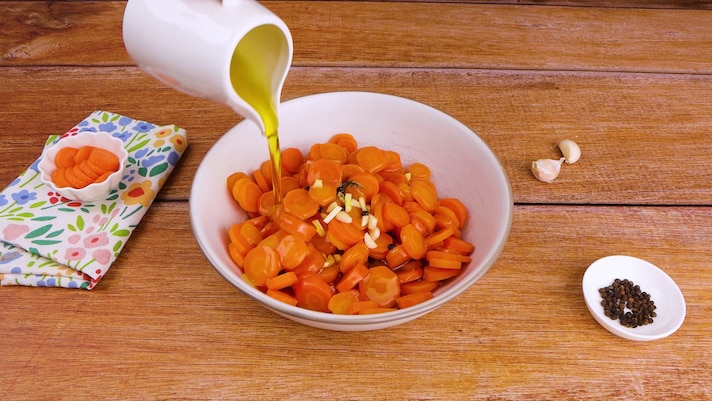
Pour 520 ml of extra virgin olive oil and mix carefully to uniform the ingredients.
Pour 520 ml of extra virgin olive oil and mix carefully to uniform the ingredients.
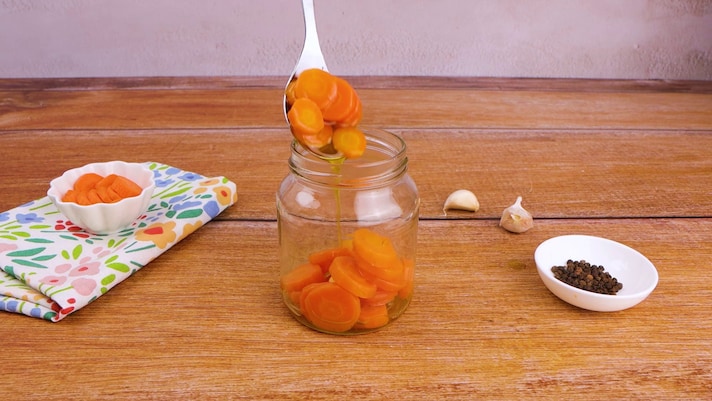
Then transfer the seasoned carrots into sterilized glass jars.
Then transfer the seasoned carrots into sterilized glass jars.
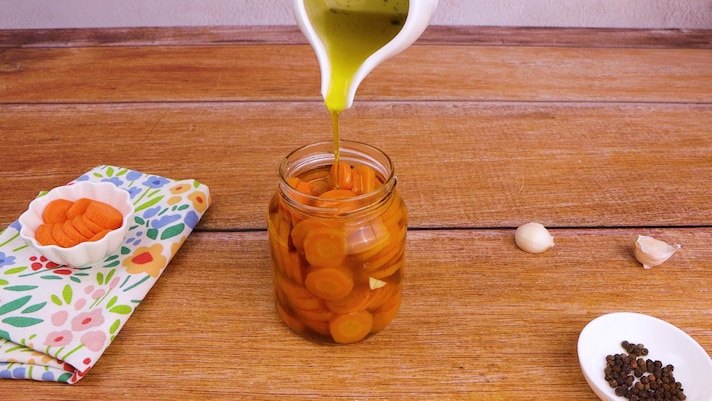
Cover with oil to a drizzle and close hermetically with the screw cap.
Cover with oil to a drizzle and close hermetically with the screw cap.
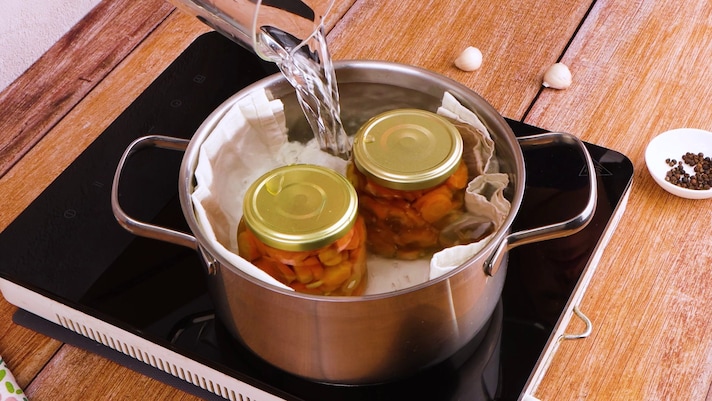
Place the jars in a large pot, wrapped in a tea towel.
Place the jars in a large pot, wrapped in a tea towel.
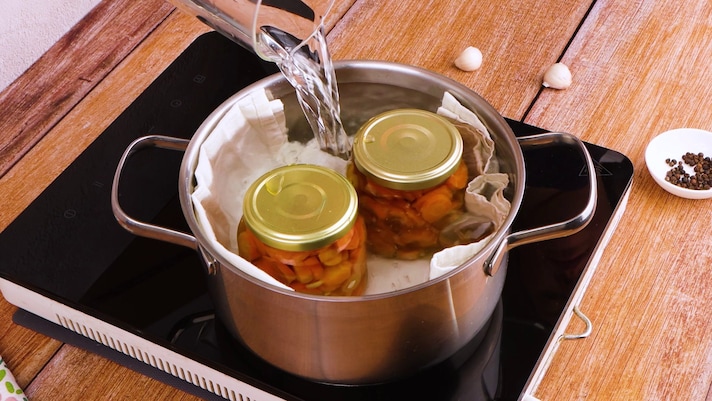
Cover with cold water and let it cook for about 15 minutes from when it starts to boil.
Cover with cold water and let it cook for about 15 minutes from when it starts to boil.
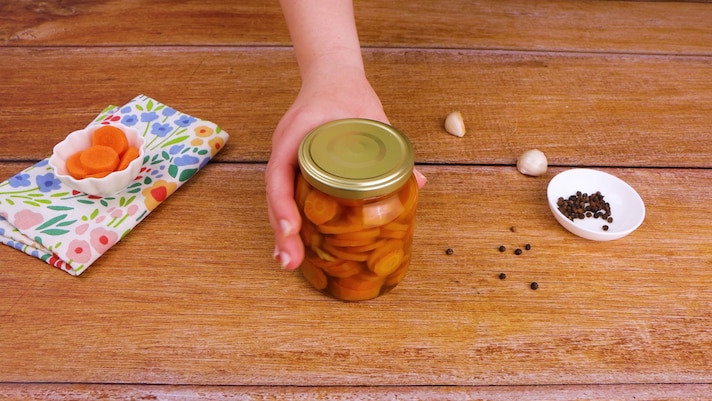
Once finished, remove the pasteurized jars and let them cool on the work surface.
Once finished, remove the pasteurized jars and let them cool on the work surface.
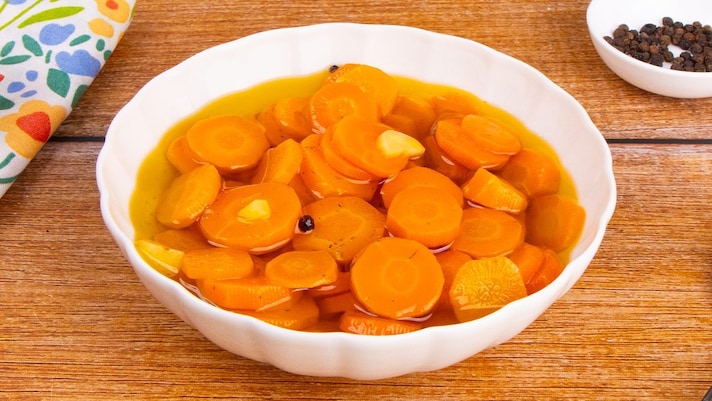
The carrots in oil are ready to be enjoyed!
The carrots in oil are ready to be enjoyed!


