This is one of the old adages of our grandparents: garlic is the solution to all ills. After all, if it defeats vampires, why can't it help humans? Well, the older generations were right about certain things because garlic, in addition to adding flavor to your dishes, can also boost your memory. It seems incredible, but several scientific studies suggest just this.
How Garlic Strengthens Memory According to Science
Sure, your breath might not be happy, but if I told you that you could counteract age-related cognitive decline simply by adding a little garlic to your diet, you might be willing to turn a blind eye (and maybe keep a few mints on hand). But what makes garlic so special for our brains? The answer lies in a substance called allyl disulfide, which is responsible not only for its pungent aroma but also for its beneficial effects on our gut flora.
Allyl disulfide is a major component of garlic essential oil and contributes to its pungent odor and distinctive flavor. The substance is formed from alliin, another compound found in garlic. When garlic is damaged (such as by cutting, crushing, or chewing), alliin comes into contact with an enzyme called alliinase, which converts it to allicin. Allicin is an unstable compound that rapidly decomposes into various other compounds and promotes healthy gut flora. Besides garlic, small amounts of allyl disulfide are also present in other plants of the Allium genus, such as onions and chives.
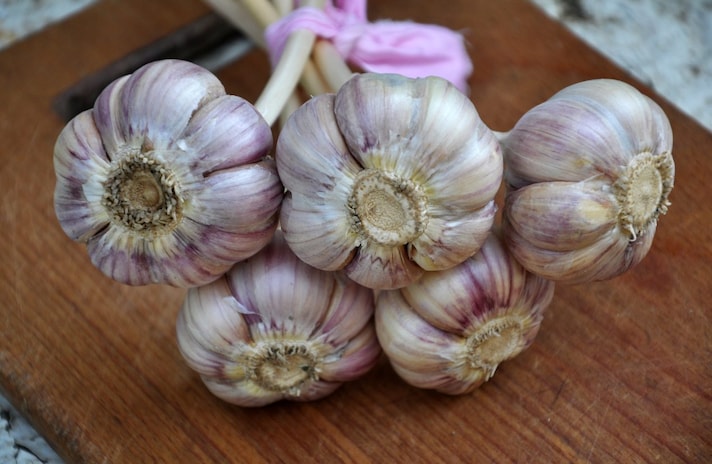
You may be wondering what the gut has to do with memory. Science is increasingly discovering the importance of the so-called "gut-brain axis": a complex communication system between these two organs that influences various cognitive functions, including memory. A study conducted at the University of Louisville in the United States has demonstrated precisely this connection. Researchers led by Jyotirmaya Behera administered garlic to laboratory mice throughout their lives and observed that, even in old age, these mice maintained a better memory than mice that had not consumed garlic. In particular, the "garlic" mice were better at remembering the routes to food. This study, published in the journal Experimental Gerontology, supports the idea that allyl disulfide in garlic promotes healthy gut flora, which in turn positively influences memory. Confirming this, scientists have also observed that people with dementia often present alterations in the composition of their bacterial flora.
Garlic has always been considered a true natural medicine, and its benefits are well known and not limited to memory. We know very well that garlic has antibacterial and antiviral properties, useful for fighting colds and flu. It also helps lower LDL cholesterol and blood pressure. However, it's important to note that most of these studies were conducted in vitro or on animals. Further human research is needed to confirm these effects and determine its efficacy and safety.
Of course, as with any food, it's important to consume garlic in moderation, both to avoid bad breath and to avoid overloading the body and expecting miracles. This type of research always leaves out a sentence because it's taken for granted, but we can't do that: these benefits only work in the context of a balanced diet and a healthy lifestyle, including plenty of exercise and a few small "slips" every now and then. So, next time you prepare a dish, don't forget to add a little garlic. Not only will you make your recipe tastier, but you'll also be doing your memory a favor.
;Resize,width=767;)
