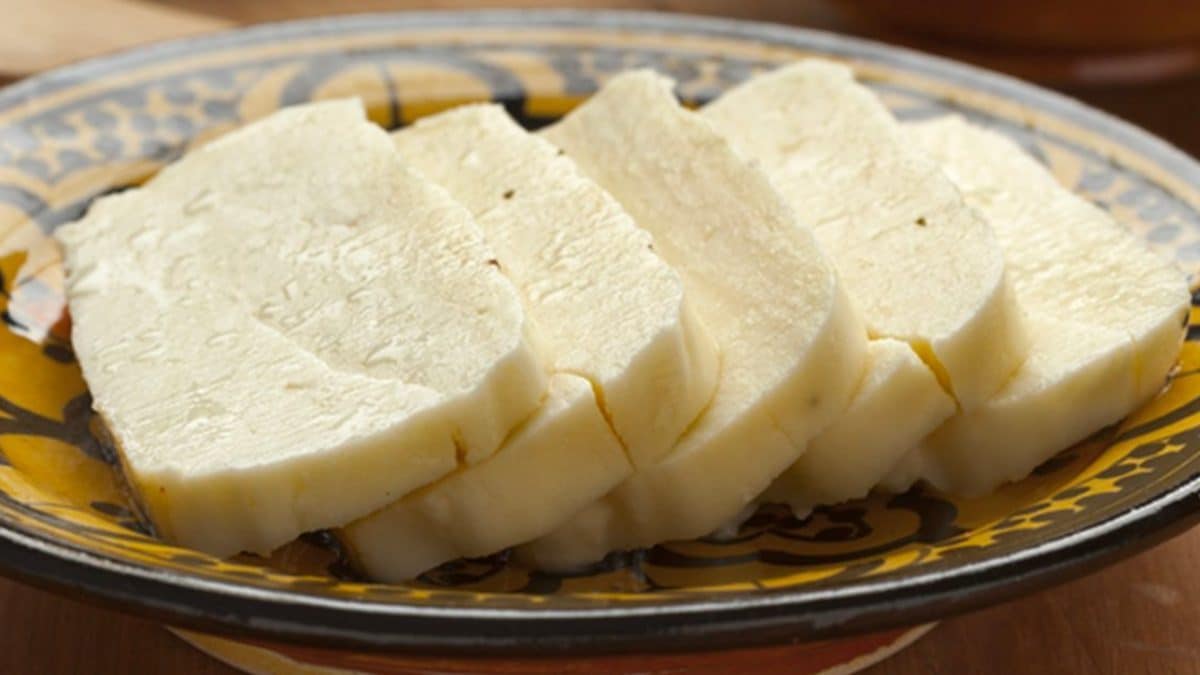
Perhaps not as well-known as its cousin, feta, halloumi is an incredibly delicious and decidedly versatile cheese. Originally from the island of Cyprus, it's made from goat's and sheep's milk and has a unique characteristic: it doesn't melt when cooked, which makes it perfect for a variety of delicious recipes. Let's explore its characteristics and how to prepare it.
Origins and Characteristics
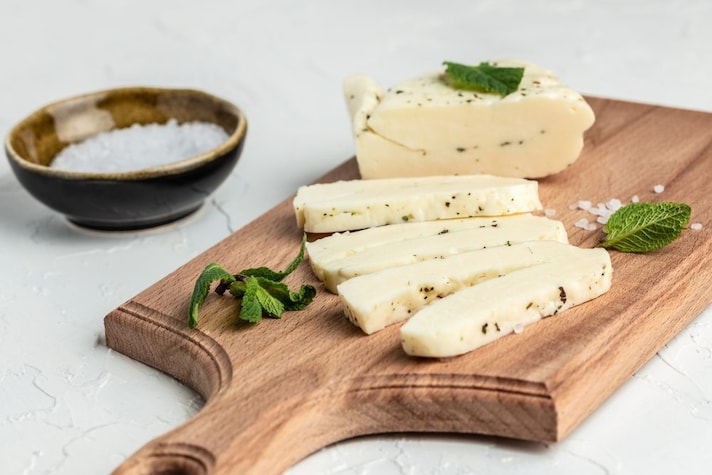
Halloumi/χαλλούμι/hellim (in Cypriot, Greek, and Turkish, respectively) is a cheese with origins dating back to the Byzantine era, around the sixteenth century. It is rectangular in shape, white, semi-hard, and has a flavor somewhat reminiscent of feta: strong, salty, and slightly tart. As mentioned, it is made from a blend of sheep's milk and goat's milk, to which today a smaller percentage of cow's milk is added. During its preparation, it is seasoned with salt and mint, giving it a pleasantly aromatic flavor. One of its main characteristics, making it unique, is that it does not melt when heated: this is because it is cooked during preparation and because it is free of lactobacilli, which are responsible for melting the cheese during cooking. Therefore, although delicious raw, it can be enjoyed grilled or fried without losing its texture.
Halloumi is a good source of protein and calcium and is low in carbohydrates. However, it's also high in sodium and saturated fat, so it's best to consume it sparingly: about 100 grams of product contains 330 kcal and about 26 grams of fat.
Cheese Diplomacy and The PDO Denomination
A product, a symbol of a region, that is slowly gaining importance and notoriety even abroad: this importance was confirmed in April 2021 when the European Commission registered halloumi as a Protected Designation of Origin (PDO). Like any product subject to production regulations, the PDO designation indicates that only cheese produced according to the required standards can be sold within the European Union using this designation.
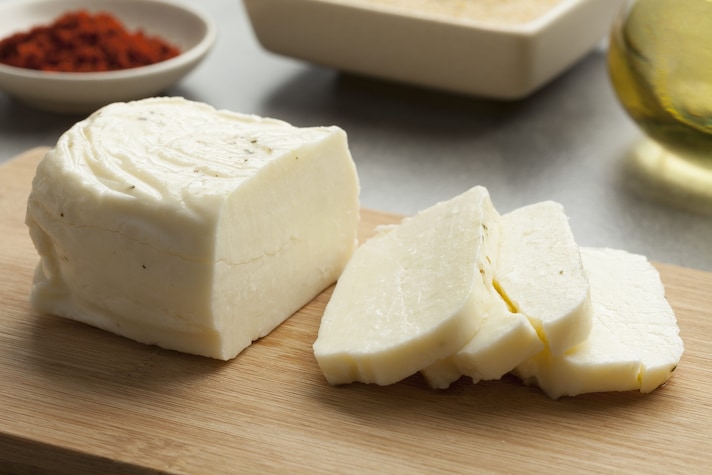
The road to obtaining the denomination was not without obstacles, however: the main controversies concerned above all the type of milk used. In fact, traditionally, halloumi was prepared mainly with sheep's or goat's milk; subsequently, however, the use of cow's milk was introduced, due to its wider availability and the fact that it was cheaper. It was mainly the inhabitants of the Republic of Cyprus – which is distinct from the Turkish Republic of Northern Cyprus – who wanted to introduce the latter type of milk, also considering the large quantities of halloumi exported. On the other hand, the Turkish Cypriots, whose production was mainly intended for local consumption, strongly opposed this desire, stating that they wanted to use only sheep's or goat's milk. An agreement was reached approving the use of cow's milk, although in ever smaller percentages compared to sheep's and goat's milk, as stated in the specifications. This process began in 2015 at the joint request of the two Republics, and only ended in 2021.
This important step marks a small rapprochement between the two parts of Cyprus, which has been dubbed "cheese diplomacy." As reported on the website of the Italian-Cypriot Chamber of Commerce, it aims to "create an opening for dialogue between the two parts of the island, starting from the shared sense of national identity towards the typical dairy product, in order to begin building trust and collaboration."
How is Halloumi Made
The process of making this cheese is quite complex. Let's try to summarize it in a few steps: it begins with heating the milk and then adding rennet; once the curd has formed, it is pressed, divided into portions, and cooked in whey at 195°F/90°C. Once cooked, the cheese is salted and flavored with chopped mint leaves, then folded and left to cool in containers with salted whey.
Halloumi can be sold immediately after its production, in which case we speak of fresh halloumi, or after being left in brine for 40 days, thus obtaining a mature halloumi.
How to Cook It
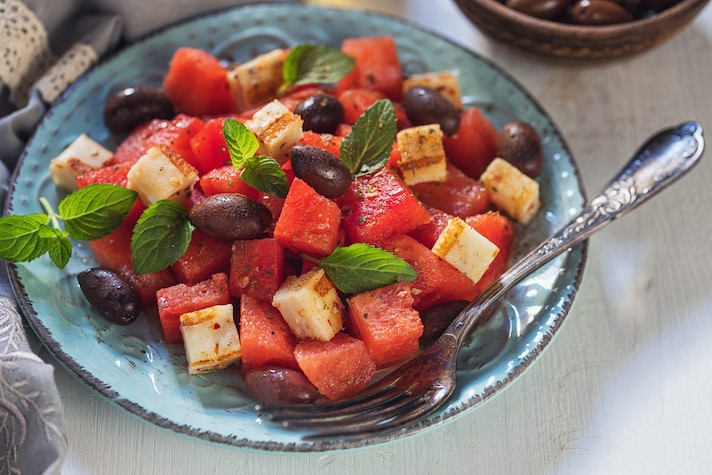
Halloumi is an incredibly versatile food: thanks to its unique ability to not melt during cooking, it's ideal for grilling or frying in oil—perhaps after being breaded —becoming crispy and golden on the outside while remaining soft on the inside. It's also delicious raw, of course, diced into a beautiful summer salad, or even to enhance tasty chicken and vegetable skewers.
Halloumi is also known as the "vegetarian steak" (when prepared with microbial, not animal, rennet) and is perfect with grilled vegetables or in place of a burger in a sandwich. In its native land, however, it is often served with a nice fresh watermelon or fried eggs.
;Resize,width=767;)
