
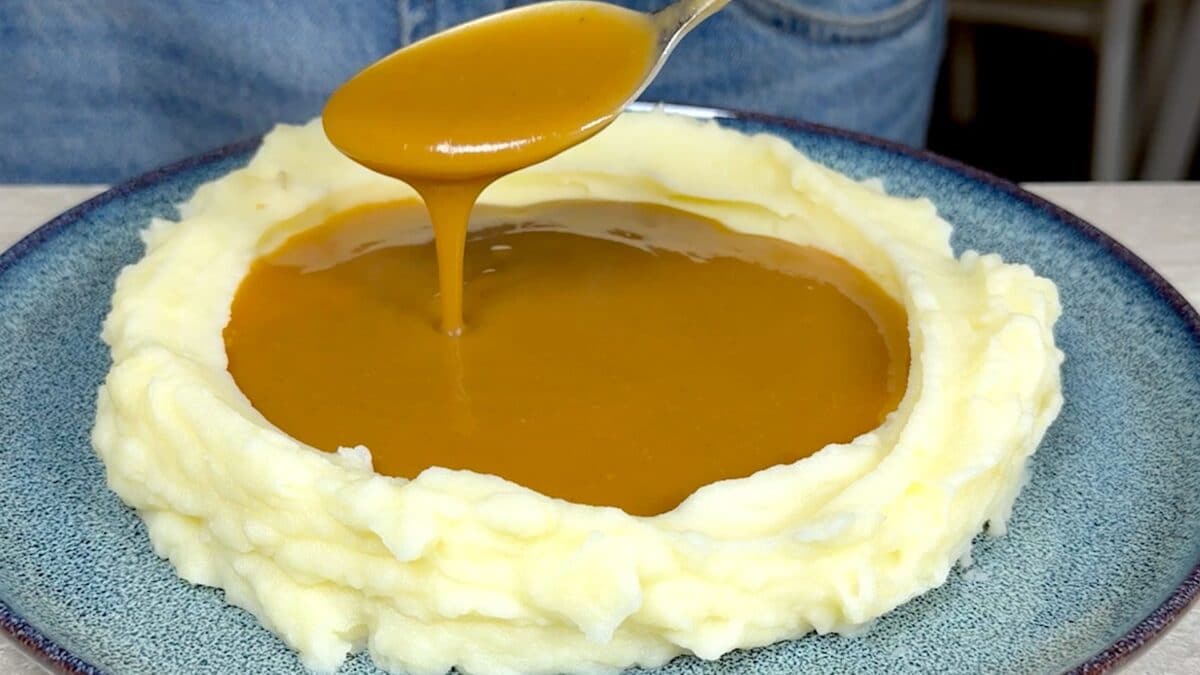
A generous spoonful of homemade beef gravy can transform a simple plate of mashed potatoes or roasted meat into a wonderfully comforting meal.
Rich, velvety, and deeply savory, this brown gravy is made from scratch using beef broth, butter, flour, onions, carrots, and aromatic herbs.
Unlike traditional gravy recipes that rely on the juices left behind after roasting meat, this version doesn't require any pan drippings. Slowly sautéed vegetables build a flavorful base, while Worcestershire sauce adds an extra layer of savory richness.
The flour is lightly toasted in butter before the broth is incorporated, giving the sauce its characteristic color and creamy consistency.
Once simmered and strained, the gravy becomes beautifully smooth and ready to pour over your favorite dishes.
What Is Gravy?
Gravy is a savory sauce traditionally prepared using the juices released by meat during cooking, often thickened with flour or another starch.
It's particularly popular in British and American cuisine, where it's commonly served with roasted meats, mashed potatoes, and other comfort food classics.
Brown gravy typically gets its color and flavor from meat drippings, browned flour, beef stock, or a combination of these ingredients.
However, making gravy without drippings is entirely possible.
This recipe uses a roux-style thickening technique, combining butter and flour with sautéed vegetables before gradually adding beef broth.
The sauce is then simmered with aromatic herbs and Worcestershire sauce to develop its flavor.
Unlike rustic gravies that retain pieces of onion or other vegetables, this version is strained before serving, creating a refined, silky consistency.
Why Everyone Will Love This Recipe
The best thing about this homemade gravy is that you don't need to cook a roast before making it. A good beef broth and a handful of everyday ingredients are enough to create a flavorful sauce from scratch.
Slowly cooking the onion and carrot brings out their natural sweetness, balancing the savory richness of the broth. Worcestershire sauce adds depth, while bay leaf and rosemary provide a delicate herbal fragrance.
The texture is equally satisfying. Thick enough to coat a spoon but smooth enough to pour, this gravy works beautifully with everything from roast beef to meatloaf.
It's also a versatile recipe that can be prepared ahead of time, making it especially convenient for Sunday dinners, Thanksgiving, and other holiday meals.
Tips for Making the Best Homemade Beef Gravy
- Don't rush the vegetables. Slowly sautéing the onion and carrot for 10–15 minutes develops their sweetness and creates a more flavorful foundation for the gravy.
- Toast the flour before adding the broth. Cook it until it reaches a light amber color to eliminate its raw taste and give the gravy a deeper flavor.
- Add the broth gradually. Pour it in a little at a time while whisking continuously. This helps prevent lumps and creates a smooth consistency.
- Season the gravy at the end. Beef broth and Worcestershire sauce already contain salt. Taste the sauce after reducing it to avoid making it overly salty.
Frequently Asked Questions
Can You Make Beef Gravy Without Meat Drippings?
Absolutely. Beef broth provides a savory foundation, while butter, toasted flour, aromatic vegetables, and Worcestershire sauce help develop a rich flavor without the need for roasting juices.
What Is the Difference Between Beef Gravy and Brown Gravy?
Beef gravy is generally made with beef broth, stock, or beef drippings. Brown gravy is a broader term that can describe sauces made with different meat stocks or browned ingredients. Beef gravy is therefore a type of brown gravy.
Can You Use Beef Stock Instead of Beef Broth?
Yes. Beef stock is an excellent alternative and may give the gravy a fuller body, particularly if it contains naturally occurring gelatin. Low-sodium or unsalted stock allows for better control over the seasoning.
Why Is My Homemade Gravy Lumpy?
Lumps usually form when the liquid is added too quickly to the flour mixture. Gradually incorporating the broth while whisking helps prevent this problem. Passing the finished gravy through a fine-mesh strainer can also remove small remaining lumps.
How Do You Thicken Gravy That Is Too Thin?
Allow the gravy to simmer uncovered for a few more minutes so that excess liquid evaporates. If it becomes too thick, simply whisk in a small amount of warm beef broth until it reaches the desired consistency.
What Can You Serve With Beef Gravy?
Homemade beef gravy pairs beautifully with roast beef, steak, meatloaf, Salisbury steak, mashed potatoes, roasted vegetables, and Yorkshire pudding. It's also delicious spooned over French fries or served alongside a traditional Sunday roast.
How to Store
Allow the leftover beef gravy to cool slightly, then transfer it to an airtight container and refrigerate within two hours of cooking.
Store in the refrigerator for up to 3–4 days.
The gravy will naturally thicken as it cools, so don't worry if its refrigerated consistency is considerably firmer.
To reheat, transfer it to a small saucepan and warm it gently, whisking frequently. Add a splash of beef broth or water if necessary to restore its original consistency.
Bring the gravy to a rolling boil when reheating, then serve hot.
How to Freeze
Homemade beef gravy can be frozen for up to 3 months for the best quality.
Once cooled, transfer it to a freezer-safe container, leaving a little space at the top to allow for expansion.
Alternatively, freeze the gravy in small individual portions so you can defrost only what you need.
Thaw overnight in the refrigerator before reheating in a saucepan.
Flour-thickened gravy may separate slightly or develop a different consistency after freezing. Whisk it thoroughly as it reheats and add a little beef broth if necessary to restore its smooth texture.
Ingredients
How to make Homemade Beef Gravy

Begin by peeling the onion and carrot, then slice both vegetables finely. Cutting them into thin, evenly sized pieces helps them soften and release their flavor during cooking.
Begin by peeling the onion and carrot, then slice both vegetables finely. Cutting them into thin, evenly sized pieces helps them soften and release their flavor during cooking.

Place the butter in a saucepan or heavy-bottomed skillet and melt it gently over low heat.
Place the butter in a saucepan or heavy-bottomed skillet and melt it gently over low heat.

Once melted, add the sliced onion and carrot.
Sauté the vegetables slowly for approximately 10–15 minutes, stirring occasionally to prevent them from sticking or browning too quickly.
The vegetables should become soft and lightly golden, developing a delicate sweetness that will give the finished gravy additional depth.

At this point, sprinkle the all-purpose flour over the sautéed vegetables.
Stir continuously with a wooden spoon or heat-resistant spatula, allowing the flour to absorb the butter and combine with the vegetables.
Continue cooking for a few minutes, until the flour takes on a light amber color and loses its raw aroma.
Be careful not to let it burn, as this would give the gravy an unpleasant bitter taste.

Gradually begin pouring in the beef broth, adding a small amount at a time while whisking or stirring continuously.
Allow each addition to incorporate before pouring in more broth. The mixture may initially become quite thick, but it will gradually loosen as the remaining liquid is added.
Gradually begin pouring in the beef broth, adding a small amount at a time while whisking or stirring continuously.
Allow each addition to incorporate before pouring in more broth. The mixture may initially become quite thick, but it will gradually loosen as the remaining liquid is added.

Once all the broth has been incorporated, add the bay leaf, rosemary sprig, and Worcestershire sauce.
Stir well and bring the mixture to a gentle simmer.
Reduce the heat and allow the gravy to cook uncovered for approximately 10–20 minutes, stirring occasionally.
Once all the broth has been incorporated, add the bay leaf, rosemary sprig, and Worcestershire sauce.
Stir well and bring the mixture to a gentle simmer.
Reduce the heat and allow the gravy to cook uncovered for approximately 10–20 minutes, stirring occasionally.

Once the desired consistency has been reached, remove the saucepan from the heat and discard the bay leaf and rosemary sprig.
Place a fine-mesh strainer over a clean bowl or saucepan.
Carefully pour the gravy through the strainer, using the back of a spoon to gently press the softened vegetables and extract as much flavorful liquid as possible.

Give the sauce one final stir until smooth and glossy.
Give the sauce one final stir until smooth and glossy.
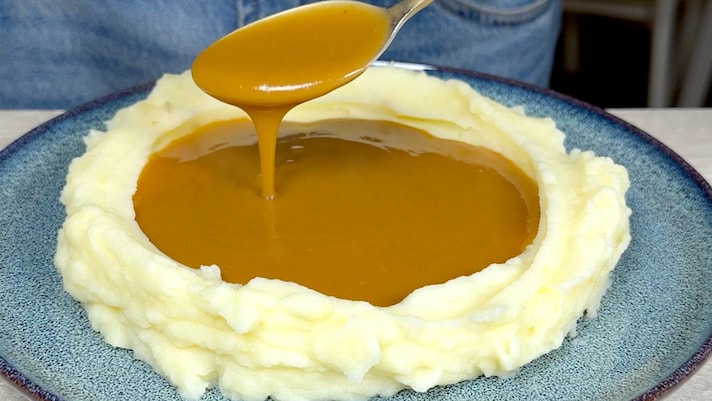
Transfer the homemade beef gravy to a warmed gravy boat and serve immediately, pouring it generously over roasted meat, creamy mashed potatoes, or your favorite comfort food dishes.
Transfer the homemade beef gravy to a warmed gravy boat and serve immediately, pouring it generously over roasted meat, creamy mashed potatoes, or your favorite comfort food dishes.


