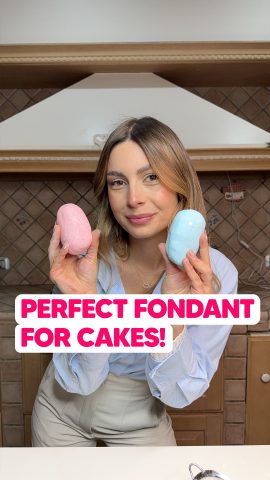
Making fondant at home might seem like something best left to professional cake decorators, but the process is surprisingly straightforward. With a few carefully measured ingredients, it's possible to create a smooth, flexible sugar paste that rolls easily and can be shaped into all kinds of decorations.
This homemade fondant recipe combines powdered sugar with gelatin, glucose syrup, butter, and food-grade glycerin. Together, these ingredients create a pliable dough that can be kneaded, rolled, and molded without becoming excessively brittle.
The real secret isn't a complicated technique. It's knowing how much powdered sugar to add, how gently to heat the gelatin mixture, and when to stop kneading.
Whether you're covering a birthday cake or making small edible decorations, this easy fondant recipe is a useful addition to any home baker's collection.
What Is Fondant?
Fondant is a smooth, sugar-based icing used to cover cakes and create edible decorations. Unlike buttercream, which is spread onto a cake, rolled fondant has a dough-like consistency that allows it to be rolled into thin sheets and draped over a cake's surface.
There are several types of fondant, including poured fondant, rolled fondant, and marshmallow fondant.
This recipe is a traditional-style gelatin-based rolled fondant, sometimes called sugar paste. It uses gelatin for structure and glucose syrup and glycerin to help create a workable texture.
Fondant is particularly popular for celebration cakes because it creates a smooth, polished finish and can be shaped into decorative elements.
Why Everyone Will Love This Recipe
Homemade fondant gives you control over the texture. Instead of working with a premade product that may feel too firm, you can adjust the consistency gradually as you knead.
The ingredients are also relatively simple. Powdered sugar provides structure, gelatin helps the fondant hold together, glucose syrup improves flexibility, and glycerin helps prevent the dough from drying out too quickly.
Another advantage is versatility. The finished sugar paste can be rolled into sheets for covering cakes or shaped into simple decorations, bows, and cutout designs.
And because the recipe starts with white fondant, it's easy to customize with concentrated food coloring when you want different shades.
Tips for Making Soft and Stretchy Fondant
- Never boil the gelatin mixture. Heat it gently, just until the gelatin, butter, and glucose syrup have dissolved. Excessive heat can affect the mixture's consistency.
- Add powdered sugar gradually. Don't incorporate all the extra kneading sugar automatically. Stop when the fondant feels smooth, pliable, and only slightly tacky.
- Use food-grade glycerin. It helps maintain flexibility and reduces the tendency of the fondant to dry out and crack.
- Keep the fondant tightly wrapped. Exposure to air causes sugar paste to form a dry outer layer, making it more difficult to knead and roll.
Frequently Asked Questions
How Do You Make Homemade Fondant More Elastic?
Glucose syrup and food-grade glycerin help keep fondant flexible, while proper kneading develops a smooth, workable consistency. Avoid adding excessive powdered sugar, which can make the dough stiff and prone to cracking.
Why Is My Homemade Fondant Cracking When I Roll It?
Fondant may crack if it contains too much powdered sugar, has dried out, or hasn't been kneaded enough before rolling. Knead it gently until pliable. If necessary, work in a very small amount of food-grade glycerin to improve flexibility.
Why Is My Fondant Too Sticky?
Sticky fondant usually needs a little more powdered sugar or time to firm up. Add sifted powdered sugar gradually while kneading, using only enough to make the dough manageable.
Can You Use Honey Instead of Glucose Syrup in Fondant?
Yes. The original recipe allows mild honey as an alternative to glucose syrup. Choose a light-colored honey with a delicate flavor, keeping in mind that it may slightly change the fondant's taste and color.
What Is CMC Powder Used for in Fondant?
CMC, or carboxymethyl cellulose, is a food-grade thickening and stabilizing ingredient used in sugar paste and cake decorating. It can make fondant firmer and more suitable for certain shaped decorations. Use it sparingly, as too much can make the paste difficult to roll.
Can You Color Homemade Fondant?
Yes. Gel or paste food coloring is generally preferable to liquid coloring because it adds concentrated color without introducing too much extra moisture. Knead the coloring into the finished fondant until evenly distributed.
How to Store
Wrap the finished homemade fondant tightly in plastic wrap, pressing out as much air as possible. Place the wrapped fondant inside an airtight container and keep it in a cool, dry place away from direct sunlight and heat.
The supplied recipe recommends storing the fondant at room temperature for up to 10 days. This should be treated as a recipe-specific guideline rather than a guaranteed shelf life, since storage conditions, ingredient handling, and the final moisture content can vary.
Before using stored fondant, unwrap it and knead until smooth and pliable. If it feels firm, warm it gently with your hands as you work.
Avoid leaving fondant uncovered, as the surface can dry out quickly.
How to Freeze
Freezing homemade fondant is generally not recommended when the goal is a perfectly smooth cake covering. Condensation during thawing can make the surface sticky and affect its texture.
For the best results, prepare the fondant close to when you plan to use it and store it tightly wrapped at room temperature according to the recipe's storage guidance.
If freezing is necessary, wrap the fondant thoroughly in several layers of plastic wrap and place it in an airtight freezer-safe container. Freeze for up to 1 month as a quality guideline.
Thaw the fondant while it is still wrapped, allowing it to return gradually to room temperature before opening the package. Knead thoroughly before use, and check that its texture is suitable for rolling.
Ingredients
How to make Homemade Fondant

Start by placing the cold water in a small bowl. Add the gelatin sheets, making sure they are fully submerged, and leave them to soak for approximately 10 minutes, or until completely softened.
Start by placing the cold water in a small bowl. Add the gelatin sheets, making sure they are fully submerged, and leave them to soak for approximately 10 minutes, or until completely softened.

Meanwhile, sift the powdered sugar into a large bowl. This helps remove any lumps and gives the finished fondant a smoother consistency.
Meanwhile, sift the powdered sugar into a large bowl. This helps remove any lumps and gives the finished fondant a smoother consistency.

Transfer the softened gelatin together with its soaking water to a small saucepan. Add the butter, glucose syrup, and food-grade glycerin.
Transfer the softened gelatin together with its soaking water to a small saucepan. Add the butter, glucose syrup, and food-grade glycerin.

Place the saucepan over low heat and stir gently until the gelatin dissolves and the butter and glucose syrup melt into a smooth, uniform mixture.
Do not allow the mixture to boil. As soon as everything is fully melted and combined, remove the saucepan from the heat.
Place the saucepan over low heat and stir gently until the gelatin dissolves and the butter and glucose syrup melt into a smooth, uniform mixture.
Do not allow the mixture to boil. As soon as everything is fully melted and combined, remove the saucepan from the heat.

Place a little more than half of the sifted powdered sugar into the bowl of a stand mixer fitted with the paddle attachment. If you're working by hand, use a large mixing bowl and a sturdy wooden spoon.
Place a little more than half of the sifted powdered sugar into the bowl of a stand mixer fitted with the paddle attachment. If you're working by hand, use a large mixing bowl and a sturdy wooden spoon.

Create a small well in the center of the sugar, then pour in the warm gelatin mixture.
Begin mixing on low speed, or stir steadily with the wooden spoon, gradually incorporating the powdered sugar into the liquid.
As the ingredients come together, the mixture will begin to thicken and form a soft, sticky dough.

Continue adding the remaining powdered sugar from the initial 700 g, one tablespoon at a time, mixing between additions. The dough should gradually become more cohesive and begin pulling away from the sides of the bowl.
Continue adding the remaining powdered sugar from the initial 700 g, one tablespoon at a time, mixing between additions. The dough should gradually become more cohesive and begin pulling away from the sides of the bowl.

Once the mixture is too thick to stir comfortably, transfer it to a clean work surface lightly dusted with some of the additional powdered sugar.
Begin kneading the fondant by hand, folding and pressing it repeatedly until the texture becomes smooth and elastic.
Once the mixture is too thick to stir comfortably, transfer it to a clean work surface lightly dusted with some of the additional powdered sugar.
Begin kneading the fondant by hand, folding and pressing it repeatedly until the texture becomes smooth and elastic.

The goal is a fondant that feels soft, smooth, and pliable, rather than dry or stiff. Although up to 300 g of extra powdered sugar is available for kneading, you may not need all of it.
Continue kneading until the fondant holds together in a smooth ball and can be stretched gently without immediately tearing. Wrap it immediately in plastic wrap, pressing the film directly against the surface to eliminate as much trapped air as possible. Place the wrapped fondant inside an airtight container and keep it in a cool, dry place until ready to use.

When it's time to decorate, unwrap the fondant and knead it briefly to restore its flexibility. Roll it out on a lightly dusted work surface, using just enough powdered sugar to prevent sticking.
When it's time to decorate, unwrap the fondant and knead it briefly to restore its flexibility. Roll it out on a lightly dusted work surface, using just enough powdered sugar to prevent sticking.
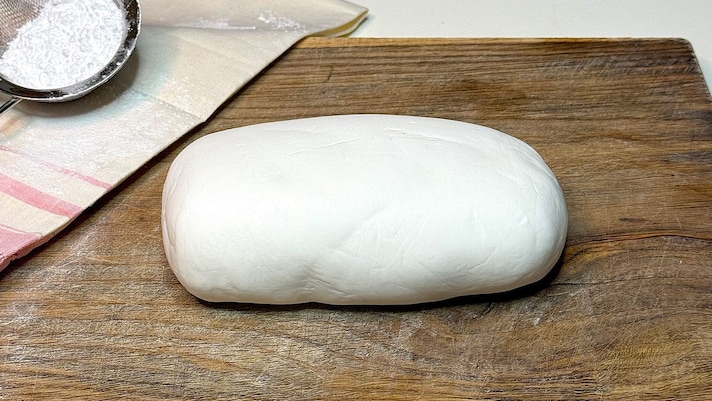
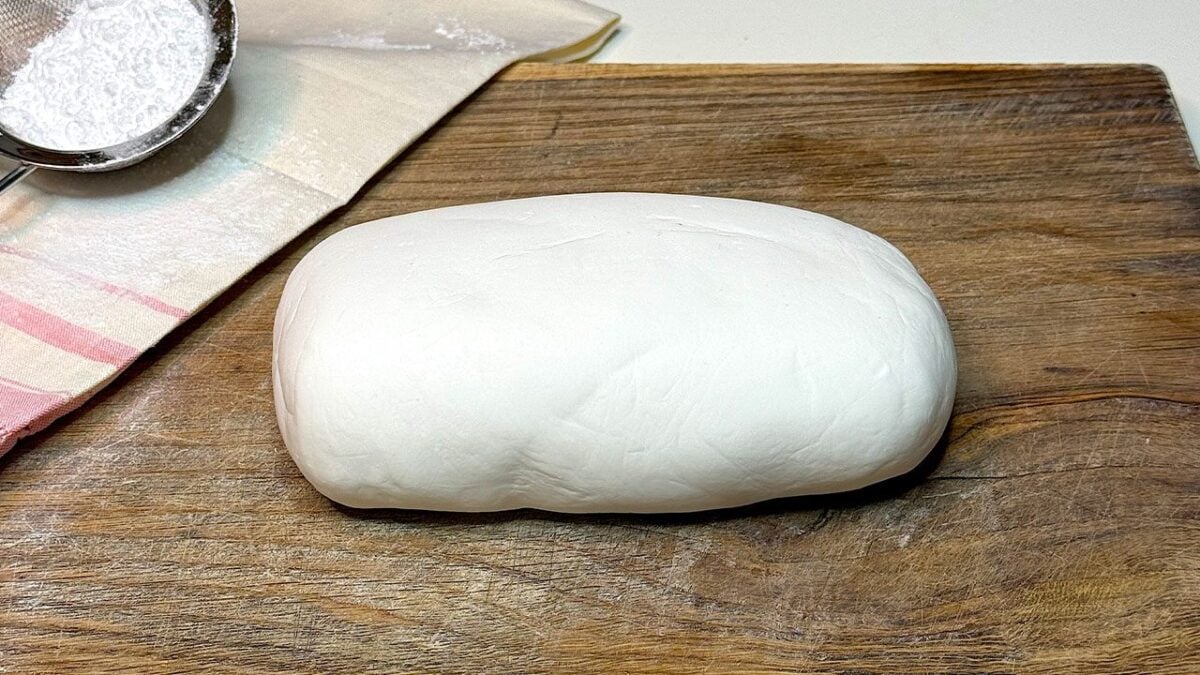
The finished homemade fondant should be smooth, soft, and easy to shape, making it suitable for covering cakes, cutting decorative shapes, and creating simple edible decorations.
The finished homemade fondant should be smooth, soft, and easy to shape, making it suitable for covering cakes, cutting decorative shapes, and creating simple edible decorations.


