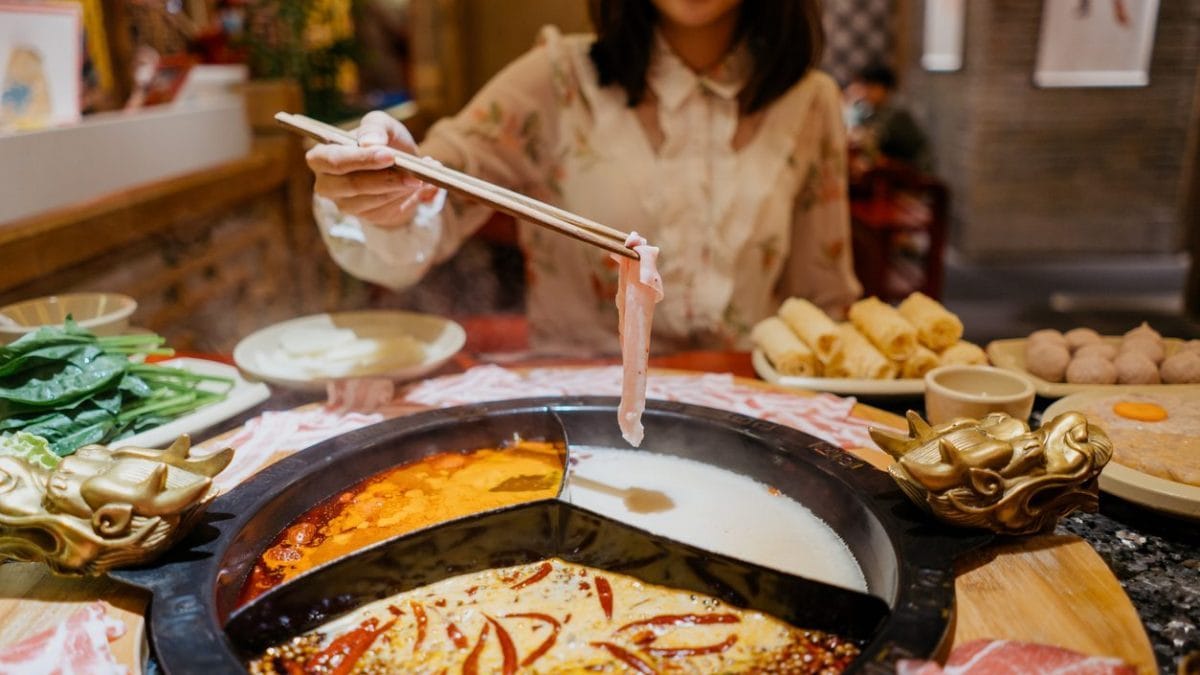
If you've traveled to Asia and visited countries like China, Japan, or Korea, you've undoubtedly seen a large pot with a small burner set up directly on the table. At first glance, it might seem like just a curious way of cooking, but the reality behind it is much more. We're talking about one of the most famous and fascinating convivial rituals of Asian cuisine: Chinese hot pot or Japanese shabu-shabu. Two dishes that seem similar, but they tell different stories and cultures. A custom much loved by tourists, too, that tells of a meal that transforms into a cultural experience before a gastronomic one. Let's take a look at it together.
What is Chinese Hot Pot?
If you're planning a visit to the Great Wall or Tiananmen Square in Beijing, you should definitely treat yourself to a hot pot dinner before leaving China. In Chinese, it's pronounced (火锅, huǒ guō), literally "fire pot," and it's an ancient tradition that dates back over a thousand years, during the Jin Dynasty (265-420 AD). Often eaten in the winter months to withstand the bitter cold, some say it was a culinary practice imported by the Mongol horsemen who invaded China. With the Tang Dynasty (618-906 AD), it then spread to the north of the country, and then throughout China with the Qing Dynasty.
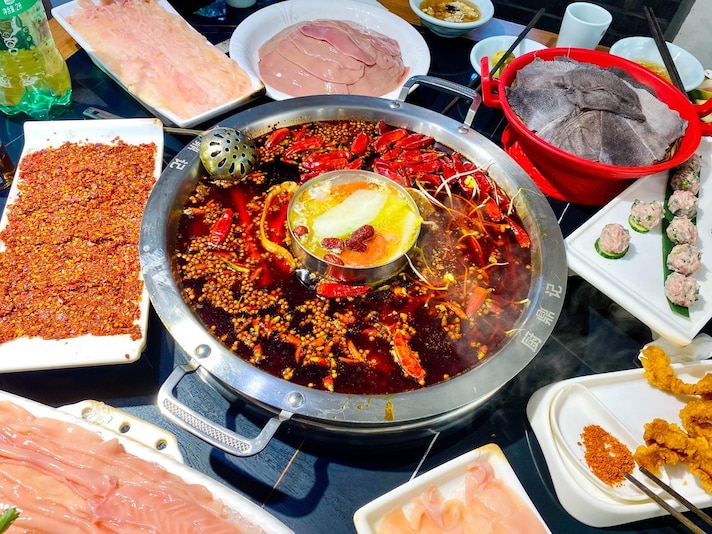
Today, the most famous and renowned version comes from the Sichuan region, already renowned for its spicy cuisine, and it's a dish so spicy it actually makes your lips numb. It essentially consists of this large pot, divided into two compartments, placed in the center of the table, in which two types of broth simmer. One compartment is super spicy, the other milder. Very thin slices of meat are served, a cut similar to that used for carpaccio, and diners themselves begin cooking them by dipping them into one of the two broths. Vegetables such as mushrooms, Chinese cabbage, and even tofu are then cooked alongside the meat. In short, hot pot is a culinary experience not to be missed.
What is Japanese Shabu-Shabu?
Japan's answer to hot pot is called shabu-shabu. Japan, with its penchant for refinement, has transformed the concept of the Chinese fire pot into something essential and minimalist.
This method of cooking meat originated in the 1950s in Osaka, and is clearly inspired by traditions from China and Mongolia. If you've never heard of it, you've surely been intrigued by the name. Well, you should know that it's nothing more than the "onomatopoeic reproduction" of the motion made by quickly moving the meat in the broth.
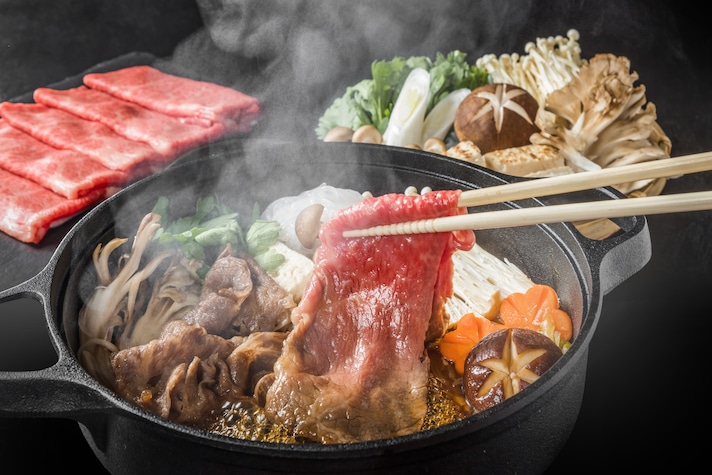
Here you won't find the explosive spices you find in China, but a clear, almost neutral broth, in which very thin slices of wagyu or pork are immersed, along with vegetables and tofu. After a few seconds of cooking, the meat is enjoyed dipped in a delicate sauce made from ponzu and sesame seeds.
Hot Pot Vs. Shabu-Shabu
To the untrained eye, hot pot and shabu shabu might seem the same, but they're actually different. The Chinese version, which is the original, is an explosion of flavors, spiciness, colors, and variety. Multiple broths at the same table, diverse ingredients, and a raucous conviviality make for a fantastic evening.
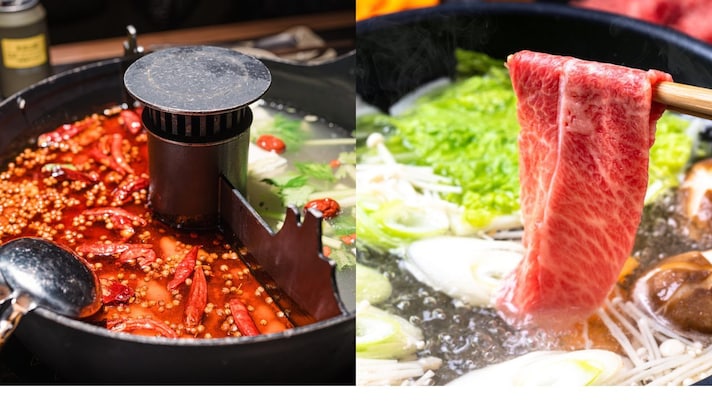
Shabu shabu, on the other hand, is a light broth, a few delicate ingredients, and an almost collective ritual of moving the meat in boiling water. In China, the broth takes center stage, lending intense flavor to each ingredient; in Japan, the broth further enhances the premium meat, Wagyu, which takes center stage. In short, two ways of experiencing the table, but both capable of transforming a dish into an unforgettable experience.
;Resize,width=767;)
