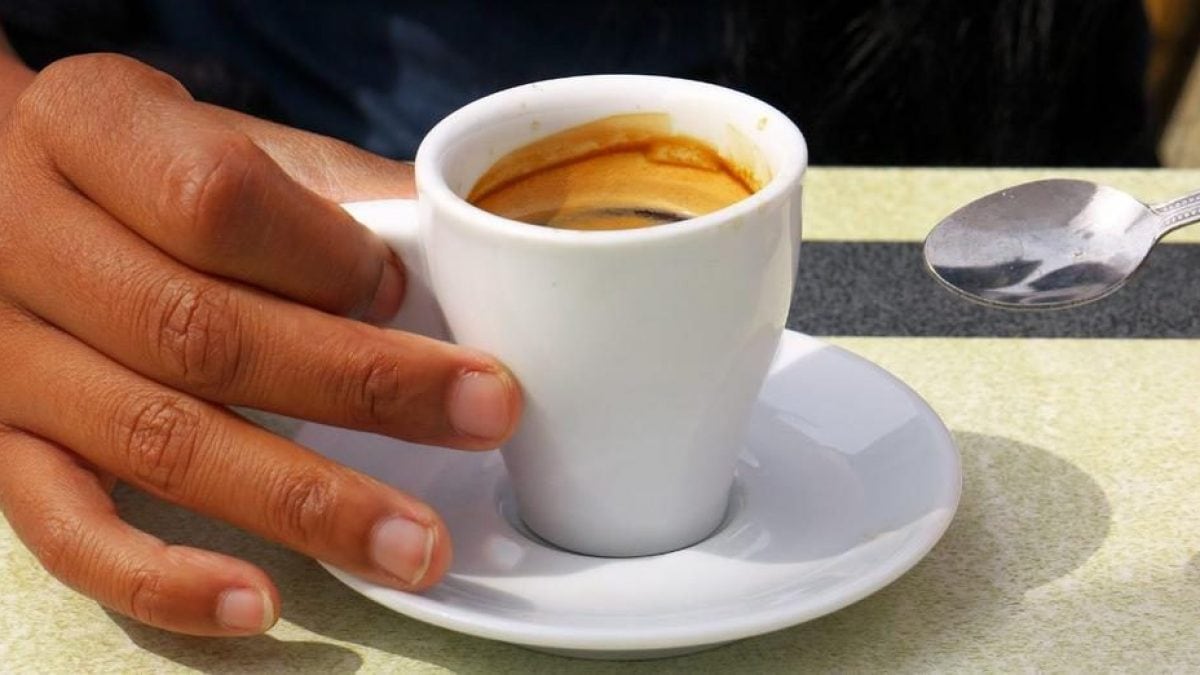
Just as lactose-free milk still contains a small amount of lactose, decaffeinated coffee isn't completely caffeine-free. This information may surprise those accustomed to drinking decaf, but unfortunately it's true: there's currently no method to completely extract the caffeine from the bean. But how much caffeine does decaf contain? Can we still drink it if caffeine causes us problems?
How Much Caffeine is in Decaf Coffee?
Everyone love coffee, even those who don't tolerate caffeine well: in addition to being a centuries-old part of our tradition, coffee also has many benefits. Unfortunately, however, it also has just as many side effects, especially if consumed in excess, such as nervousness, insomnia, hand tremors, and headaches (especially when we suddenly stop drinking). Currently, however, there is no method that allows us to completely eliminate caffeine from coffee.
By law, the maximum caffeine content in a decaffeinated bean must be less than 0.1% by weight for raw or roasted coffee, rising to 0.3% for freeze-dried coffee or coffee extract. For comparison, Arabica coffee beans have a caffeine content of 0.6%–1.5%, while Robusta beans (two different botanical species) have a caffeine content of 1.2%–3.5%. In practice, by law, 97–98% of the caffeine in decaffeinated coffee should be removed.
What if we wanted to understand the amount of caffeine contained in a decaffeinated espresso? We asked Simone Amenini, director of Scuola del Caffè: "For a 25-30 ml cup of espresso, we can roughly estimate that it contains about 80-100 mg of caffeine per cup of traditional espresso, compared to the 5 mg of caffeine contained in decaffeinated espresso. A cup of specialty espresso, on the other hand, contains about 60-70 mg of caffeine." What does this mean? Can someone with caffeine issues drink decaffeinated coffee?
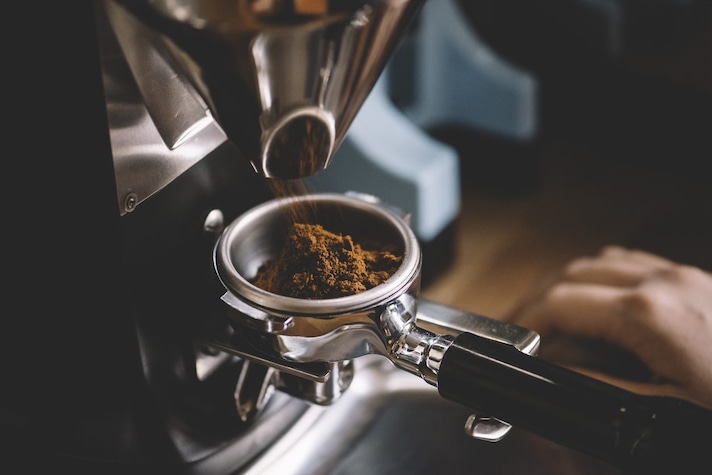
Let's say that, as always, it's a matter of common sense: if you drink decaf in the morning, you'll have plenty of time to process a small amount of caffeine, no matter how sensitive you are. Of course, this "rule" only applies to insomnia, nervousness, and tremors, but not to gastrointestinal problems: many factors contribute to these types of discomforts, and we can't limit ourselves to considering caffeine alone. If you have stomach problems, we suggest avoiding coffee altogether, whether regular or decaf.
How is Decaf Coffee Made?
To obtain a decaffeinated coffee from espresso coffee, various methods are used: however, none of these guarantee that the decaffeinated coffee is totally free of caffeine.
- Classic system. The raw coffee is soaked in water to swell the beans: they are then immersed in dichloromethane, a substance that removes caffeine but allows other elements to pass through. It is a highly volatile solvent, evaporating at 105°F/40°C and is therefore easily removed from the coffee by water vapor. With this method, the quality of the product obtained is very high, as it does not affect the organoleptic characteristics of the coffee and also makes it "dewaxed," meaning it removes all the waxes present on the surface of the raw coffee bean. In other cases, ethyl acetate is used, a natural substance also found in fruit, but which has two drawbacks: it leaves a fruity odor in the coffee and is highly flammable.
- Water extraction. Green coffee beans are immersed in very hot water, which almost completely removes the caffeine and the coffee's sensory characteristics. The water is then filtered through activated carbon filters, which allow other substances to pass through while retaining the caffeine. This is therefore a "natural" method that does not use chemicals, but it does cause the coffee to lose some of its characteristics.
- Carbon dioxide. The most complex method for removing caffeine from coffee is using carbon dioxide (although it remains a natural method). It does so by exploiting the change in state of carbon dioxide from liquid to gas: under a specific condition, namely 72.8 atmospheres, the liquid and the gas have the same density, and so the resulting carbon dioxide is an excellent solvent for caffeine. This method allows for a high-quality decaffeinated coffee, but it is very expensive and therefore not used very often.
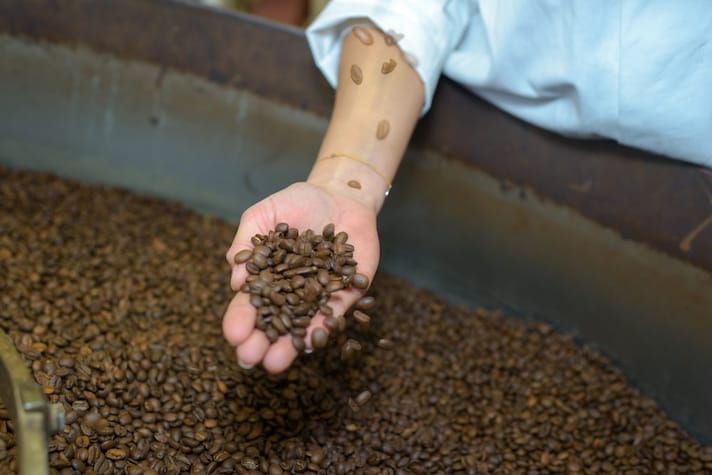
What is The Maximum Amount of Caffeine Per Day?
Nutritionists and experts identify a safe daily intake of 400 mg of caffeine, equivalent to about five cups of espresso. Although this may seem like a wide margin, it's not uncommon to exceed these doses. There are several contraindications to excessive coffee consumption, as well as warning signs: insomnia and gastrointestinal problems, first and foremost, but also excessive nervousness, hand tremors, and frequent migraines.
;Resize,width=767;)
