
Prosecco is the best-selling Italian sparkling wine in the world, especially in the United States, where it now accounts for 31% of Italian wine sales. A success story that began fifteen years ago, which has seen this local sparkling wine conquer record after record, thanks in part to the redefinition of the production pyramid – with the introduction of specific denominations (such as Conegliano Valdobbiadene Prosecco Superiore DOCG, Asolo DOCG, and Prosecco DOC).
But let's take a step back: it's true that Prosecco is a sparkling wine, but not all sparkling wines can be called Prosecco. Today, we'll look at how this unique sparkling wine is produced, the differences between the various types, its classification, and we'll reveal a few tricks for pairing it perfectly at the table.
How is Prosecco Produced
Prosecco is a sparkling wine produced from a native Veneto grape called Glera, characterised by high acidity, capable of concentrating sugars in the grapes and developing floral and fruity aromas ranging from pear to apple.
The Prosecco production area is limited to the regions of Veneto and Friuli Venezia Giulia. In the past, similar names could be found outside these regions as well: consider the controversy with "Prošek," a Croatian sweet wine from Dalmatia that sparked a dispute with Italian Prosecco due to its similarity in name.
Most Prosecco is produced using the Martinotti Method (also known as the Charmat Method). Like the Classic Method, the process involves a second fermentation of the base wine with the addition of yeasts and sugars, but with one major difference: in the Martinotti Method, the refermentation takes place in large steel pressure tanks, rather than in the bottle. This method was chosen not so much to speed up the process, but rather to ensure that the delicate aromas of the Glera aren't overshadowed by the more evolved notes that derive from the long aging required by the Classic Method.
The elegance and prestige of Prosecco depend primarily on the specific production area, but this is not the only classification criterion.
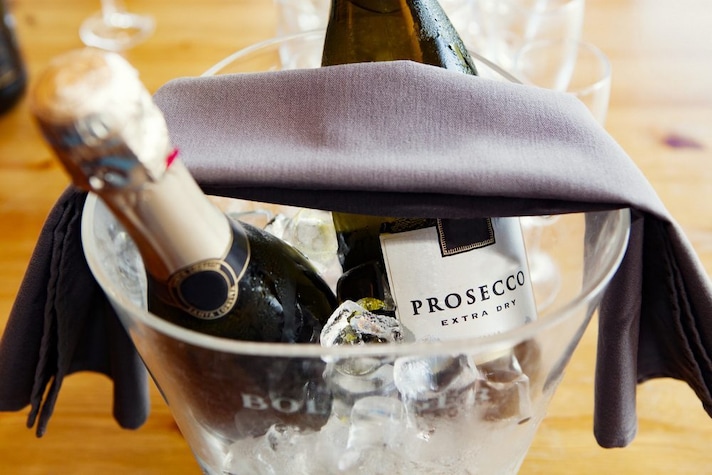
Residual Sugar Content Classification
A first useful classification comes from the level of residual sugar, or the amount of sugar that escaped fermentation. Extra Dry was traditionally considered the most classic of all Proseccos, much loved for its roundness and mouthfeel; in recent years, however, drier versions, such as Brut, or even Pas Dosé, have also become increasingly popular. But what exactly do these terms mean?
The scale used to distinguish the various Proseccos based on residual sugar content is the following, in ascending order:
- Pas Dosé: residual sugar content less than 3 grams/litre
- Extra Brut: between 3 and 6 grams/liter
- Brut: between 6 and 12 grams/liter
- Extra Dry: between 12 and 17 grams/liter
- Dry: between 17 and 32 grams/liter
What Types of Prosecco Are There?
In addition to the classification by residual sugar content, which unites Prosecco with all other sparkling wines produced around the world, there is also a classification by geographical area, particularly useful for orienting oneself when purchasing and understanding the quality of the bottle in front of us.
We have seen that Prosecco can be produced throughout the Veneto and Friuli Venezia Giulia regions: in most cases, we are talking about Prosecco DOC, easy and drinkable, perfect for an aperitif with friends without too many pretensions.
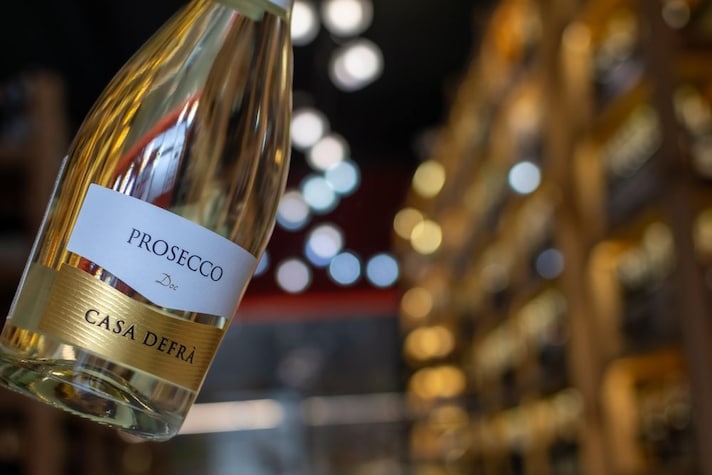
Moving up the production pyramid, we find Prosecco DOC Treviso, which can only be produced in the province of the same name and offers a more territorial product.
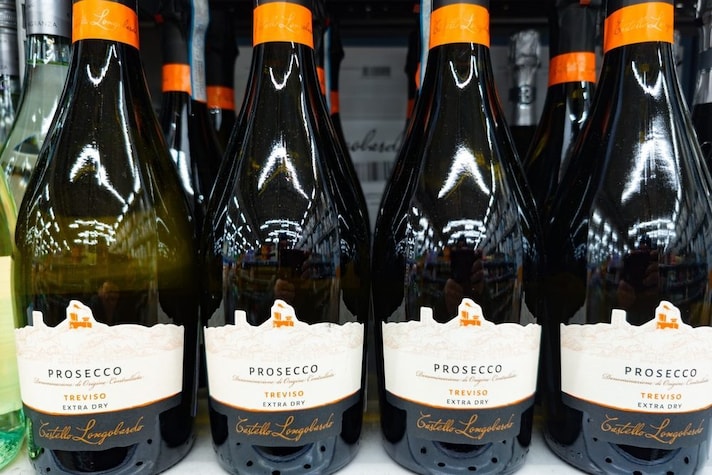
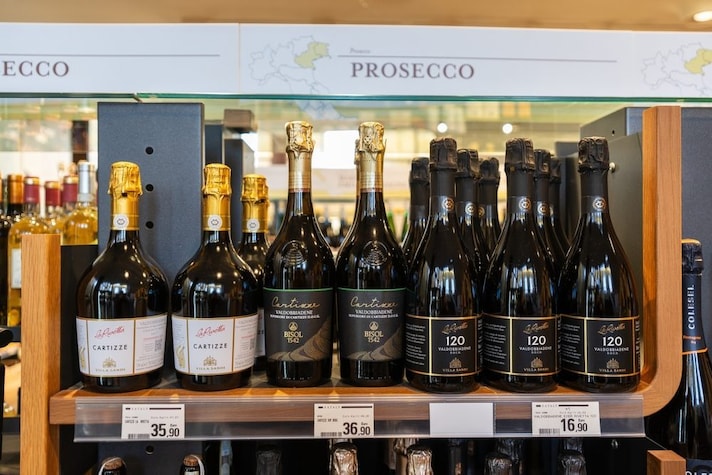
There are also two more prestigious denominations that can boast the DOCG designation: Asolo Prosecco Superiore DOCG, from the hills of Asolo, and Conegliano Valdobbiadene Prosecco Superiore DOCG, produced in a particularly suitable hilly area. These Proseccos are distinguished by their finesse, structure, and aging potential, and are often the result of more careful and selective viticulture.
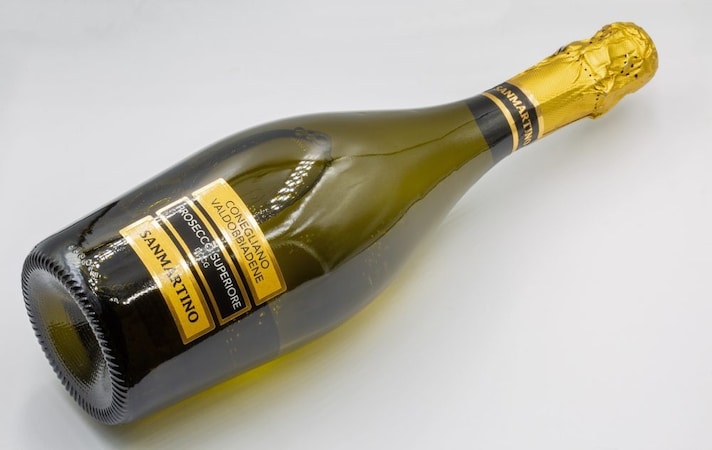
Within the Conegliano Valdobbiadene DOCG denomination there are also the "Rive", geographical mentions that indicate individual municipalities or hamlets that are particularly suited to this area, where viticulture is often heroic and the wines best express the characteristics of the territory.
Finally, in the heart of the Valdobbiadene region, between the hamlets of Santo Stefano, Saccol, and San Pietro di Barbozza, we find a micro-production area of extreme quality: Valdobbiadene Superiore di Cartizze DOCG, the pinnacle of both quality and, consequently, price. Cartizze represents absolute excellence, with just 107 hectares of vineyards and a limited production that yields sparkling wines of great aromatic intensity and complexity.
Other Types of Prosecco
In addition to the production pyramid, you may have seen other types of Prosecco in wine shops or on supermarket shelves. One example is Prosecco Rosé, officially introduced only in 2020, which indicates a Prosecco produced with at least 85% Glera grapes, blended with 10-15% Pinot Noir grapes, which give it its typical pink hue.
You may also have seen a Prosecco with the words "Millesimato" on the label: in this case, you are looking at a Prosecco produced with Glera grapes from a single vintage.
Also increasingly popular are Proseccos produced using the Ancestral Method, which involves refermentation in the bottle without dégorgement, therefore with the fine lees still in suspension.
How to Pair Prosecco
Prosecco lends itself to a variety of food pairings, which vary depending on its residual sugar content. The drier versions, such as Pas Dosé and Extra Brut, are perfect as an elegant aperitif or to accompany raw fish, oysters, and simple dishes.
The Brut, more versatile, goes well with seafood main dishes, vegetable risottos, tempura and fresh cheeses, making it ideal for informal dinners.
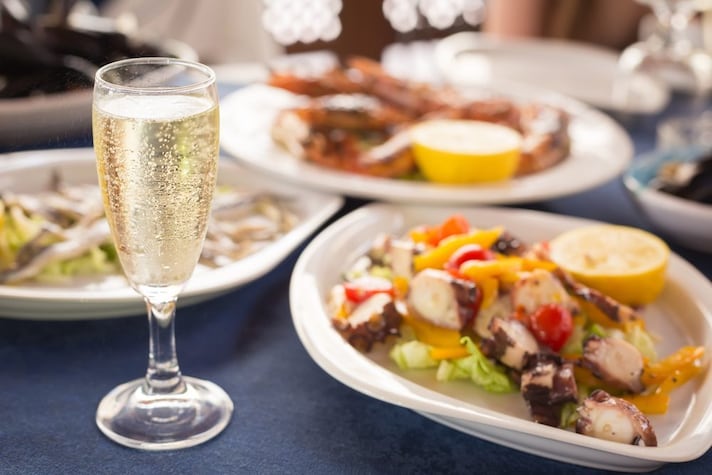
The Extra Dry, considered the most classic of Proseccos, pairs well with savory pies, cured meats, finger foods, and delicate main dishes, while the Dry, softer and rounder, is ideal for dessert, alongside fruit tarts, leavened desserts, and dry pastries.
How to serve it? Served at the ideal temperature of 24-46°F/6-8°C, in sparkling wine glasses, Prosecco best reveals its perlage and aromas.
;Resize,width=767;)
