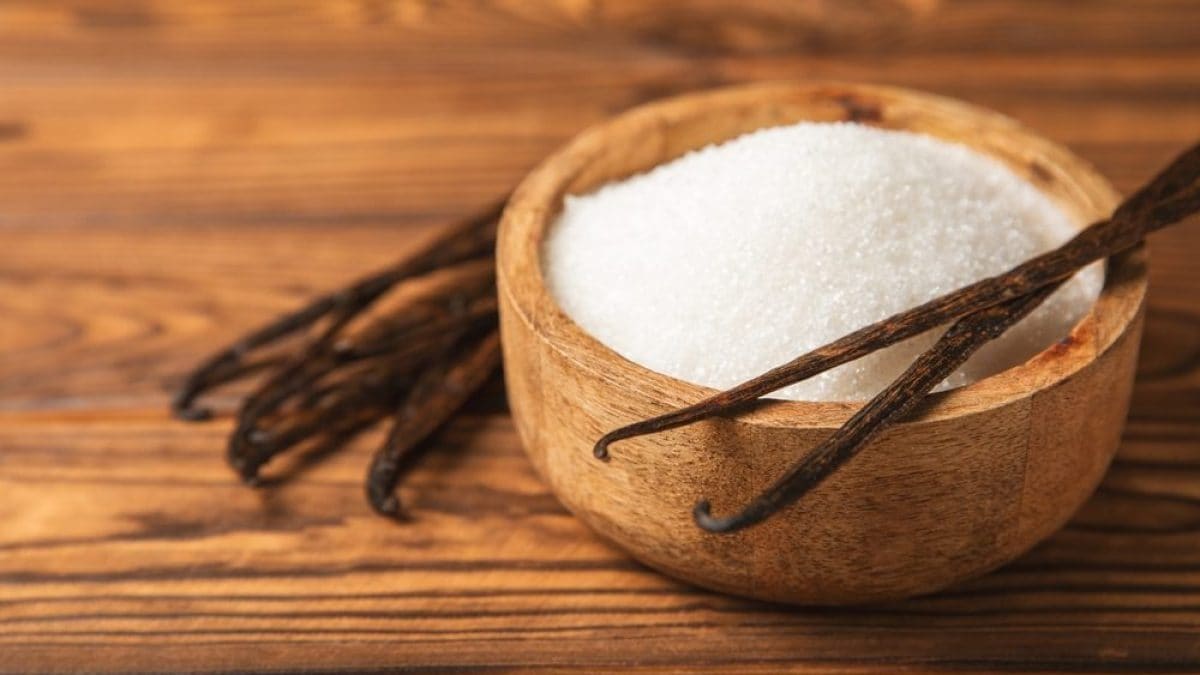
We see it on supermarket shelves, in the section dedicated to homemade pastries: vanilla sugar is an easy-to-find ingredient that gives sweet preparations the typical warm and enveloping aroma of vanilla. Used as a decoration, sprinkled, or in dough, it gives a boost of deliciousness: here's what it is, how to choose it, but also how to prepare it at home and how to best use it in recipes.
What is Vanilla Sugar?
The vanilla sugar commonly used in recipes is sugar (granulated or powdered) flavored with natural vanilla pods. When we talk about vanilla powdered sugar, we're referring to the finest version, often with a small amount of starch added to keep it smooth. In this case, vanilla refers to the natural vanilla pod, which is particularly fragrant thanks to its numerous aromatic compounds: a spice whose value and, consequently, its cost are well known.
For this reason, when purchasing vanilla sugar, you should be careful to ensure it isn't made with vanilla flavoring, better known commercially as vanillin: it's cheaper because it's synthetic, but also less elegant and intoxicating than the original. Often, the packaging specifies the wording "vanilla sugar," while other times the adjective "vanilla" remains, so you should rely on the label: if the word "flavorings" appears among the ingredients, then it refers to those of the chemically obtained molecule.
Vanilla Sugar Vs. Vanillin Sugar
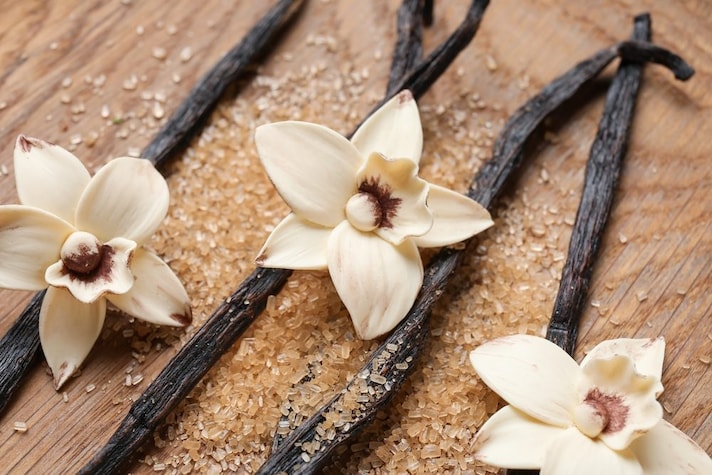
As mentioned, vanilla sugar and vanillin sugar are not the same thing, although they are often confused. The former is flavored with natural vanilla, obtained from the pod of the Vanilla planifolia plant: it contains a rich aromatic complexity, with warm, floral, and slightly woody notes due to the presence of numerous natural aromatic compounds. Vanillin sugar, on the other hand, is flavored with vanillin, a single molecule responsible for the main aroma of vanilla, produced synthetically or extracted from other plant sources: the result is a more linear and less layered scent. The difference is not only in cost, but above all in aromatic depth: vanilla offers a more complex bouquet, vanillin a simpler and more immediate aroma.
How to Make Vanilla Sugar at Home
To have good vanilla sugar on hand, you can make it directly at home, following the powdered sugar recipe. You can start directly with ordinary granulated sugar or white cane sugar and a vanilla pod, using it without any waste: you will only need one to obtain 400 grams of sugar. As for the cornstarch, remember that the proportion is one teaspoon for every 100 grams of sugar. Proceed as follows. Pour the sugar into the blender jug with the starch and cut the pod lengthwise with a small knife and cut it into small pieces, add it to the blender and blend for 2-3 minutes. The vanilla pulp will come out very easily, mixing with the sugar, with a finer and more speckled texture than the starting one . Once ready, transfer the vanilla icing sugar to a clean, dry, airtight glass container and leave it closed for about 10-15 days away from heat and light sources, shaking it once a day to better distribute the contents.
How to Use Vanilla Sugar
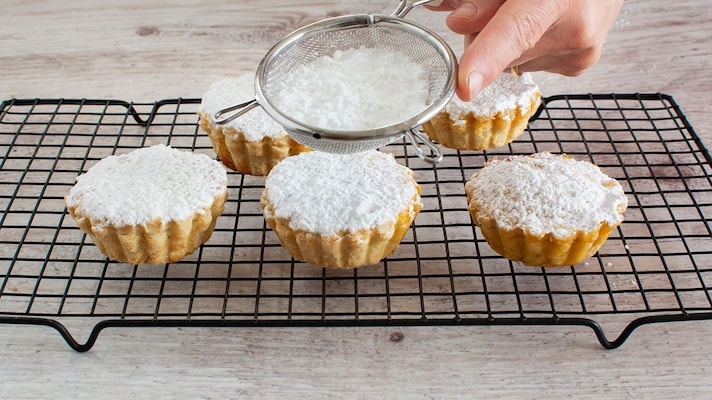
In cooking and baking, vanilla powdered sugar is used just like confectioner's sugar when you want to enhance the aroma of a dish. It's perfect for icing cakes or spectacular plum cakes, or in creams and sauces, such as those made with cream (like whipped cream) or fresh cheese (like chilled cheesecakes). It's also excellent dusted on cakes, biscuits, or pancakes. Only with vanilla powdered sugar, which contains a small amount of starch, should you consider its impact on the texture of delicate preparations like meringues.
How to Store Vanilla Sugar
Vanilla sugar retains its aroma for up to 3 months if stored properly: as mentioned, the container must be glass, clean, and perfectly dry. Store it in the pantry, away from direct sources of light and heat; furthermore, the jar must always be tightly sealed after each use. Using cornstarch helps protect it from moisture, another enemy of sugar, preventing it from hardening quickly.

Vanilla Powdered Sugar, Without Starch
You can also opt for a vanilla sugar without the cornstarch, mixing just the sugar and vanilla in the same way, but the practical use won't be exactly the same. You have to pay attention to the consistency, because a small percentage of starch in recipes is functional, as it acts as a thickener and stabilizer: in this case, go ahead when using it as a decoration, simply dusted, or if you need to flavor mixtures that will still be velvety, such as a mousse or ricotta cream, which call for granulated sugar and not powdered sugar. It's not suitable for making icings or sugar paste, however, which is why the powdered sugar you find in the supermarket usually lists starch as an ingredient.
;Resize,width=767;)
