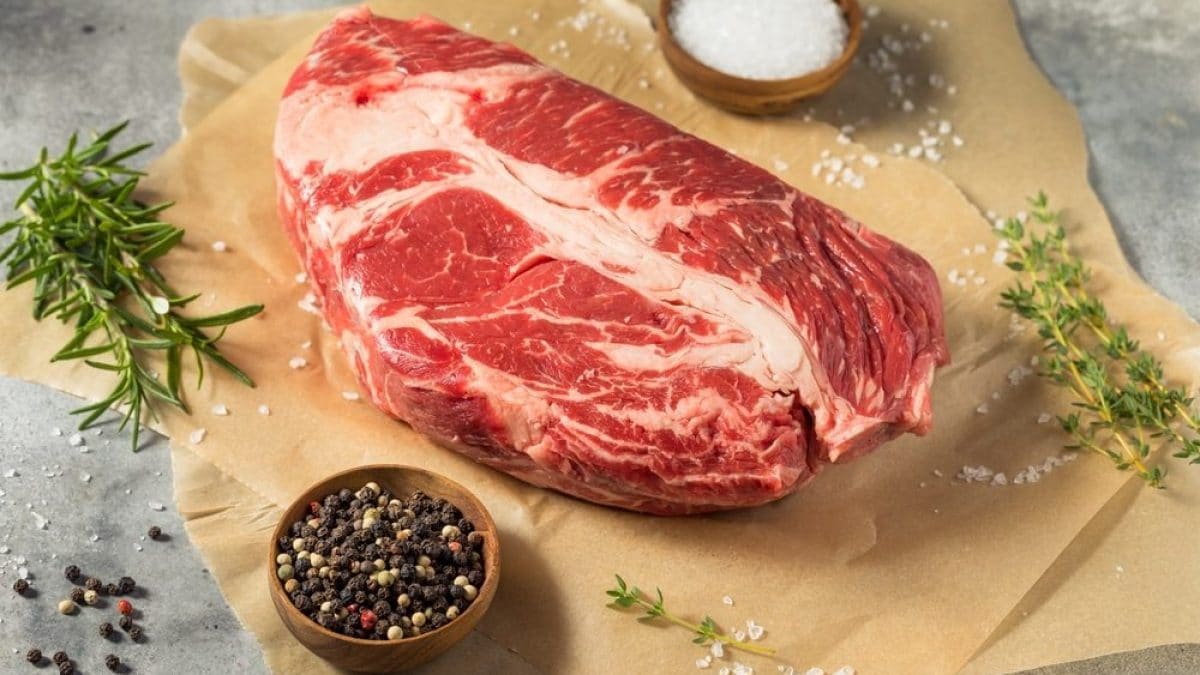
Choosing meat consciously is a real challenge for those seeking an ethical, healthy, and sustainable product. Unlike other foods, such as eggs, which in the U.S. have a mandatory labeling system indicating the farming method, there is no similar requirement for meat. For this reason, much of the information on labels can be vague, generic, or misleading for consumers.
In the United States, a large share of meat and poultry comes from large-scale production systems. While there is no single national percentage measuring ‘intensive farming’ across all species, USDA data show that livestock production has increasingly shifted toward larger operations, with poultry, hogs, and cattle production often concentrated in specialized facilities. The EPA classifies the most intensive operations as Concentrated Animal Feeding Operations (CAFOs), which are regulated because of their potential environmental impacts.
What is Actually on Meat Labels (And What's Missing)
In the United States, meat labels are also not required to include a mandatory indication of the farming system or whether animals were raised in intensive production environments. Terms describing how animals were raised are generally voluntary claims that must meet specific USDA requirements or certification standards, but there is no universal label indicating conventional, intensive, or CAFO-raised meat. As a result, consumers often have to rely on additional certifications and carefully read packaging claims, since some marketing terms may provide only limited information about the animal’s living conditions.
- “No antibiotics ever” / “Raised without antibiotics”: This means animals were not given antibiotics during their lifetime, but it does not indicate anything about housing conditions, outdoor access, diet, or overall animal welfare.
- “Natural”: According to the USDA, this term refers mainly to how the meat is processed after slaughter (with no artificial ingredients or added colors), not how the animal was raised. It does not mean pasture-raised, free-range, or sustainably produced.
- “Organic” (USDA Organic): This certification requires specific standards for feed, medication use, and animal management. However, it does not automatically mean animals lived outdoors year-round; requirements vary depending on the species and production system.
- “Grass-fed”: For beef, this USDA-regulated claim means cattle were fed a diet of forage, but it does not necessarily describe all aspects of their living conditions or guarantee a small-scale farm environment.
- “Certified Humane,” “Animal Welfare Approved,” or “Global Animal Partnership”: These third-party certifications focus more specifically on animal welfare practices, including housing, handling, and access to outdoor areas.
The only significant exception concerns Demeter certification: an official label for biodynamic agriculture, which goes beyond organic, promoting sustainable, ecological farming practices that respect natural ecosystems. As for meat, Demeter-certified animals are raised on organic feed, have access to natural pastures, and are treated to ensure their well-being. While the certification does not require year-round pasture-based rearing, it does ensure that animals live in more natural environments and with greater care than on factory farms. Demeter guarantees superior product quality, following an integrated approach that includes soil health, biodiversity, and respect for animals.

Voluntary Labeling of Chicken Meat
In the United States, there is a voluntary labeling system for chicken production, but companies are not required to indicate the farming method on the package. The most common terms consumers encounter are:
- Farm-raised chicken
- Free-range chicken
- Pasture-raised chicken
You may also find variations such as "extensively raised indoors" or "raised with more space than the legal minimum." However, be very careful: even good-sounding terms don't always guarantee optimal conditions, especially when referring to producers who only comply with the legal minimums.
It is important to know that broiler chickens are never raised in cages, but the expression “indoor farming” can still indicate conditions close to intensive ones, with very limited space and little opportunity for the animals to move around.

What is Grass-Fed Meat and Why Choose It?
“Grass Fed” literally means grass-fed: an animal raised on pasture grows up eating exclusively fresh grass, natural forage and hay, without cereal supplements or industrial feed. Grass-fed meat is distinguished by several aspects:
- Animal welfare, because animals live outdoors and follow natural behaviors.
- Environment, as it reduces dependence on intensive cultivation of corn, soy and other feeds with a high environmental impact.
- Nutrition, with a more favorable fat profile: higher content of omega-3 and CLA (Conjugated Linoleic Acid), associated with health benefits, and a better omega-3/omega-6 ratio than grain-fed meat.
- Flavor and texture, with a more intense and distinctive flavor, often described as "richer" and less neutral than conventional meat.
Beware of "Grass-Fed" Labels
In the United States, the term “grass-fed” is more clearly regulated than in many other countries, especially for beef. The USDA allows the “grass-fed” or “grass (forage) fed” claim when cattle have been fed only forage after weaning, with limited exceptions, and producers must maintain documentation to support the claim. However, the label does not automatically guarantee pasture access, organic practices, or a specific level of animal welfare. For consumers looking for stricter standards, third-party certifications such as American Grassfed Association (AGA) can provide additional guarantees. Even with regulated terms, it is still useful to check labels carefully and ask farmers or butchers about how the animals were raised.

What is Biodynamic Meat?
Biodynamic meat presents itself as an alternative that goes beyond animal feed, promising a holistic approach to the regeneration of agricultural ecosystems. Although Demeter certification imposes rigorous standards for soil, nutrition, and agricultural management, its application in the meat sector is still rather limited. The certification is certainly one of the most comprehensive for those seeking products that respect the environment and animal welfare, but its use in the meat sector is marginal compared to its use in wine and plant-based products.
This raises doubts about the company's real ability to establish itself in the meat market, where other certifications, such as organic, are more established and readily available. Furthermore, adopting biodynamic practices requires significant commitment from producers, which could lead to higher costs, with no guarantee of any significant added value in terms of the quality of the final product.
How to Tell if You Bought Intensive Farmed Meat
Since labeling doesn't always provide all the necessary information, you can rely on some visual, organoleptic, and practical cues to distinguish meat from intensively farmed meat versus pasture-raised meat.
- Fat color. The fat in grass-fed (extensively raised) meat tends to have a more yellowish hue, due to the beta-carotene contained in the fresh grasses the animals consume. This natural pigment gives the fat a distinctive color that differentiates it from that of intensively raised meat, where the fat is generally whiter or paler, as the animals are fed primarily commercial feed.
- Water loss during cooking. Another distinguishing feature is water loss during cooking: meat from intensively farmed animals tends to release a large amount of liquid during cooking, often visible in the form of water and fat, which can make it appear drier and less juicy. Conversely, meat from pastured animals tends to retain more juices, resulting in a more flavorful and less "flammed" result, thanks to a natural and balanced diet that promotes denser and more moist meat.
- Flavor. Flavor is one of the easiest indicators to identify: meat from pasture-raised animals has a deeper, more complex flavor, with notes reminiscent of soil and fresh grass, and is especially noticeable in higher-quality meats, such as those from grass-fed cattle, sheep, or goats. In contrast, meat from intensively farmed animals tends to have a more neutral and less distinctive flavor, often due to a diet of artificial feed and a more stressful living environment for the animals.
- Appearance of the meat. Even the visual appearance of the meat can provide clues to its origin: grass-fed meat tends to have a firmer consistency and a more "stringy" texture, with more visible fat marbling. Conversely, meat from intensively raised farms may appear paler, with a more uniform appearance and less pronounced intramuscular fat, which is typical of free-range animals.
- Odor. Meat from pastured animals tends to have a more natural, "fresh" odor, while factory-farmed meat, due to more industrial feed and preservation methods, may have a less pleasant or more "metallic" odor.

