Cast iron is a very ancient material, already used in China many centuries before it became popular in the West, but it was only between the late 19th and early 20th centuries that it became a material for cookware. It was during this period that cast iron cookware began to spread into Western home kitchens and was immediately appreciated for its ability to retain and distribute heat evenly, but also for its long life. Today, cast iron is a common material for making pots and pans, still appreciated precisely for their versatility, ability to handle heat, robustness, and longevity.
But cast iron, despite its many advantages, is a very particular material that requires specific care and constant maintenance. Cast iron pots and pans don't just need to be washed, they also need to be cleaned properly and treated with care: only then can they truly last over time and maintain all their valuable properties. Let's discover together everything you should (and shouldn't) do to clean, descale, and maintain cast iron pots and pans, to keep them impeccable and efficient for a long time.
Why Cast Iron Cookware Requires Different Cleaning
Why does cast iron require all these specific precautions? First of all, cast iron is a microporous material, which means it is sensitive to moisture and can rust easily if left soaking or not dried after use: moisture remains in the pores of the cast iron and leads to rapid deterioration of the material.
Cast iron isn't a material that scratches easily, but it can break if subjected to violent impacts or thermal shock, which is why it should be washed by hand and never in the dishwasher. Furthermore, unlike traditional non-stick pans, cast iron cookware naturally develops a non-stick surface through a process known as seasoning: this involves cooking a thin layer of polymerized oil on the surface of the pan to create a thin protective film that makes the surface more resistant and also prevents rust from forming.

Precisely for this reason, it's important to wash cast iron pots and pans properly, as aggressive washing or the use of unsuitable products could damage the protective non-stick coating. The more cast iron is used, the stronger the patina becomes: after performing the process before first use, it's a good idea to season it when the protective coating is damaged or ineffective.
How to Properly Clean Cast Iron After Use and What to Avoid
Cleaning cast iron pans therefore requires care to preserve their natural patina and prevent damage. As with cleaning cast iron stovetops, avoid using harsh detergents that could damage the surface, but this doesn't mean you can't use soaps.
There are two basic rules for washing cast iron: always wash pots and pans made from this material by hand, avoiding the dishwasher altogether, as it is too aggressive and uses a machine that is too wet, which conflicts with the needs of cast iron; and never leave them soaking in the sink, even if the dishes are particularly dirty, precisely to prevent the material from absorbing too much water.

To prevent food residue from becoming encrusted, it's a good idea to wash pots and pans immediately, but be careful not to let them get too hot: cast iron is sensitive to temperature fluctuations, which could cause microcracks or damage to the surface. When the cookware is still warm, simply use hot water and a soft-bristled brush or non-abrasive sponge to avoid scratching it. This is usually enough to remove dirt, but if necessary, you can add a few drops of mild soap to degrease. Never use harsh or highly degreasing detergents, as they risk damaging the non-stick coating.
Remedies to Remove Encrustations And Residues Without Damaging the Surface
What should you do if the dirt is particularly aggressive, or you didn't wash the dishes right away, and more stubborn encrustations have formed? In this case, pour hot water over the preheated pan, let it sit for a few minutes (no longer; as we explained, avoid soaking for too long), or simmer directly over low heat, using a rubber scraper to remove the residue, which will be softened by the hot water. If the residue is very stubborn and even hot water fails to soften it, it can be helpful to sprinkle the surface of the cast iron pan with coarse salt, a product that acts as a gentle abrasive and absorbs grease and dirt without damaging the patina. Let it sit for a few minutes, then wipe with a cloth or sponge to remove both the salt and the residue.
How to Dry, Grease and Store Cast Iron
Drying is also essential to ensure cast iron lasts as long as possible in optimal conditions. As we've explained, moisture is cast iron's number one enemy: pots and pans should never be left damp or wet, and once washed, they must be dried immediately and thoroughly. Use a soft cloth, and if it's particularly soaked, you can also pass it over the stovetop for a minute on low heat to ensure all the water evaporates. Don't worry if you notice a streak on the cloth you use to dry the cast iron; this is simply evidence that the seasoning is still present.
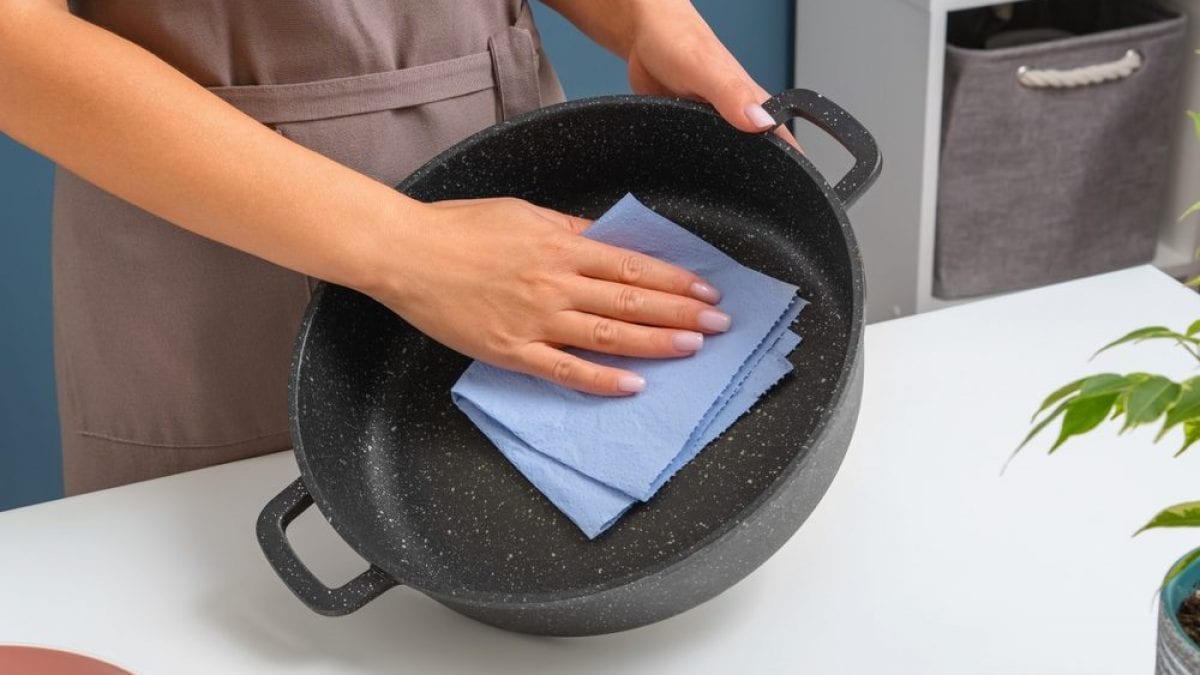
Before using cast iron pots and pans for the first time, it's necessary to season them. This process creates a nonstick, rust-resistant surface by polymerizing a thin layer of oil. This is done by applying a thin layer of seed, linseed, or peanut oil to the inside or outside of the pan and then baking the pan upside down in the oven at 200-250°C (400-480°F) for 1 hour. You don't need to season your cast iron pots and pans every time you wash them, but to maintain and refresh them, you can apply a light coating of seed oil to the surface after drying it. A few drops are enough (a spray oil works well for easier measurement), and should be spread over the entire inside and outside of the pan with a paper towel.

If you notice rust stains appearing or the cast iron feels sticky to the touch, it's time to repeat the seasoning process, after washing the cookware with soap and water to remove any signs of wear. Once cleaned, dried, and oiled, the cast iron pan or pot can be stored. The best advice? Keep it in a dry place, without a lid, and keep it as separate as possible from other cookware. If space constraints force you to stack them, place a sheet of paper towel between each pan to reduce the risk of scratches and protect the patina.
;Resize,width=767;)
