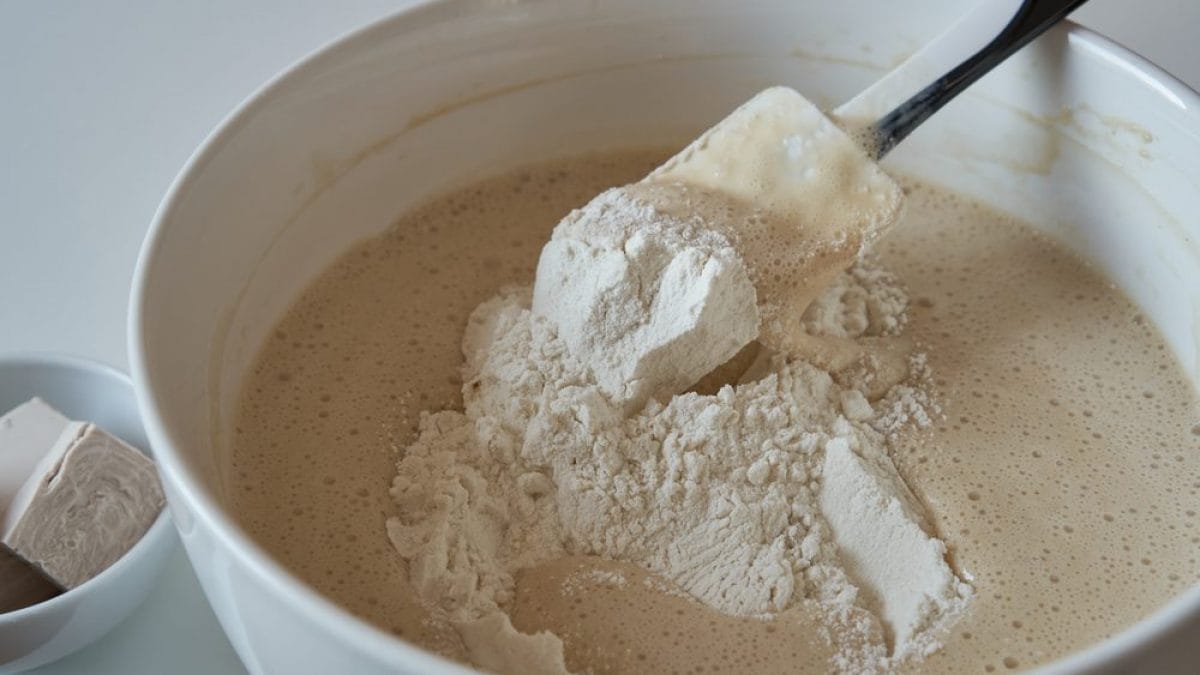
Sometimes finding a substitute for an ingredient is very simple and has minimal impact on the final result; other times, however, it requires more effort. In some situations, such as baking, a preparation is the result of meticulous interplay between the various components, reaching the perfect balance after numerous attempts. Converting brewer's yeast into sourdough starter (and viceversa) is probably one of the most complicated tasks when you decide to get your hands dirty, which is why there are no magic formulas to keep handy. Here, we'll explain why the mission is quite complicated—even for the experts—and what to do when you discover you're out of one or the other.
Brewer's Yeast Vs. Sourdough Starter
Brewer's yeast and sourdough starter are the main alternatives used in baking to activate the fermentation of a dough, along with water and flour, which are the other two key elements of common foods like bread, pizza, and focaccia. They are both functional products, not chemical ones like, for example, instant yeast, but they have a different nature: the former refers to the culture of a single microorganism, Saccharomyces cerevisiae, while the latter, called sourdough starter or sourdough, is a fermented acidic compound of water and flour in which various strains of yeast and bacteria spontaneously grow. Brewer's yeast is specifically designed to be easy to use (it can be dissolved in water or added directly), ensuring a rather rapid, constant, and standardized production of carbon dioxide, giving the dough stability. Sourdough starter, on the other hand, is capable of a more complex, less predictable activity, with a dough that must be treated with greater care on several fronts, given that the microorganisms have a different impact based on the type of flour, the quantity of water, the temperature, the handling of the dough, the resting place, so much so that with the same recipe, different results can be obtained from time to time.
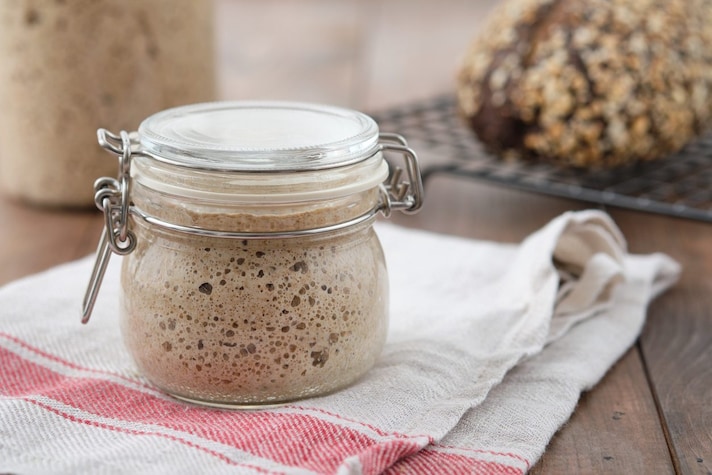
How to Replace Brewer's Yeast With Sourdough Starter
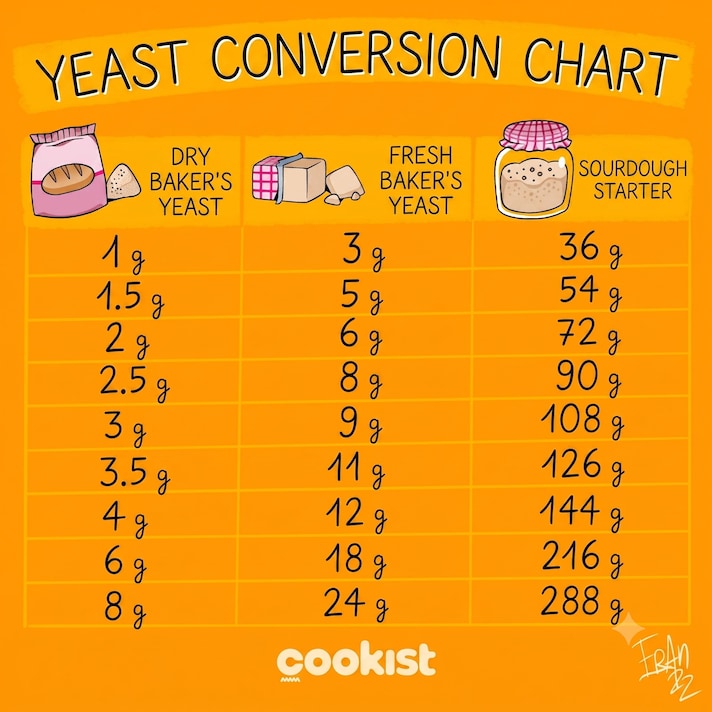
Before considering a possible substitution of brewer's yeast with sourdough starter, it's helpful to know that even within brewer's yeast, there's a distinction to be made: between dry yeast, which is the dehydrated and powdered product sold in convenient disposable sachets, and fresh yeast, which contains water (and therefore weighs more) and can be purchased in blocks to be stored in the refrigerator. Generally, in this case, the values are:
- 1 gram of dry brewer's yeast corresponds to approximately 3 grams of fresh brewer's yeast, with a ratio of approximately 1:3.
- On the packaging, you will read that 25g of the classic block is equivalent to 7g of the dry product, i.e. the content of a sachet, on which many home recipes are based.
As for the conversion between brewer's yeast and sourdough starter, there is no equally precise mathematical formula, because, as the well-known baker Fulvio Marino points out, sourdough starter shouldn't be considered an ingredient (like salt, sugar, or brewer's yeast itself), but a true living organism that changes based on many factors, from the strength of the flour to the level of hydration and acidity, including the state of maturation and the temperature, both the processing temperature and the ambient temperature. One of the most commonly used criteria is to use a quantity of sourdough starter equal to approximately 20-30% of the total flour weight, then adjusting the timing and dough management: for example, for 500g of flour, you can use approximately 100 to 150g of solid sourdough starter.
In a recipe that calls for brewer's yeast, therefore, in addition to this proportion, another fundamental aspect must also be considered: the mother yeast is already composed of water and flour, which are therefore combined in the dough, with a consequent recalculation of the starting doses, removing 100 grams of flour and 50 grams of water from the total, considering a hydration of 50% on 150 grams.
How to Convert Sourdough Starter Into Brewer's Yeast
The opposite requirement, that of replacing the sourdough starter with brewer's yeast, is generally simpler, as in bread making, the amount of brewer's yeast is generally 8-10% of the total sourdough starter. Therefore, in many recipes, it is generally assumed that 250 grams of sourdough starter can be replaced by about 15-20 g of fresh brewer's yeast (and about 7 grams of dry yeast), subject to adjustments based on the desired fermentation times. Note that in this case too, it is necessary to recalibrate the quantities of flour and water, adding them rather than removing them. When it comes to medium-long leavening times (8 hours or more), such as those for which the use of sourdough is preferred, however, the tendency is to reduce the quantity of brewer's yeast, so as to prolong the maturation, also aided by refrigeration: for example, for 1 kg of flour, 2-3 grams of fresh brewer's yeast may be sufficient for a highly hydrated pizza that has risen for more than 24 hours.
What Changes in The Final Result
The choice of yeast profoundly changes the product you want to obtain, and this is why the substitution is not so linear as to be schematized in tables that have the weight of the yeast as the only value. With sourdough starter, doughs develop more complex aromas and slightly acidic hints, especially in rustic breads and highly matured pizzas: the crust is often crispier and the shelf life is prolonged. Furthermore, digestibility also changes: the sourdough starter, thanks to the long fermentation, favors a greater transformation of the starches and proteins present in the dough, contributing to modifying its aromatic characteristics and digestibility, provided that the process occurs correctly. Brewer's yeast is usually used for faster leavening, which guarantees doughs that are easy to manage and also replicate. In conclusion, it is important to underline that there is no better yeast than another, and that with practice and multiple trials, one can find a very personal squaring of the circle.
;Resize,width=767;)
