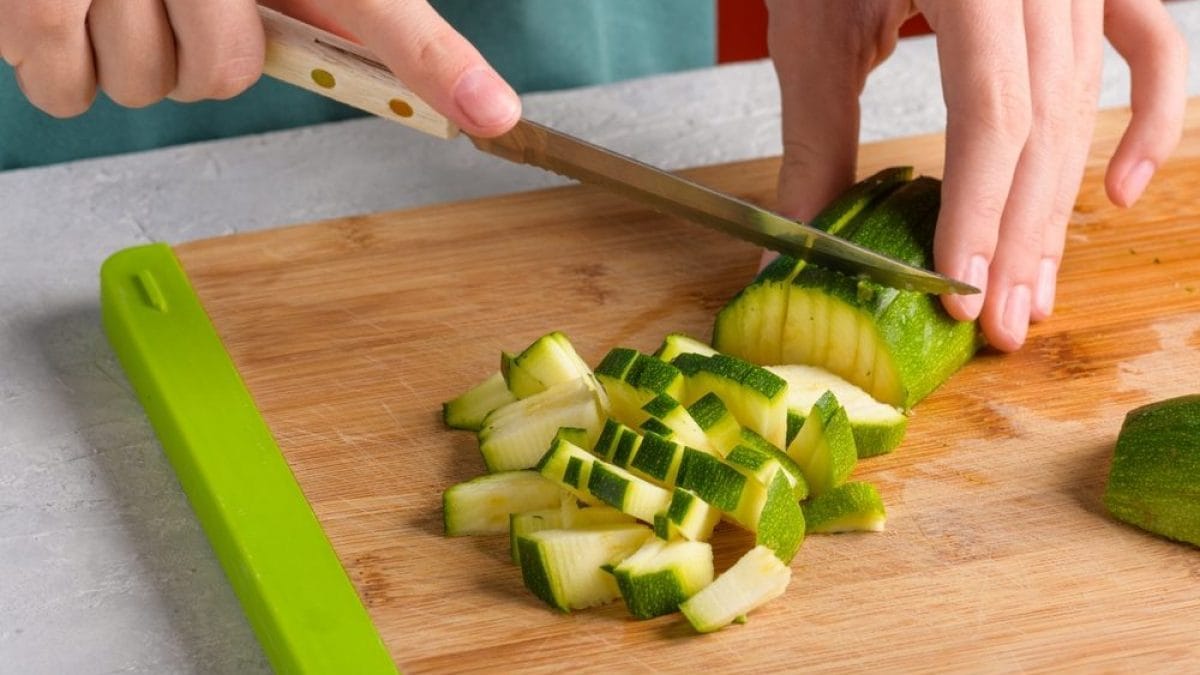
Delicate, digestible, and light: zucchini are among the most beloved vegetables in the kitchen because they are the star of simple, creative, and tasty dishes. A great advantage is that they're available year-round, although they're at their peak in flavor and texture during the summer months: from May to September, zucchini are in season and are at their best both raw and cooked. Whether you want to sauté them, stuff them, marinate them, or even transform them into creative vegetable noodles, clean and cut them correctly for a flawless result. Below, we'll explain how.
How to Clean and Cut Zucchini
Compared to other vegetables, zucchini have a strong advantage in terms of ease of cleaning. Cleaning is incredibly quick: first, run them under running water and gently scrub the surface with your hands. You can also use a sponge or soft-bristled brush to remove any soil or other impurities. If you want to clean more thoroughly, use baking soda, but remember that you're not disinfecting, just removing dirt. Don't immerse the zucchini in a regular bowl of water; instead, use a spray bottle to avoid compromising the texture. Then, dry with a clean cloth and remove the ends with a sharp knife: these are the only parts you'll discard.
Zucchini lends itself to an infinite number of preparations, and each one can be enhanced with the right cut. Below, we'll show you the most common ways to cut them and a few recipes to try.
1. Cut Into Rounds
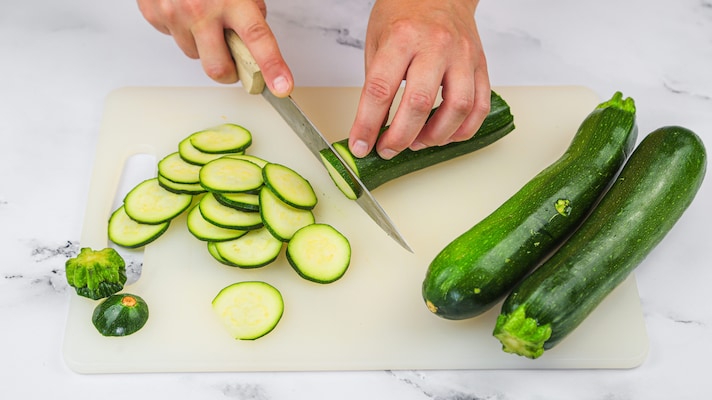
Due to their cylindrical shape, they are the simplest and most immediate cut. It is obtained by slicing the zucchini crosswise, into slices that vary in thickness depending on their final use, from 2 mm to half a centimeter, always of the same size, to ensure even cooking. If the vegetable is rather large, you can also cut it in half lengthwise, forming crescents to further cut them in half, a passe-partout for pasta dishes. Thin rounds are ideal for sautéed zucchini, for chips, for frittatas, while the thicker ones are excellent grilled, fried, or for making ratatouille.
2. Diced Zucchini
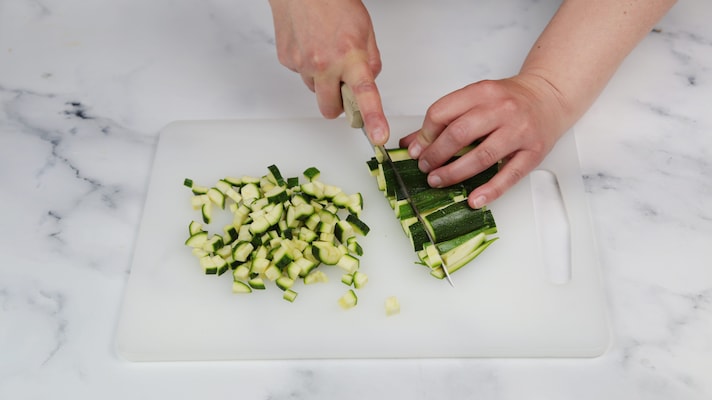
In this context, zucchini lend themselves particularly well to two classic cuts: mirepoix and à la paysanne. The first involves celery, carrot, and onion cut into irregular dice of 6 to 8 mm, but our vegetable is also perfect when used in a vegetable ragù for vegetarian sauces, as a filling for savory pies, or as a condiment for cold rice. The second, however, is slightly larger in size, reaching a centimeter, and has a coarser appearance, making it ideal for use in minestrone soups or, for example, when you want to cook the zucchini in a pan with diced vegetables, along with eggplant and peppers.
3. Cut Into Slices
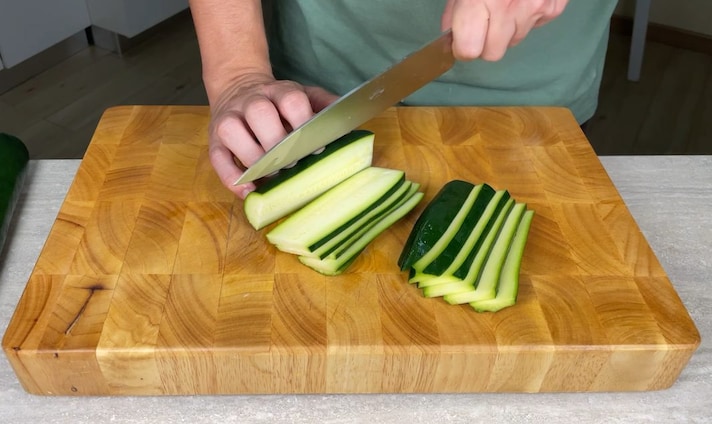
We're referring to the cut obtained by slicing the zucchini lengthwise, into even, thin strips about 3-5 mm thick, using a sharp knife, a potato peeler, or a mandolin. This makes it easy to make rolls, both raw and cooked, by rolling the slices up, or by placing them in a baking dish and marinating them. A thicker cut is recommended for classic grilled zucchini, to prevent them from breaking.
4. Julienne Cut
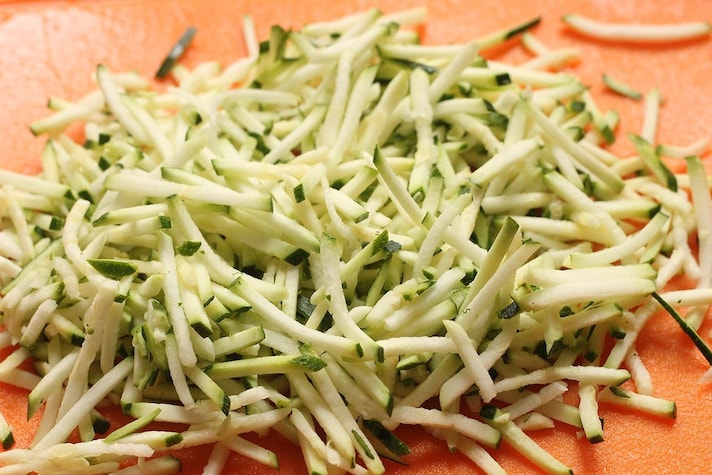
Thin strips similar to matchsticks, 6 cm long and 1 mm thick: the rule of thumb is that they should not exceed 2 mm. This is the famous julienne cut: the simplest way to obtain it is to cut the zucchini in half and make further transverse incisions until you have small sticks. You can use them raw, to enrich salads, or cooked, for example with other vegetables cut in the same way and sautéed in a wok, since they cook in very little time. By leaving the matchsticks a little longer and wider, they are also excellent for frying.
5. Cut Into Sticks
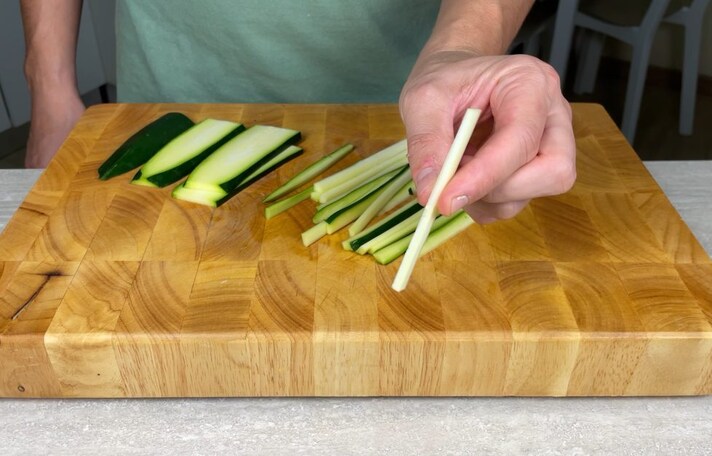
It's called bâtonnet and is similar to the previous one, but the strips are thicker. The vegetables are cut into sticks (hence the name) about 5 cm long and 5-6 mm thick. While it's ideal for carrots or celery when you want to eat them raw, such as in a dip, use it for cooked zucchini, because it's very versatile: from a light boiled version to a delicious battered one.
6. Boat Cut
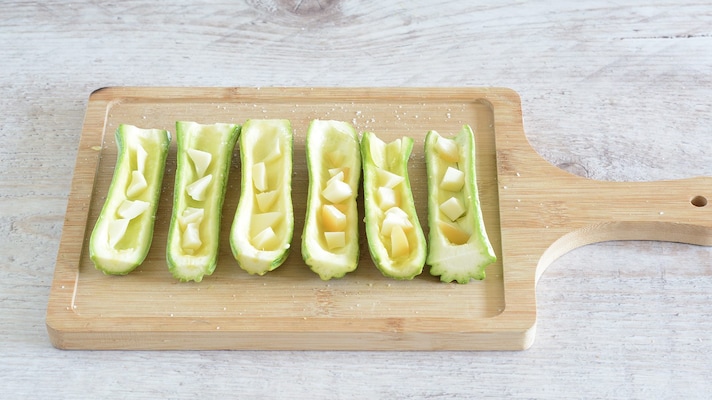
When it comes to long zucchini, this is the preferred method when you want to stuff them with meat, fish, or vegetarian options. How to proceed? Remove the end of the "head" and cut the vegetable in half lengthwise: then use a teaspoon to create a cavity for the filling, being careful not to break the skin. Usually the pulp is used in the recipe itself, so as not to waste it, or use it to make zucchini meatballs.
Bonus: Zucchini Noodles (or Zoodles)
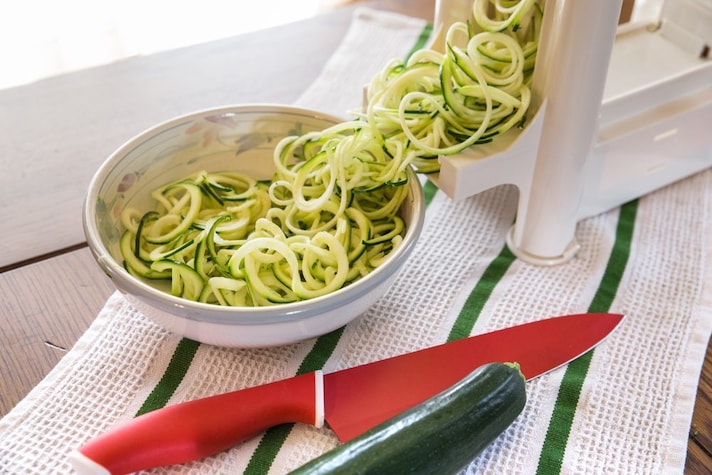
Last, but certainly unbeatable in terms of visual appeal, is the noodles-like cut, which transforms the zucchini into a sort of vegetable pasta, also known as “zoodles,” a portmanteau of “zucchini” and “noodles.” How is it done? In this case, you need a special spiralizer, which can be manual or electric, often included in food processors. Once trimmed, the zucchini are inserted into the tool, which cuts them into long strands. They are ideal raw in salads, dressed with oil, lemon, and a few mint leaves, or lightly cooked in a pan, bringing to the table an alternative “pasta” with feta and cherry tomatoes, for example.
;Resize,width=767;)
