Barbecues are one of the joys of the spring and summer months: there's nothing more enjoyable than gathering in the garden, or in a specially equipped space, and cooking meat, vegetables, and fish with friends or family, chatting, enjoying delicious food, a cold beer, and enjoying the warm rays of the sun. Like all tools, from the simplest to the most complex, it's important to take care of your grill so it's always ready for use in good condition, undamaged. But how do you clean your barbecue grill? Residues from cooking over flames or charcoal are quite stubborn, and it's easy for them to become encrusted with grease, bits of food, or burnt scraps: all of this must be removed thoroughly, not only because it can pose a food safety risk, but also because the cooking performance itself is affected. Here's a guide to the most effective methods, both natural and otherwise, for cleaning your barbecue grill to perfection.
Why Is It Important to Clean Your Barbecue Grill?
Cleaning your barbecue grill regularly, after every use, is essential for many reasons, including aesthetics: who wants to cook—and eat—food on a dirty grill? Certainly not, but that's not the only reason. Leaving a dirty grill also compromises food safety, ruins the quality of cooking, and ultimately compromises the lifespan of the equipment itself.

During every grill use, it's normal for grease, juices, marinades, and charred residue to build up on the surface, creating a layer that, if left untreated, can become a breeding ground for bacteria and potentially harmful substances. When these residues are reheated, they can generate acrid smoke and unwanted compounds that alter the flavor of food and, in some cases, can be harmful to your health. Furthermore, the accumulation of dirt compromises the even distribution of heat, causing uneven cooking and increasing the risk of food sticking to the grate. Over time, failure to clean also promotes corrosion of the materials, reducing the efficiency and lifespan of the barbecue. For all these reasons, keeping your grill clean is not just good practice, but an essential condition for safe, tasty, and sustainable cooking.
How to Clean a Still Hot Barbecue Grill
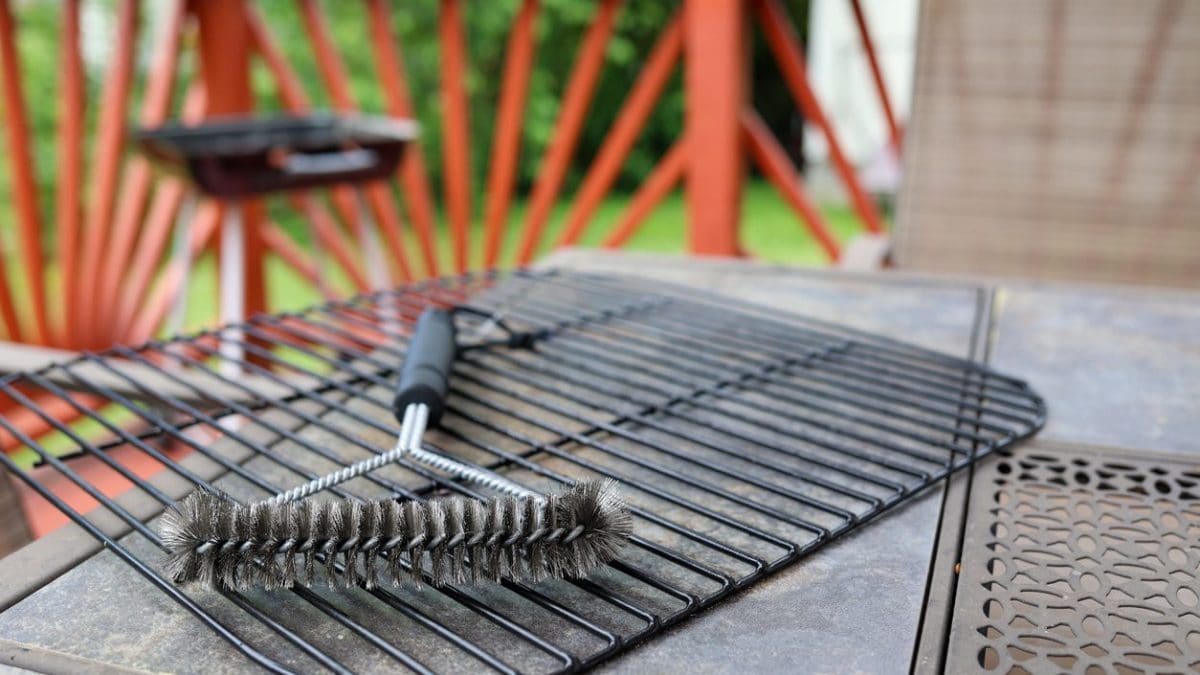
Once your food is cooked, the best practice is to clean the grill while it's still hot, before it cools down: this is an effective strategy for avoiding any traces of dirt, as the residual heat helps remove residue. When the grill is still hot (but not dangerously hot), food residue hasn't yet hardened completely and is much easier to remove because it's still soft. Furthermore, thanks to the heat, grease and juices don't solidify and can be cleaned easily. At this stage, simply use a brush with sturdy bristles or a special scraper, running vigorously over the bars to remove encrusted residue before it solidifies. Then rinse the grill and, if necessary, degrease it using a mild detergent.
How to Clean a Cold Barbecue Grill
It's true, taking advantage of the residual heat from the still-hot grill would be ideal, but let's face it: how easy is it, after cooking, to sit down at the table and forget about the passing of time amidst conversation, good food, and the cool breeze of the garden? Cleaning the grill becomes the last thing on your mind, and by the time you finally remember, it's too late and the grill is not only cold, but also quite crusty. But don't worry, you can still clean it perfectly; you just need to use a few extra tricks.
First, use a spatula or metal brush to remove any superficial encrustations, ash, and remaining charcoal. Then, proceed with a more thorough cleaning: you can do this using standard commercial cleaners or, even better, a series of equally effective but gentler natural methods. If you have half a lemon in the fridge, perhaps already partially squeezed, pierce it with the barbecue fork you used for grilling and run it over the grill. This is an excellent cleaner and, in addition to degreasing and removing odors, will moisten the steel parts, making them easier to clean. Afterward, you can proceed with a normal wash with soap and water.

When it comes to cleaning, vinegar is also an exceptional product, an excellent natural cleaner thanks to its high acetic acid content, which gives it degreasing and deodorizing properties. When you need to clean the grill, you can create a solution of 1 liter of warm water and 3 tablespoons of vinegar: pour everything into a spray bottle, shake well, and then spray the mixture on encrusted areas, let it sit for 15 minutes, and then rinse with a non-abrasive sponge. If the dirt is particularly stubborn, you can also soak the grill in a basin filled with water and vinegar for about twenty minutes. Another valid ally for cleaning the grill is baking soda, especially for encrusted residue: in this case, mix 4 tablespoons of the product with a liter of warm water and cover the grill with the resulting paste. Let it sit for about twenty minutes, soak a non-abrasive sponge in the paste, and finish cleaning.
Mistakes That Could Ruin Your Barbecue Grill
To keep your barbecue grill efficient and in good condition over time, it's essential to avoid some common mistakes and adopt small preventative measures. One of the most common mistakes is putting off cleaning, allowing grease and residue to build up and become increasingly difficult to remove. It's always advisable to clean the grill after use and not leave it there for days, because the longer it's used, the more stubborn the encrustations will become. How you clean your grill is also important, which is why we've suggested several natural solutions. Using overly aggressive or unsuitable tools, such as low-quality metal sponges or improvised objects, can scratch the surface and promote corrosion. Excessive use of chemical cleaners, especially if not rinsed properly, can also be harmful and leave unwanted residues that end up on food during subsequent cooking.
Regular cleaning of your grill after use is very important, but remember that periodic maintenance is also essential to keep your grill in tip-top condition for a long time. A highly recommended practice is to grease the grill grate (and all parts and surfaces) with a paper towel moistened with a little oil at the end of the barbecue season or between uses. This helps prevent rust from forming during the winter months or when you're using your grill less. Also, remember not to leave the grill grate lying around; instead, store it inside the grill itself or in a sheltered area, with a cover to protect it from humidity and weather if it's outdoors, slowing the formation of rust and dirt.
;Resize,width=767;)
