If there's one ingredient you should always have at home, it's milk: particularly delicious when mixed with coffee, this precious food is among the most versatile products and can become the basis of a multitude of sweet and savory recipes, or it can be used to prepare inviting drinks like milkshakes and smoothies. What's more, milk is also one of the most complete foods there is, naturally rich in essential nutrients such as calcium, protein, vitamins (especially vitamins D, A, and the B complex), and minerals (such as phosphorus and potassium) that aid in the development and sustenance of the body.
Milk presents just one problem: it spoils rather quickly, because it's a food rich in water and nutrients (sugars, proteins, fats), which provides an ideal breeding ground for bacteria. These microorganisms, especially psychrotrophic ones, multiply even at low temperatures, acidifying the product and degrading its components, accelerating the spoilage process. So how can you avoid wasting it if you have too much and can't consume it? Using it as a genuine ingredient is certainly a good solution, but what you may not know is that you can preserve it even longer in the freezer.
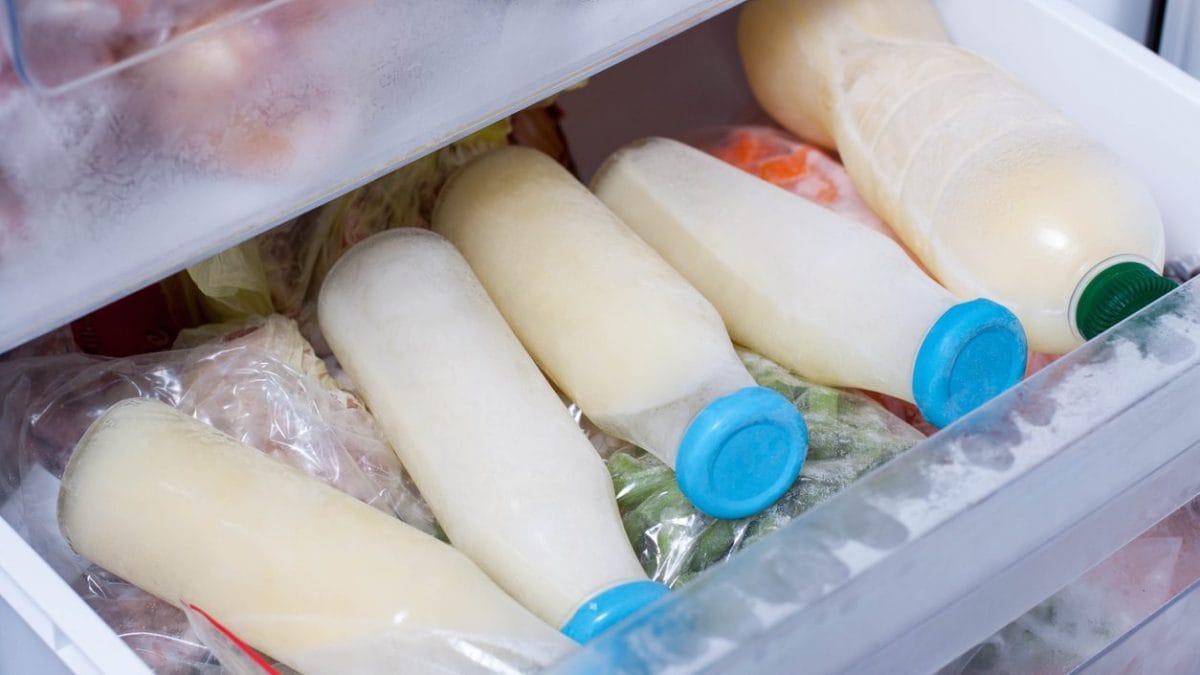
Yes, milk can be safely frozen to avoid waste: it lasts up to 3 months in the freezer, provided it is stored correctly and thawed following the right procedure. Here's an in-depth guide on how to freeze milk safely and what mistakes to avoid to avoid spoiling it.
Can Milk Be Frozen?
Milk can be frozen, even if not many people know it: it's not a very common habit, but it's a practical and safe way to extend its shelf life, also because freezing preserves most of the proteins, fats, and vitamins. If you store it correctly in the freezer, therefore, the milk will remain nutritionally excellent, but you must keep in mind that something else will change, namely the physical structure of the food.
Even if you thaw it correctly, the milk will likely be more granular. This happens because, during freezing, the water contained in the milk forms ice crystals and the components separate, particularly the fat part, which tends to separate from the aqueous phase. For this reason, once thawed, the milk may appear less homogeneous, with a more "broken" consistency and a less uniform appearance than fresh milk. The consistency may improve, to some extent, by agitating the liquid, but the result will never be as perfectly smooth as fresh milk, which is why many people find it less pleasant to drink on its own, and some prefer to use it in cooking as an ingredient.

How to Freeze Milk Properly
Freezing milk is not difficult, but it is a process that requires following some practical precautions to best preserve its quality and safety.
- First of all, it is very important that the container is well sealed and prevents air from entering: avoid milk cartons, prefer containers suitable for freezing, such as food-safe plastic bottles or airtight containers designed for low temperatures; glass can be used but only if specifically indicated for the freezer, otherwise the risk of breakage is high.
- The second fundamental precaution is to always leave some free space in the container, without filling it to the brim but leaving approximately 10–15% of the volume empty (more or less 4-5 cm): during freezing, in fact, the water contained in the milk expands and could deform or break the container if completely filled, while if the frozen liquid has some free space it can expand without causing damage.
- Also pay attention to portion management and prefer to divide the milk into smaller quantities by placing it in multiple containers, so that when it's time to use it you will only defrost the amount you need, avoiding waste.
- Finally, to obtain the best results, the milk should be frozen when it is still fresh, that is, well before the expiry date, and placed in the freezer as quickly as possible, so as to limit the formation of excessively large ice crystals, which are responsible for the main alterations in consistency after thawing.
How Long Does Milk Last in The Freezer?
From a food safety perspective, frozen milk can be stored for quite long periods without spoiling in any way: in a home freezer, at around -0.4°F/-18°C, it remains safe for more than three months. So why is it always recommended to consume it within three months of freezing it? It's more about maintaining the product's sensory and structural quality: over time, even in the absence of significant microbial growth, physical and chemical phenomena such as lipid oxidation and further protein destabilization occur, which can accentuate phase separation and slightly alter the flavor.
To best preserve the flavor of milk, it is recommended to consume it within 1-3 months of freezing. Using it beyond this time is not a risk; it may simply taste less pleasant. To maintain optimal shelf life, it's helpful to label each container with the freezing date, making it easier to manage your supplies. Choose moisture-resistant labels and permanent markers to write the date, so as to prevent condensation or cold from erasing the writing.
If you have a lot of milk stored in the freezer, a simple but effective system is to arrange the containers according to the "first in, first out" (FIFO) principle: according to this rule, you will place the most recent milk at the back and the oldest milk at the front. This organization, in addition to reducing waste, allows you to always use the product while its quality is still acceptable.

How Thawed Milk Changes and How to Thaw It Safely
To safely thaw milk, simply follow the same thawing instructions as for any other food: it's essential to avoid sudden changes in temperature and temperatures that favor bacterial growth. Therefore, the best method is to transfer it from the freezer to the refrigerator and let it thaw slowly at about 4°C (39°F). This process can take several hours or overnight, depending on the quantity of milk being thawed. If, however, you want to speed things up, you can immerse the container in cold water, changing it as it returns to room temperature (approximately every 30 minutes). Once thawed, milk should be consumed within 24-48 hours and should not be refrozen. As with all foods, bacteria reactivate and multiply during thawing, and refreezing the product "hibernates" large quantities of germs, increasing the risk of infection.
From a physical standpoint, it's perfectly normal to notice a change in consistency in milk, even if it's still good and you've followed the entire thawing process carefully. As we mentioned, fats tend to rise to the surface, and the watery portion settles at the bottom, resulting in a less homogeneous and sometimes slightly grainy appearance. This phenomenon is due to the destabilization of the original emulsion and the formation of ice crystals during freezing, which alter the structure of the protein micelles. Shaking the container vigorously can partially restore homogeneity, but the consistency often remains less smooth than that of fresh milk. The flavor may also be slightly different, with a less "rounded" perception and sometimes a hint of oxidized taste in cases of prolonged storage, which is why defrosted milk is generally better suited to use in cooked or blended preparations, where any changes in consistency and aroma are less noticeable.

Mistakes to Avoid And When You Shouldn't Freeze Milk
Among the most common mistakes to avoid when freezing milk is placing a product that is close to its expiration date in the freezer: freezing stops microbial growth but does not "regenerate" a food that has already begun to deteriorate. Likewise, it is not recommended to freeze milk that has been left at room temperature for a long time or that has had its cold chain broken, as it may have already begun to deteriorate, and you would be storing a product that is not suitable for human consumption. Refreezing is also to be avoided, as each freezing and thawing cycle accelerates the degradation of proteins and fats, compromising quality and safety.
Another common mistake involves containers: using unsuitable containers or filling them completely can cause breakages and contamination, so it's important to choose the containers you use carefully, ensuring they have an airtight seal and leaving enough space inside for the milk to expand during the freezing process. Also remember that, although any type of milk can be frozen, some types respond less well to refrigeration. It's best to avoid this storage method for high-fat milk, as it tends to separate more and therefore lose consistency and flavor, and for certain types such as microfiltered or long-life milk, because due to the processing they undergo, they may undergo more noticeable sensory changes once thawed. It's also inconvenient to freeze small quantities intended for direct consumption if you plan to drink them "straight," as the result may be unsatisfactory: as we've explained, frozen milk is better used as an ingredient rather than a beverage.
;Resize,width=767;)
