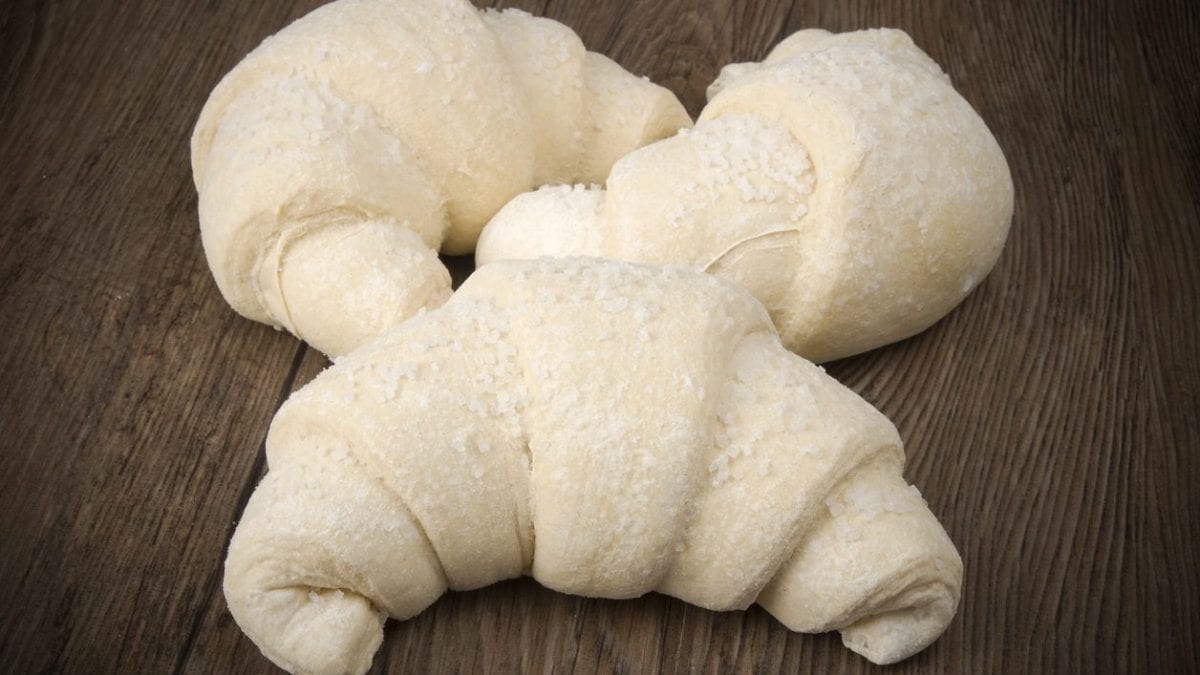
We know that the freezer is one of the most useful appliances in the kitchen: the advantage is that you can keep a wide variety of foods, raw, cooked, and ready-made, in it for long periods. Delicious croissants for breakfast are no exception, as are leavened doughs, sweet or savory, for brioche, bread, and pizza. Freezing them is a great way to optimize preparation time, as well as preventing waste in case of excess. The advantage? Freezing croissants isn't even complicated, but you do need to be careful to do it correctly. Let's see how.
Why Should You Freeze Leavened Doughs? When Should You Do It?
Freezing raw croissants allows you to bake them when needed, obtaining a fragrant, freshly baked product without having to make the dough each time. This is a very convenient solution when you want to prepare large quantities of croissants, perhaps to have them on hand for weekday breakfasts or for a special occasion, such as a weekend brunch with family or friends and to wake up without rushing on Saturday or Sunday morning. Croissants can be made with leavened dough, with brewer's yeast or sourdough, even in a savory version, or more quickly without puff pastry or with ready-made puff pastry or shortcrust pastry. In all cases, the freezer is an effective solution for preserving them, lasting up to 3 months if arranged correctly and without being filled with creams and jams. The same solution can be used with uncooked bread and pizza dough (when it is not yet topped), making them specifically in larger quantities, or when there are leftovers. Freezing doesn't kill yeast, but it slows its activity, putting the fermentation process on hold . Our advice? Freeze before the final leavening stage, preferably with pre-formed loaves and rolls, to ensure the dough hasn't gone beyond the proper maturation limits. Freezing won't improve a poorly made dough; its purpose is simply to preserve it for a longer period of time.

How to Freeze Raw Croissants and Leavened Dough Correctly
It must be said that storing uncooked croissants and leavened dough in the freezer is a fairly simple operation. Once you have shaped your croissants, place them on a baking sheet lined with parchment paper, spaced apart, and freeze them for an initial hour or two, so they harden. Get some standard freezer bags and then portion them out as needed: it's best not to overdo it, so you only thaw what you need. For puff pastry croissants, be careful not to use puff pastry that is nearing its expiration date or has expired: more than for food safety reasons, the dough could lose its qualities, resulting in an unsatisfactory end result. If you are making pizza, however, divide them into loaves: you can freeze them individually wrapped in plastic wrap and then put them in freezer bags, or you can roll them out and wrap them in parchment paper, then seal them in an airtight container or your usual bag. If you intend to store food for a long time, remember to label the packaging with the product name and date.

How to Thaw Correctly
A rule that applies to most foods frozen at home is to avoid thermal shock and the risk of possible contamination from external agents that can cause health problems. For leavened dough, the best method is to refrigerate for at least 12 hours (overnight) and then leave at room temperature long enough for the croissant or loaf to swell and complete the leavening process. Bread or pizza dough may require a brief handling after refrigeration to restore elasticity. In all cases, once thawed, it cannot be re-frozen raw, but only after cooking.
;Resize,width=767;)
