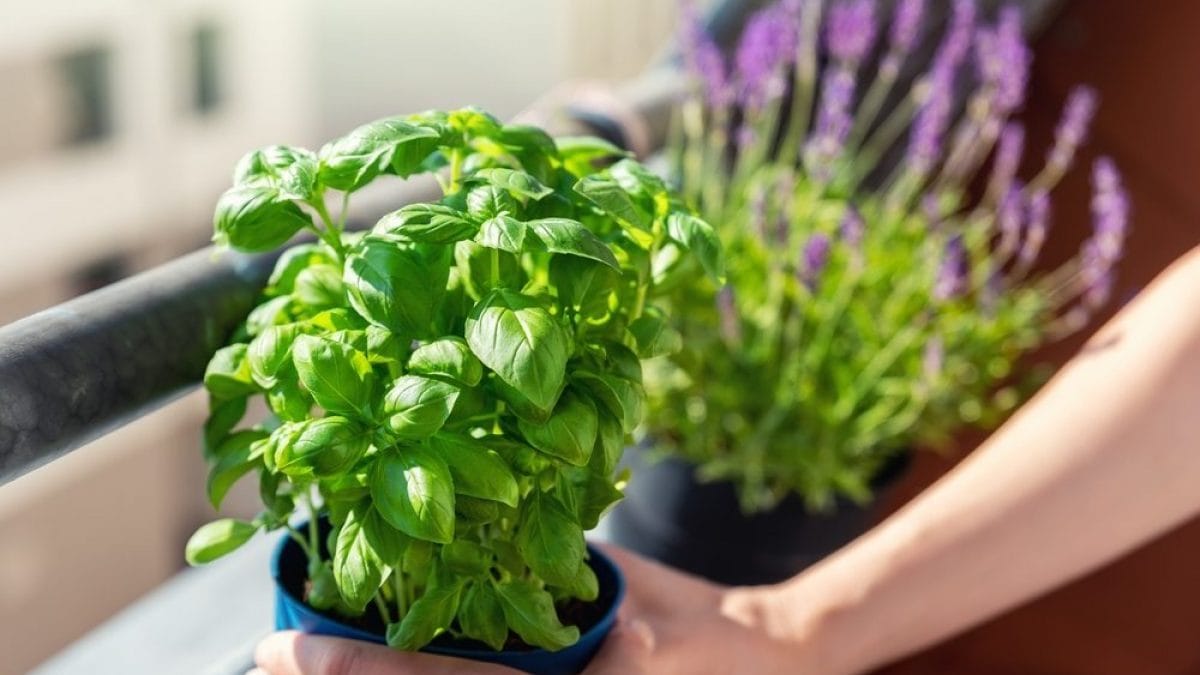
Basil, whose scientific name is Ocimum basilicum, is an aromatic herb fundamental to gastronomy, but it has actually become a symbol of all Mediterranean cuisine. What would tomato puree be without basil leaves to flavor it? Pesto, one of the most beloved condiments in cuisine, wouldn't even exist. And to think that it's a plant native to India, but which has found its ideal habitat in the Mediterranean basin.
It's impossible to live without basil, not only because it's delicious but also because of its many beneficial properties, including being an excellent source of vitamin C and extremely rich in minerals. So why not try growing it yourself at home? You don't need a lot of space or special skills: basil is a very easy plant to grow in a pot; all it requires is a sunny spot like a balcony, a garden, or even a windowsill, and a few simple precautions. Here are all the tips and tricks you need to know to grow your own potted basil plants to perfection.
How to Grow Basil on Your Balcony From Seeds
Growing basil isn't difficult, as long as you know the plant's characteristics and preferences. This will make it easy to grow your plants in pots and place them on your balcony, or even on a cupboard at home if you don't have an outdoor space, as long as it's well-lit. The first characteristic to know about basil is that it loves sunlight (but not direct sunlight, otherwise the leaves will burn) and mild temperatures, while it tolerates cold and humidity.

Once you've chosen your favorite basil variety, you have two options: you can buy seeds and start growing from scratch, or you can purchase fully developed plants from a nursery and transplant them into pots on your balcony. If you choose seeds, you should plant them between February-March and late May-early June, placing them in terracotta pots filled with universal potting soil. Place a first layer, distribute the seeds evenly, spacing them about 3-4 cm apart, and cover with another layer of soil.
Place the pot in a sunny and bright area of the balcony (but this also applies to the garden, terrace, or indoor shelf), but in a spot where the sun's rays don't shine directly on the plant, otherwise the leaves will quickly burn. The key rule at this stage is to keep the soil moist but never soaked, as basil is very sensitive to waterlogging. A good method is to stick your finger into the soil and check whether the top few inches are dry: if they are, it's time to water, but remember that once the plant begins to grow, the water shouldn't get on the leaves.

By following these tips, about a month after sowing, the plant should be mature enough to harvest its first leaves. Remember, when the basil flowers emerge, you'll need to cut them off; otherwise, the plant will waste energy producing seeds (which come from the flowers) rather than leaves. Don't throw them away, though! Basil flowers can also be used in cooking, both fresh to garnish salads, pasta dishes, or to flavor salt, or dried as a condiment for dishes.
What if Your Basil Has Flowers?
Basil flowering is a natural part of its life cycle: when the first flowers appear, the plant is signaling it's ready to produce seeds. However, this physiological change alters the plant's behavior: much of its energy is diverted to seed formation, to the detriment of new leaf production, which can become less abundant and sometimes lose some of their intense aroma. If your goal is to have fresh, fragrant leaves throughout the season, it's advisable to regularly remove the inflorescences as soon as they form, thus encouraging the plant to refocus its energy on leaf growth.
If you decide to let your basil flower, you can still take advantage of this stage: the flowers are edible and offer a more delicate, slightly spicy flavor than the leaves. You can use them fresh to add a touch of drama to salads, pasta dishes, or appetizers, or dry them to make aromatic salts or herbal teas. Furthermore, by letting the plant complete its cycle, you can harvest the mature seeds and save them for planting the following year, turning the flowering into a resource for future crops.
How to Transplant Basil Into Balcony Pots
If you purchased the basil plant from a nursery, all you need to do is transplant it into the pot you have at home, the one you plan to place on your balcony or wherever you prefer to create your own small basil stash. We recommend choosing a terracotta pot at least 18 centimeters in diameter, with a saucer to catch the water when you water the plant, and a good all-purpose potting soil; basil grows well in any type of soil, but there are also specific potting soils for aromatic plants that are even more fertile and nutritious.

Usually, in the pot you buy, there are several basil plants, so the procedure to follow is as follows:
- turn the plastic pot you purchased upside down and extract the entire root ball, then separate each seedling trying not to break the roots too much;
- place the seedlings in the pot you have chosen, previously filled with soil, and space them at least 5 centimeters apart so that they have enough space to grow;
- Add enough soil to fill the pot without compacting it too much and gently water the seedlings.
Remember to carry out the repotting operation in a shaded area: as we have explained, excessive heat or direct sunlight tend to ruin the basil and cause the leaves to wilt.
How to Care For Basil Plants
Once the seeds have grown or the transplant has been successful, it's time to care for your basil plants. How? Here are some tips to keep them lush and fresh:
- You can keep basil pots on the terrace or balcony during the spring and summer months, as long as they don't get direct sunlight, but during the colder months, you should bring them indoors: basil freezes and dies in low temperatures. Alternatively, there are special covers available to protect the plants from frost.
- It's essential that the area where you grow basil is sunny (it's a light-loving plant), even indoors, and that the plants are not directly exposed to cold or hot drafts. Ideally, place the pots in a spot where they get morning or late-morning sun; partial shade outdoors is ideal.
- Always check that the soil is sufficiently moist using your fingers, as explained above. If it feels too dry, it's time to water. Use room-temperature water and water the seedlings early in the morning or in the evening after sunset, once in winter and twice a day in summer. Be careful of waterlogging; basil is particularly sensitive to it, and if the soil is too wet, the roots will rot, so water sparingly: the soil should be moist, not soaked.
- Be careful how you pick leaves, as this also affects the plant's health. Always choose the largest and most mature ones, leaving the youngest ones on the plant and giving them time to grow. Use scissors, but don't pick too many leaves at once, or the plants will suffer. Also remember to remove the inflorescences to encourage greater leaf production.

;Resize,width=767;)
