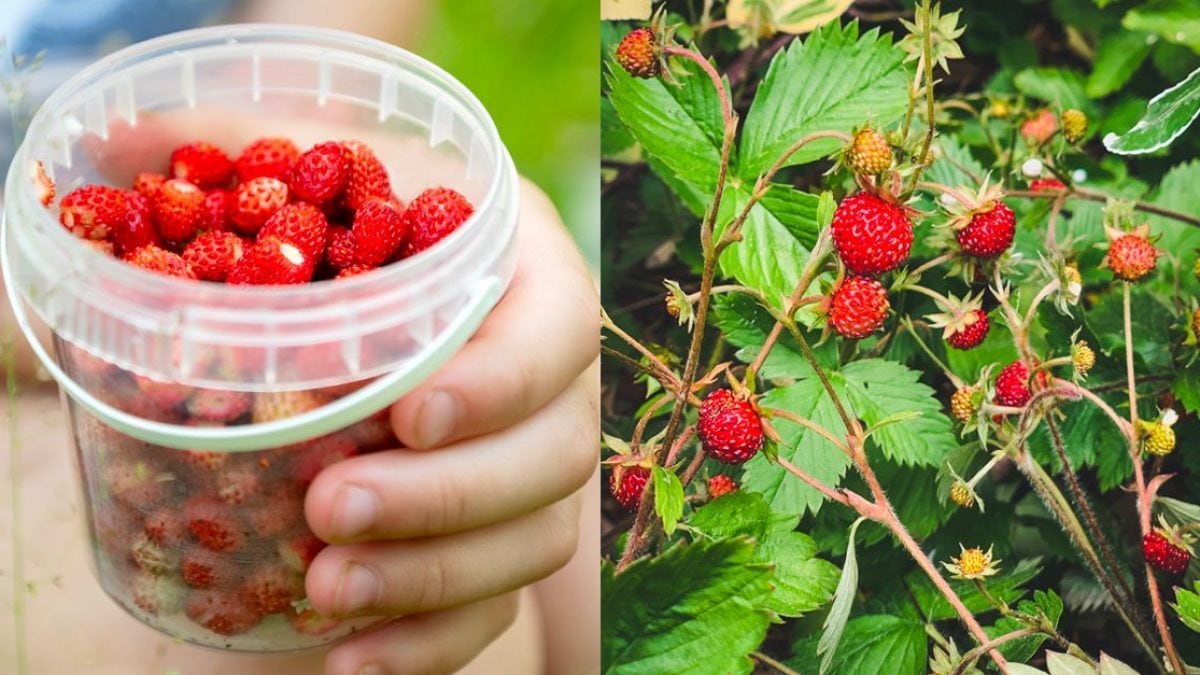
In a birthday cake or as a Sunday dessert, we have all eaten them at least once in our lives: wild strawberries are small fruits with a sweet and sugary flavor and are part of the large family of berries.
Wild strawberries grow spontaneously in nature, although cultivation for fresh consumption or for processed products is increasingly widespread. Incredibly used in countless recipes such as summer tarts, spoon mousses, and even fruit salads, wild strawberries can also be grown in your own garden: we explain everything in this article.
Characteristics and Beneficial Properties
Sisters of blueberries, raspberries, blackberries, and currants, wild strawberries are wild fruits belonging to the Rosaceae family and the Fragaria genus. They come directly from Europe and Siberia, and in the U.S., the most common variety is Fragaria virginiana. Compared to common strawberries, they have an elongated, irregular shape, are very small, and have a slightly lighter shade at the base. Like strawberries, however, they are actually "false fruits": this is because, botanically, the true fruits are the yellow seeds visible on the surface, called achenes.
Loved primarily for their flavor, wild strawberries are also particularly appreciated for their beneficial properties: they are rich in vitamin C, calcium, and phosphorus. They also contain a lot of water and fiber, making them suitable for low-calorie diets and for summer consumption. Finally, they are especially recommended for those suffering from mild hypertension, as they help keep blood pressure levels under control.

How to Grow Wild Strawberries at Home
As we mentioned earlier, wild strawberries grow wild in nature, which is why many people go into the woods to pick these wonderful little fruits. But perhaps you didn't know that wild strawberries can easily be grown in your own small home garden, and we'll explain how:
- Soil: Growing in the woods, wild strawberries prefer moist, humus-rich soil. If yours is too dry, we recommend adding some home compost.
- Plant location: It's best to choose a shaded area that can also receive direct sunlight. In any case, wild strawberry plants tolerate low temperatures and mountain climates well.
- Sowing: After lightly wetting the soil, proceed with sowing, but without burying the seeds too deeply and keeping a distance of about 40 centimeters between them, so that the seedlings have plenty of space to grow.
- Mulching: in case of excessive heat, it is advisable to cover the soil with straw, in order to limit the proliferation of bacteria and weeds.
- Watering: Wild strawberry plants require very moist soil, so water them regularly, while avoiding water-logging.
- Harvest: When your strawberries are a beautiful bright red, they're ready to be harvested. They should be ripe, fragrant, soft to the touch, and easy to pick from the plant.

Mock Strawberry, Wild Strawberries' Evil Twin
It's not widely known, but there's another type of strawberry, very small, bright red in color and incredibly similar to our beloved wild strawberries, but with one small difference: it's inedible. It's the mock strawberry, which arrived in our country directly from East Asia and can cause diarrhea and stomach cramps if eaten in excessive quantities.
Although it can easily be mistaken for a wild strawberry, there are some differences, distinguishable even with the naked eye, that it is best to pay attention to: first of all, the fake strawberry remains upright on the stem while the wild strawberry tends downwards and its flowers are yellow instead of white; it has a completely red surface with numerous protuberances and no seeds, it is slightly larger than the wild strawberry and, unlike the latter, it is not characterized by any odor.
;Resize,width=767;)
