
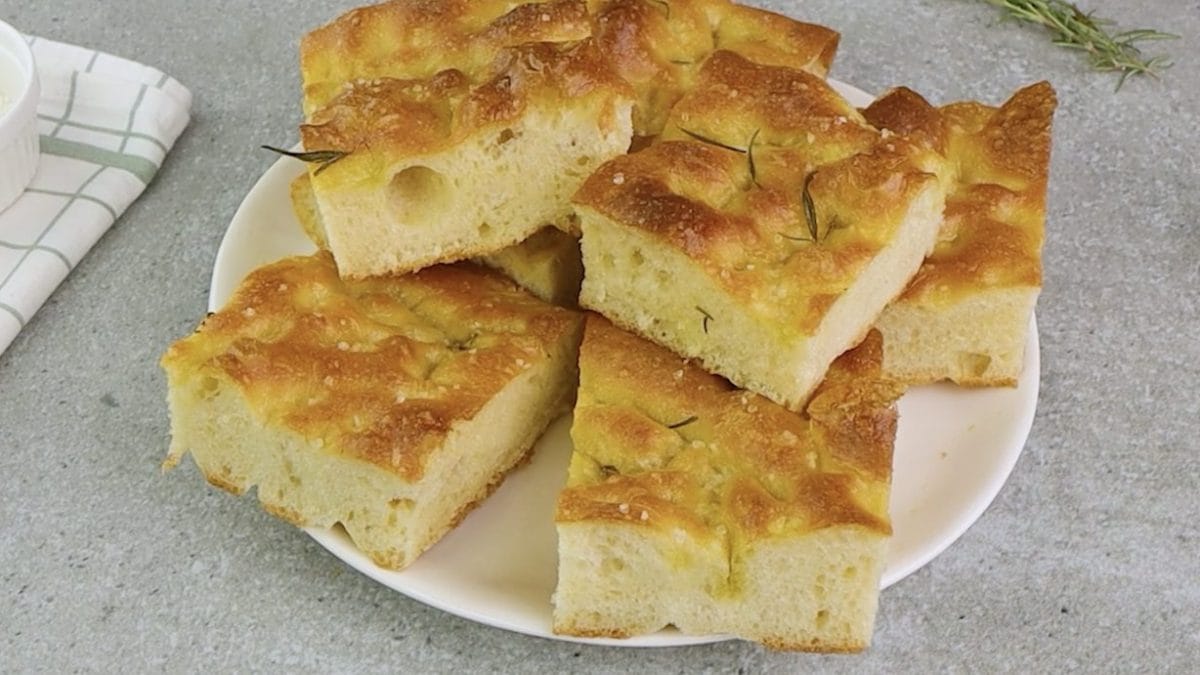
There’s a particular kind of satisfaction that comes from bread that feels lighter than it looks, and something you can tear apart with one hand while the other is already reaching for another piece. Milk focaccia takes the familiar structure of classic focaccia and swaps water for milk, quietly transforming the texture into something softer.
This is the kind of recipe that wins over just about everyone, and you can serve it as a side dish with soups, slice it for sandwiches, or set it out as an appetizer with a drizzle of olive oil.
What is Milk Focaccia?
Milk focaccia is a softer version of traditional Italian focaccia. While classic versions rely on water, olive oil, flour, and yeast, this variation introduces milk into the dough, which changes both texture and flavor. The crumb becomes more tender and slightly more delicate, while the crust still holds onto that signature golden finish.
Focaccia itself traces back to ancient Rome, where flatbreads were baked on hearths and seasoned simply with oil and herbs. Over time, regions across Italy put their own spin on it, with some thin and crisp, and others thick and airy. Focaccia dough is often described as “forgiving,” which is a polite way of saying it tolerates a bit of chaos and still turns out well.
Pro Tips for the Best Milk Focaccia
- Cold milk slows down yeast activity. Slightly warm or room temperature milk helps the dough get going without shocking the yeast.
- This dough is soft and slightly sticky. Damp hands prevent sticking without adding extra flour, which would make the bread heavier.
- Fold, don’t knead aggressively, as gentle folding builds structure while keeping the dough airy. Think “lift and tuck,” not “wrestle it into submission.”
- Volume matters here, so if the dough hasn’t doubled, give it more time. Under-proofed dough leads to a tighter texture.
Frequently Asked Questions
My dough feels too sticky, what should I do?
Sticky dough is completely normal here. Resist the urge to add extra flour immediately. Instead, use wet or lightly oiled hands to handle it. Adding too much flour can make the final bread dense rather than soft.
Can I add toppings other than rosemary?
While rosemary is classic, you can experiment with olives, cherry tomatoes, garlic, or even thinly sliced onions. Just avoid overloading the surface, as too many toppings can weigh the dough down.
How do I know when the dough has risen enough?
Look for visual cues rather than strict timing. The dough should double in size and feel airy when touched. If it springs back slowly when pressed, it’s ready.
What type of flour works best?
All-purpose flour works well for this recipe. If you want a slightly chewier texture, you can use bread flour, but it’s not essential. The goal is softness, not toughness.
Why didn’t my focaccia rise properly?
This usually comes down to yeast activity. Expired yeast, overly hot or cold liquids, or insufficient resting time can all affect the rise. Double-check your ingredients and give it time.
Can I make this without olive oil?
Olive oil plays a big role in both flavor and texture. While you can reduce it slightly, removing it entirely will change the character of the bread significantly.
How to Store Leftovers
Once cooled, store the focaccia in an airtight container at room temperature for up to 2 days, or refrigerate it for a week. For longer storage, slice and freeze it, and when needed, reheat directly from frozen.
Ingredients
How to Make Milk Focaccia
;Resize,width=712;)
In a bowl, combine the milk, fresh yeast, and olive oil. Stir until the yeast fully dissolves into the liquid.
In a bowl, combine the milk, fresh yeast, and olive oil. Stir until the yeast fully dissolves into the liquid.
;Resize,width=712;)
Place the flour in a large mixing bowl. Gradually pour in the milk mixture while stirring with a wooden spoon. Keep mixing until everything comes together into a soft dough. Cover with cling film and let it rest for 15 minutes.
Place the flour in a large mixing bowl. Gradually pour in the milk mixture while stirring with a wooden spoon. Keep mixing until everything comes together into a soft dough. Cover with cling film and let it rest for 15 minutes.
;Resize,width=712;)
After resting, sprinkle in the salt and mix again. Transfer the dough onto your work surface, and fold the dough over itself a few times. Cover it with the bowl turned upside down and let it rest for another 15 minutes.
After resting, sprinkle in the salt and mix again. Transfer the dough onto your work surface, and fold the dough over itself a few times. Cover it with the bowl turned upside down and let it rest for another 15 minutes.
;Resize,width=712;)
Lightly grease a bowl and your hands. Perform another round of gentle folds, then place the dough into the greased bowl. Cover with cling film and let it rise for 1 hour, or until it doubles in size.
Lightly grease a bowl and your hands. Perform another round of gentle folds, then place the dough into the greased bowl. Cover with cling film and let it rise for 1 hour, or until it doubles in size.
;Resize,width=712;)
Oil a 25x35cm pan and transfer the dough into it. Fold it slightly, then begin pressing it out with your fingertips. Brush the surface with olive oil, cover, and let it rise for another 40 minutes.
Oil a 25x35cm pan and transfer the dough into it. Fold it slightly, then begin pressing it out with your fingertips. Brush the surface with olive oil, cover, and let it rise for another 40 minutes.
;Resize,width=712;)
Once risen, gently press your fingertips into the dough to spread it across the pan. Add more olive oil on top, sprinkle with coarse salt, and scatter fresh rosemary.
Once risen, gently press your fingertips into the dough to spread it across the pan. Add more olive oil on top, sprinkle with coarse salt, and scatter fresh rosemary.
;Resize,width=712;)
Bake in a preheated oven at 240°C (460°F) for 20 minutes.
Bake in a preheated oven at 240°C (460°F) for 20 minutes.
;Resize,width=712;)
Enjoy!
Enjoy!
;Resize,width=767;)
