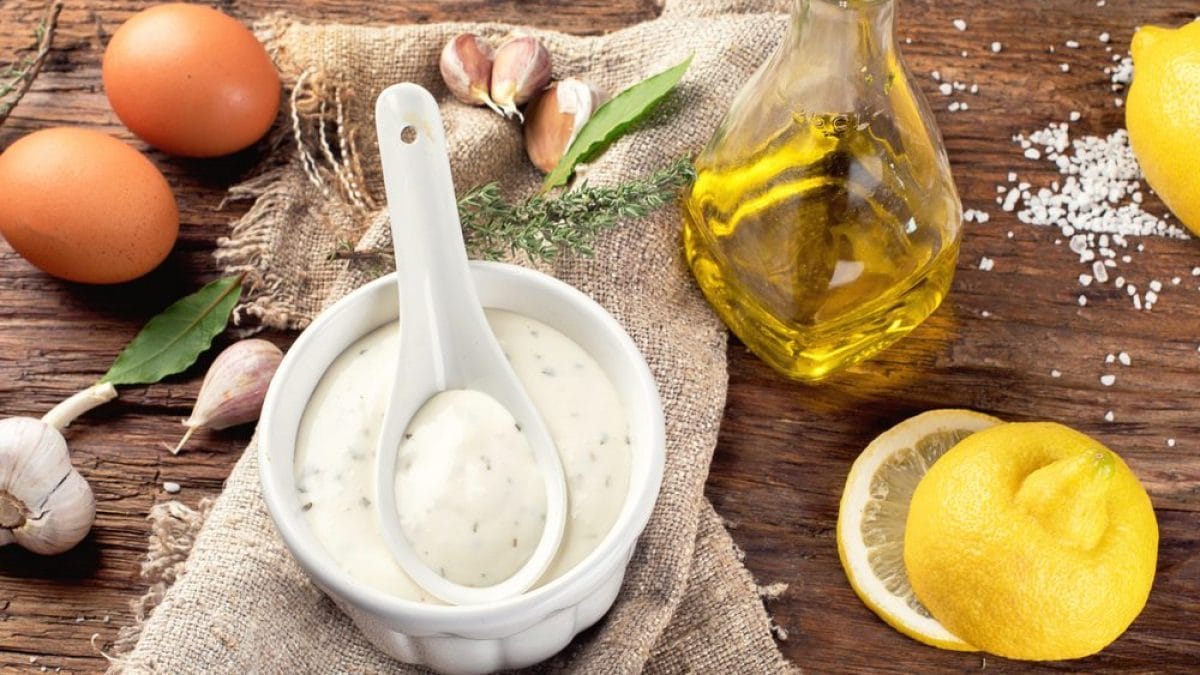
In the kitchen, they are the secret of many chefs (and not only), because they are capable of personalizing and giving identity and character to a recipe. We are talking about sauces, preparations that accompany, enrich or bind the ingredients within a dish. The sauce can be hot or cold, thick or fluid, made of butter, cream, tomato, broth, cheese, wine, vinegar, lemon. Often it is an emulsion, that is, the meeting of two liquids that naturally do not mix together (such as water and oil) and that, to stay together, require an element that binds them, called an emulsifying agent – egg yolks, mustard, but also milk casein or soy lecithin, also used as a food additive – and a mechanical action, such as that exerted by a fork, a whisk or a blender. It is not uncommon, therefore, to hear about sauces that have "gone crazy", mayonnaise above all, and that separate, that is, with the components that instead of staying together, divide, with aesthetic, but also taste, results that are not very satisfactory.
Why Do Sauces Separate and How to Avoid It
The separation of a sauce is almost always a matter of the balance between the components (liquids, fats, acids) being disrupted. You need to pay attention to the freshness of the raw materials (an old yolk, for example, has less binding capacity), the proportions, the temperature, trying to avoid thermal shock, the way in which the different ingredients are added (never quickly, but gradually so that they can blend together) and how they are incorporated, making rapid and regular movements, whether by hand or with an electric tool. Here are some practical examples.
- Mayonnaise. Probably the most famous of all sauces, it's known to be unstable: a cold emulsion of eggs, oil, and vinegar (or lemon juice), held together by the lecithin in the yolk. If you add too much oil all at once, beat too lightly, or the yolk is too cold, it could curdle, failing to whip or tearing.
- Béchamel sauce. A mother sauce in French cuisine, it's a versatile base that, in the classic recipe, combines milk with a roux made from butter and flour. If you pour cold milk into a hot roux, or if you cook it over too high a heat without stirring, the béchamel sauce can form lumps and the liquid portion can separate from the fat.
- Hollandaise sauce. Delicate and silky, perfect with eggs Benedict or paired with asparagus, it's notoriously "capricious." It's made by whipping egg yolks in a bain-marie with clarified butter, which must be added gradually, continuing to whisk. Temperatures are crucial here: the water in the saucepan must never touch the bowl or boil.
- Cream and cheese-based sauces. We have a combination of fatty and liquid components that can easily separate: to thicken them, we usually use egg yolk or flour, taking care not to cook them for too long at high temperatures: the risk is that they separate into an oily surface component and a grainy component.

5 Solutions to Fix a Separated Sauce
When a sauce separates, the temptation is to throw it away and start over. Often, however, it doesn't take much to get it back on track. Here are five "universal strategies" to try.
1. Lower The Temperature
Often, excessive heat causes sauces to separate. This can happen while the sauce is still on the stove: the first thing to do is turn off the heat or lower it and stir vigorously.
2. Add a Reactivating Liquid
A small amount of warm or hot liquid can help thicken the sauce. Depending on the type, this could be hot water, broth, milk, or even cream. Add it little by little, stirring vigorously with a whisk or wooden spoon. This trick helps loosen the tension between the separated components and promote a new emulsion.
3. Use an Immersion Blender
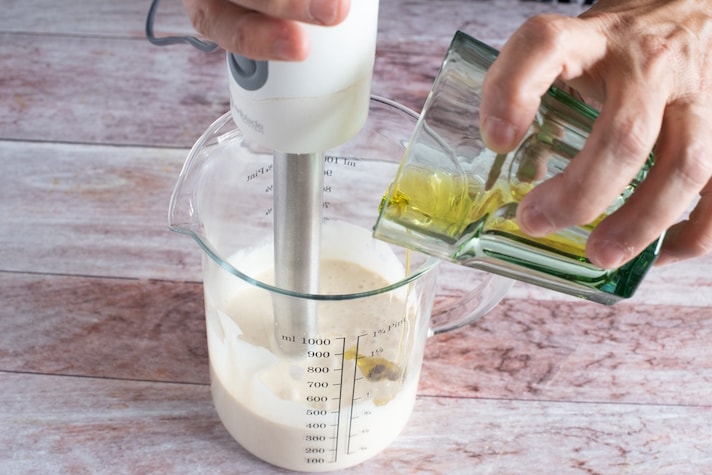
For emulsions that have gone haywire, an immersion blender can work wonders. Simply transfer the sauce to a tall, narrow container and blend from bottom to top: the motion helps recombine the fat and water molecules. If necessary, you can add a teaspoon of mustard or an egg yolk to help the process along, much like you would with mayonnaise.
4. Bind With an Emulsifier or Thickener
When the sauce seems irretrievably lost, you can use a binder. A teaspoon of flour, cornstarch, or potato starch dissolved in a little cold water can help bring the sauce together. Naturally emulsifying ingredients, such as the mustard or egg yolk mentioned above, can also act as a glue to restore the structure.
5. Start From a Small New Base
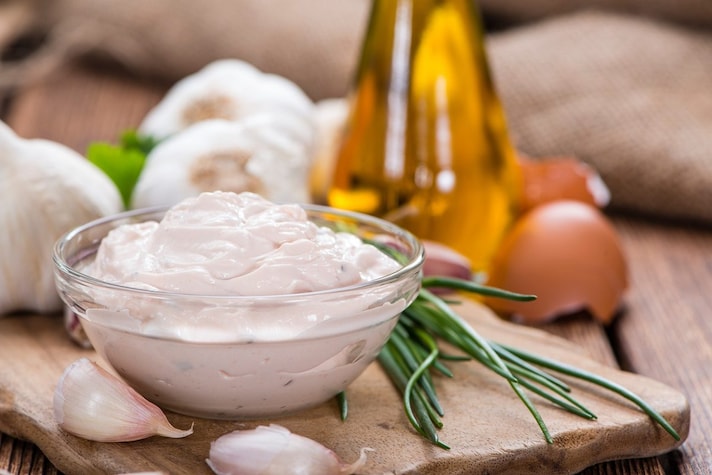
Sometimes the best way to save a sauce is to remake it, but be clever. You can prepare a small fresh base —for example, a new egg yolk for mayonnaise, or a little roux for béchamel—and gradually add the sauce that didn't work, as if it were the ingredient to be incorporated.
How to Store Sauces Correctly
Sauces are delicate preparations that can easily spoil if exposed to sudden changes in temperature or air, and should be consumed quickly because they spoil quickly. A cold sauce (such as mayonnaise) should be stored in the refrigerator at a constant temperature (around 39°F/4°C) and in an airtight container that prevents exposure to oxygen. Béchamel or cheese sauce, which are initially warm, should be cooled completely before refrigeration. A helpful tip is to choose a container proportionate to the quantity, so the preparation is less likely to oxidize. Homemade sauces will keep for a maximum of 2 or 3 days. Before using them, stir to recompose, because the ingredients tend to separate in any case, especially if there is fat present, which separates from the watery particles: you can use a whisk, or an immersion blender for a few seconds.
Should you use the freezer? It depends: egg-or cheese-based sauces are among those foods that should never be put in the freezer, as the cold breaks them down, altering their consistency and flavor. Béchamel sauce, on the other hand, is safe to go; it can last up to two months if well-sealed.
;Resize,width=767;)
