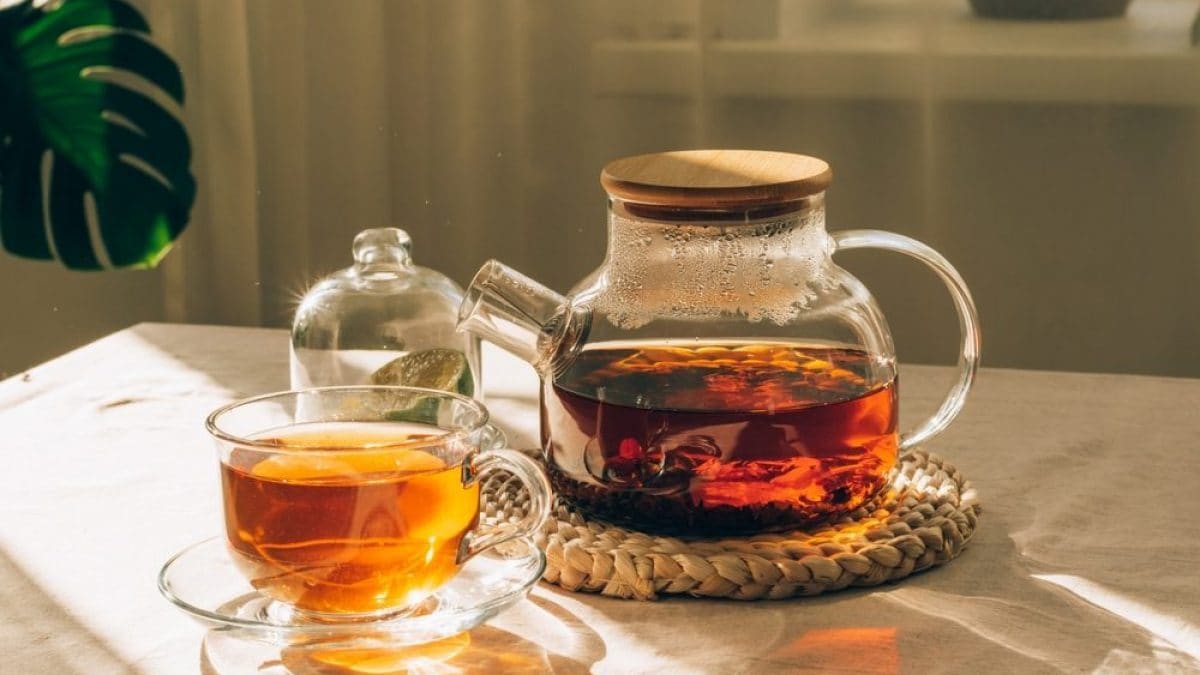
Tea is one of the most loved and consumed beverages in the world, not just something to sip on cold days but a true ritual that, in some cultures, is a historic tradition and an almost sacred ritual. Originating in Chinese culture, and deeply rooted as a moment of pleasure in countries like England and Japan, tea is now widespread throughout the world, but it's not always possible to recognize a truly high-quality product.
The world of tea, in fact, is a universe with a thousand facets: there are dozens of tea varieties, but often, for convenience's sake, we still prefer to limit ourselves to massive and superficial consumption of the product, purchasing primarily from the shelves of large retailers. And although today's tea bags have significantly improved in quality compared to the past—you can find tea bags of a certain quality—it remains undeniable that loose leaf tea is superior. Even in this case, however, in addition to knowing how to prepare it correctly, you also need to learn how to choose it.
In herbalist's shops and specialty tea shops, you can find countless different types of tea leaves. How can you navigate them and choose an objectively good one, regardless of your personal taste preferences? Here's a guide to recognizing good tea and learning to evaluate not only its appearance and aroma, but also its provenance and certifications.
1. Tea's Appearance

The first impact of the tea you're about to purchase is visual: learning to evaluate the appearance of tea leaves is therefore important and a factor that already helps you understand the quality of the product before you. Regardless of the different cultivation and processing they undergo, the leaves of a good tea should be brightly colored, shiny and not dull. If they appear dull, faded, or damaged, it means the product is definitely not fresh or, at least, of low quality. Furthermore, the leaves of a good tea are whole and of uniform size, especially if we're talking about specialty teas, whose leaves are hand-selected in the final stage of processing. You can also observe the tea after infusion to further confirm its quality: the product is valuable if the liquid is also vivid and bright, clear and not cloudy. It's best not to rely too much on the intensity of the color; some excellent quality teas barely "color" the water, others that dye it quite a bit.
2. Tea's Perfume

When it comes to tea, the first thing that captures and captivates you is its scent. Every tea has a specific, characteristic odor and aroma, but there are also objective parameters that help you recognize a quality product simply by using your nose. The scent of a good tea should be pleasant and easily perceptible, pungent enough but not excessive, and with natural odors. If you detect overly strong or chemical, unpleasant, or pervasive elements, it's best to leave it alone; it means the tea is old, poorly stored, or of poor quality. As with wine, the more pronounced the scent, the better the quality of the tea.
3. Tea's Consistency

What does touch have to do with tea? Actually, much more than you think. It's clear that you can't walk into a store and start touching the products, but sometimes leaves are set aside specifically for this purpose, or you can check the texture once you get home. A good, quality tea has leaves that are smooth and slightly springy when dry, not too easy to break, while when wet they are soft and tender, in some cases slightly thickened by the water.
4. Tea's Flavor

The taste of tea is the last factor you can evaluate, because only once you get home and brew a cup can you truly experience it. However, it's important to learn to evaluate it in the future: it's a fundamental element in recognizing good tea. Regardless of the tea variety and the specific characteristics of each type, quality tea is distinguished by a distinct yet subtle flavor, in which all the aromas are distinct without one overwhelming the other. How can you tell? Inhale the steam rising from the cup with your mouth —this will help you better perceive the aromas—and let the tea flow slowly over your tongue before swallowing.
5. Tea's Origins

When looking for quality tea, as with all products, knowing its provenance is an important indicator of its value: the organoleptic characteristics of the plants are closely linked to the specific characteristics of the soil, climate, and altitude of the country from which they originate, all factors that significantly influence the quality of the product. Furthermore, some regions famous for tea production—Darjeeling in India or Ceylon in Sri Lanka—often have geographical designations of origin, a mark that certifies their provenance, purity, and therefore quality. Knowing the product's provenance also helps prevent fraud, ensuring that the tea is authentic and not a blend of inferior varieties.
6. Tea's Certifications

The topic of certifications is quite controversial: as with coffee, there is still no clear definition of the standards that distinguish a specialty tea from one that cannot be, meaning reliability can vary and one could encounter counterfeit certifications, tests passed on non-representative samples, or regulations that are no longer up-to-date. How can one navigate these complexities? The key is to verify the certification body's reputation. Among the most reliable certifications in the tea industry is the Food Safety Certification (e.g., FSSC 22000), part of the GFSI (Global Food Safety Initiative) certifications, recognized worldwide as the most stringent in terms of food safety prevention. The certification requires that the entire supply chain be monitored and follow stringent quality requirements to ensure the final product is wholesome, safe, and of high quality.
7. Tea's Price

The price of tea can be an additional indicator of quality, especially when purchasing loose-leaf tea, but it's not one of the key factors determining whether you're purchasing a valuable product. The price, in fact, is influenced by factors such as the product's processing, the rarity of the plant from which it's extracted, and the brand that produces it (if it's historic or renowned, for example, these factors also influence the selling price). A high price, therefore, isn't a guarantee of quality and should be kept in mind to avoid scams: even a cheap tea can be good, if chosen carefully based on the factors previously mentioned.
;Resize,width=767;)
