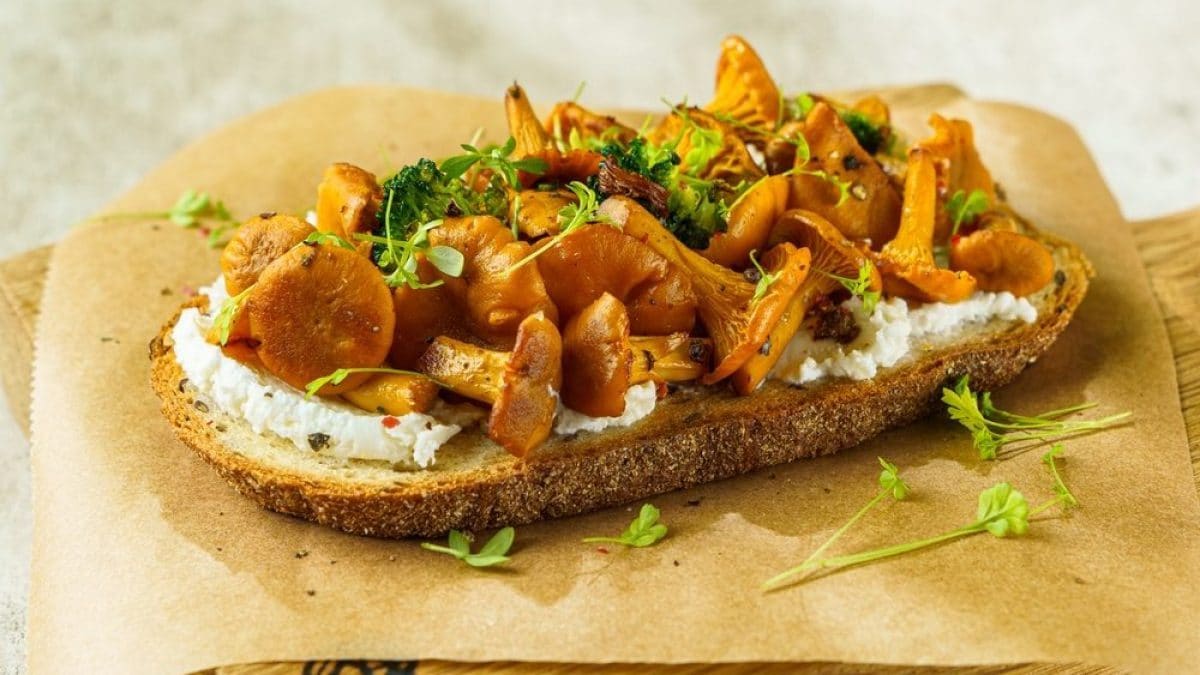
They're yellow like the sun, smell like summer fruit (unlike other mushrooms, which are usually herbaceous and earthy), and have a sweet, aromatic flavor: they're chanterelles. Whatever you call them, Cantharellus cibarius is one of the best-known and most beloved wild mushrooms in the kitchen, almost on par with the prized porcini, the king of the forest. This is due to its particularly delicate flavor, which makes it ideal for risottos, pasta dishes, and pan-fried side dishes, to which it also adds a touch of aesthetics with its bright color. Chanterelles grow between June and October, especially during summer and early autumn, although peak availability varies from year to year depending on the weather. Let's see how to make the most of chanterelles in the kitchen, discovering how to recognize, clean, and cook them.
What Are Chanterelles and How to Recognize Them
“Chanterelle” is one of the many names given to the mushroom scientifically known as Cantharellus cibarius, a member of the Cantharellaceae family, which includes several species and varieties of edible mushrooms. It's hard to miss in the undergrowth, as it features a distinctive, intense yellow hue throughout, a funnel-shaped cap with wavy edges, and a short, firm stem. The intensity of its color can vary, from yellow to orange, depending on the humidity level of its specific habitat. Its flavor is always the same: sweetish but also a bit salty on the finish, with a typical aroma of fresh fruit such as peaches, apricots, or plums, and a firm, fibrous, almost velvety pulp.
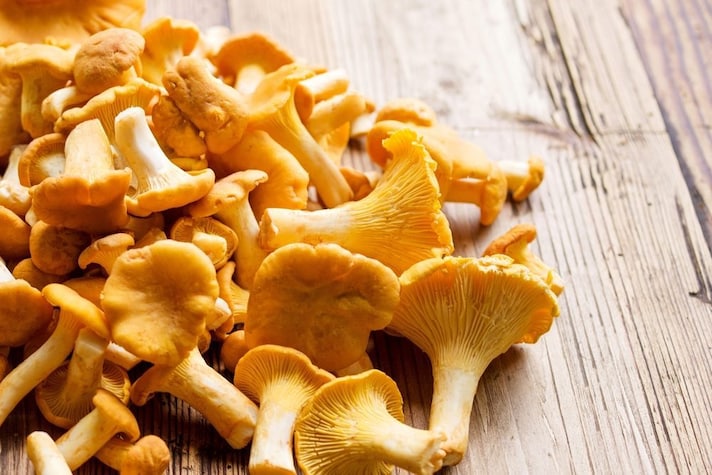
The shape and color of chanterelles make it extremely difficult to confuse them with other species. They may resemble the "finferla" (Cantharellus lutescens), an equally sweet and aromatic mushroom that also belongs to the Cantharellaceae family, but have completely different colors: the long, narrow stem is creamy yellow or orange, and the trumpet-shaped cap has brownish-orange hues. Furthermore, the chanterelle grows in an even more humid habitat than chanterelles. It is nevertheless an edible mushroom and particularly delicious, especially as a meat flavoring. However, be careful not to confuse chanterelles with the poisonous "olive mushroom" (Omphalotus olearius): the cap is orange but broader and more rounded with prominent gills, and it grows only on tree trunks, unlike chanterelles, which prefer the ground.
Some people also confuse chanterelles with the so-called "false chanterelle," Hygrophoropsis aurantiaca, which actually has a blackish-brown stem. In this case, the error is less serious, because this species is edible, but if you have even the slightest doubt about the edibility of the mushrooms you've collected, go to the appropriate local health authority office responsible for certifying their healthiness.
Where Do Chanterelles Grow and How to Harvest Them
From an ecological standpoint, chanterelles are considered symbiotic mushrooms, meaning they can grow in a variety of forest environments. Specifically, the mushroom's spores form symbiotic relationships with both broadleaf trees (such as beech, oak, and chestnut) and conifers (particularly fir and pine). This makes it a ubiquitous species, capable of adapting to diverse forest environments, from mountain beech forests to sandy pine forests, and present across a wide altitude range, from lowland plains to high mountain forests. In short, you can find these delicious mushrooms almost everywhere in our forests, both in the Pacific Northwest, the Northeast, the Upper Midwest and along the Appalachian Mountains.
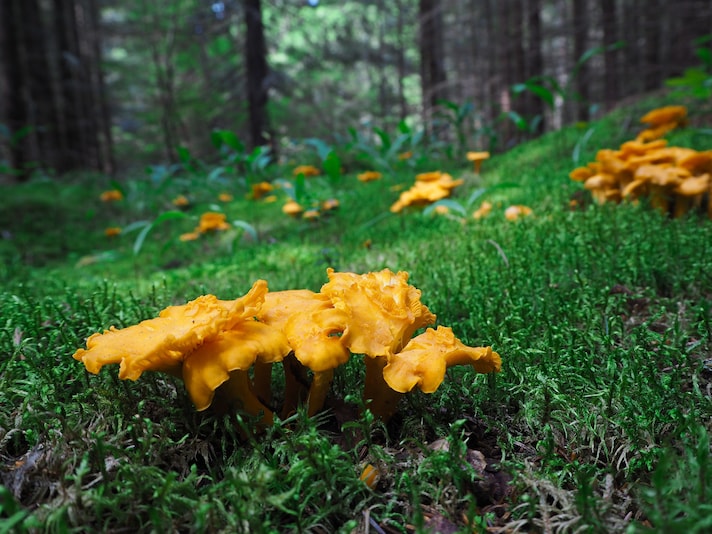
Chanterelles typically appear in summer and autumn, with abundant fruiting after well-distributed rainfall, especially if followed by cool, humid days. In some years, in well-exposed, humus-rich woodlands, you can observe veritable families, capable of coloring the undergrowth with their golden hue. Chanterelles, like all edible mushrooms, are regulated by harvesting restrictions that vary from region to region: in some, a permit is required to permit harvesting, while in others, a harvesting permit with weight limits on the daily amount of mushrooms to be taken, enacted to protect the forest ecosystem.
How to Clean and Prepare Chanterelles Before Cooking
Chanterelles have a yellowish-white flesh with a firm, fibrous consistency, and the distinctive feature is that they don't change color when cut. Pre-packaged mushrooms often require less thorough cleaning because excess soil has already been removed during preparation, but in general, all mushrooms should be thoroughly cleaned before using in recipes or storing. How should you treat chanterelles before cooking them? It's very simple, but requires a little care.
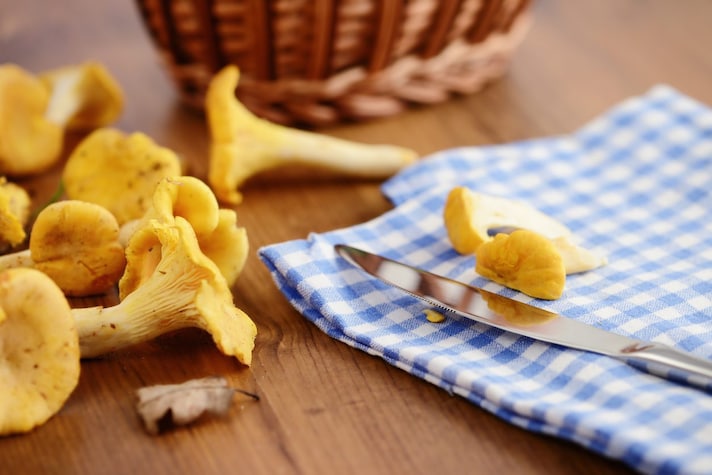
Unlike other varieties, chanterelles have a particularly fragile and jagged cap, where soil residue can easily hide. Usually, mushrooms don't need to be washed because they act like a sponge that absorbs water, but in this case, an exception is made because a simple brushing may not be enough to remove soil residue hidden between the folds of the mushroom. To clean chanterelles thoroughly, proceed as follows:
- Using a sharp knife, cut off a few millimeters of the base of the stem, that is, the part that has been in contact with the ground and is dirtiest.
- Using a toothbrush, a soft-bristled brush, or a kitchen brush, remove any soil or leaves stuck between the pseudogills, on the cap, and along the stem. Do not use too much force, otherwise the mushroom will break.
- At this point, quickly rinse the chanterelles under running water, or wipe them with a damp cloth to remove any residual dirt. It's best to avoid soaking them, as they can lose some of their texture and aroma by absorbing water.
- Finally, dry with kitchen paper or a tea towel, because it is important to eliminate excess moisture before cooking.
Chanterelles come in various sizes, some smaller, others larger. Depending on how you use them, you can leave them whole, or cut the larger ones in half or quarters lengthwise. If you don't intend to eat them immediately, you can easily freeze them raw, either whole or chopped. There's no need to thaw them when you're ready to use them (because they'd become too watery); you can simply pour them directly into the pan and cook them.
How to Cook Chanterelles
Unlike porcini mushrooms, which can be eaten raw in small quantities, chanterelles must always be cooked: this helps neutralize heat-labile toxins that would otherwise cause gastric upset. When cooked, however, they are considered the "parsley of mushrooms" thanks to their great culinary versatility, where they find their way into a variety of dishes. Excellent preserved in oil, they are ideal for appetizers on crostoni or bruschetta, perhaps paired with a richly flavored cheese like Fontina or Gorgonzola. They are a perfect ingredient for risotto, cooked alone with a drizzle of milk and Parmesan or paired with savory ingredients like sausage, or for long fresh pasta dishes or as a filling for tortelli and ravioli.
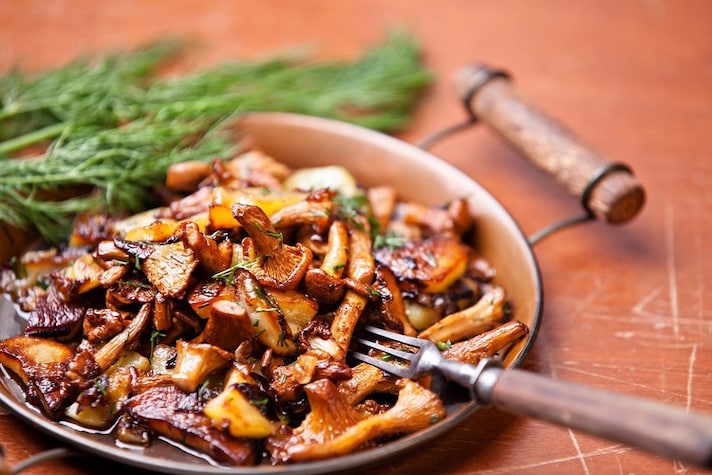
If you want them as a side dish, chanterelles are excellent sautéed in a pan with a light sauté of oil and garlic, or mixed with melted butter. You can eat them on their own, or use them as a perfect starting point for a filling for an omelette or a delicious savory pie. They pair perfectly with red meats, especially braised and roasted dishes, and also pair very well with delicate white meats like chicken and rabbit, especially cooked as escalopes. A classic pairing with polenta is also a must, perfectly balancing their sweet, delicate flavor.
;Resize,width=767;)
