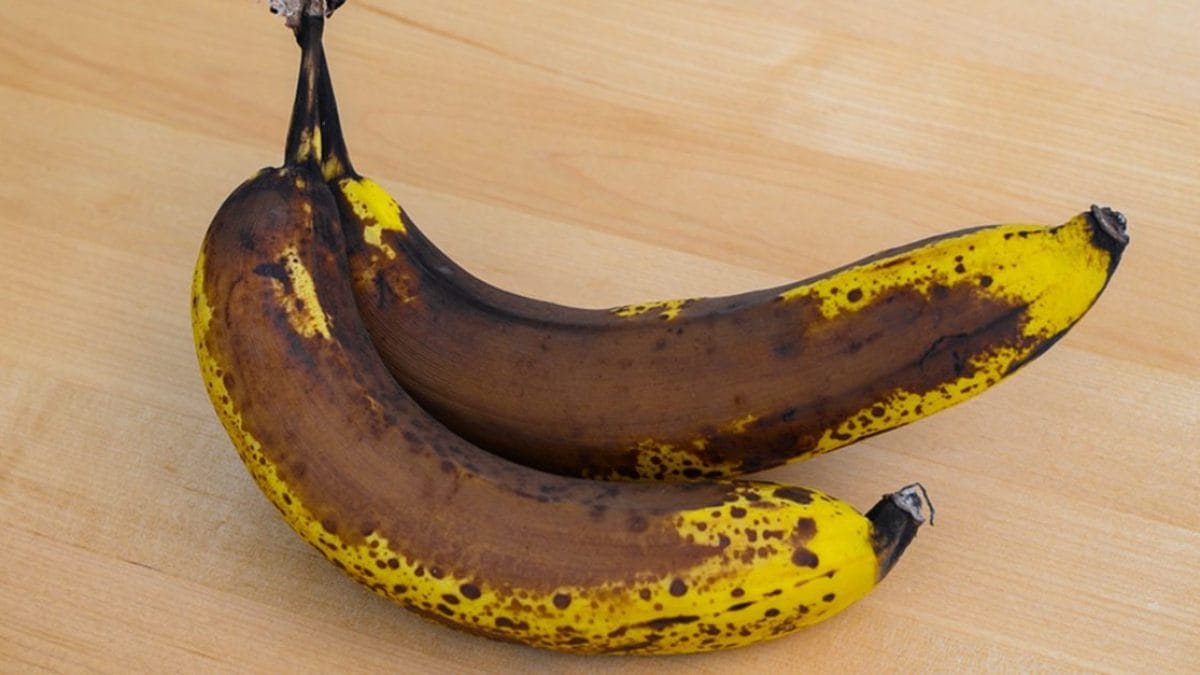
Bananas are among the most popular and popular fruits in the world, thanks to their versatility, numerous health benefits, and sweet flavor. The downside? They're a delicate fruit: once picked, they continue to ripen, changing their nutritional values and organoleptic properties. If exposed to high temperatures, they do so more quickly, risking overripeness in a very short time. "Forgetting" a banana can be tantamount to wasting it, which is why it's important to preserve it as best as possible. Below, are some methods for making bananas last longer.
How to Store Bananas at Room Temperature
The most effective way to store bananas is at room temperature, especially when they're not yet fully ripe, so buy them with yellow skin and a green tip. How? Bananas should be stored in a cool, dry place away from direct sunlight, as excessive heat accelerates the ripening process. If you want to speed it up, you can do so by placing apples, pears, or avocados near the bunch, which emit ethylene, a gas that contributes to the transformation of starches into sugars, thus softening the pulp. However, if you prefer to slow it down, there's a trick: separate bananas one by one and wrap the stem in aluminum foil or cling film to inhibit the release of ethylene.
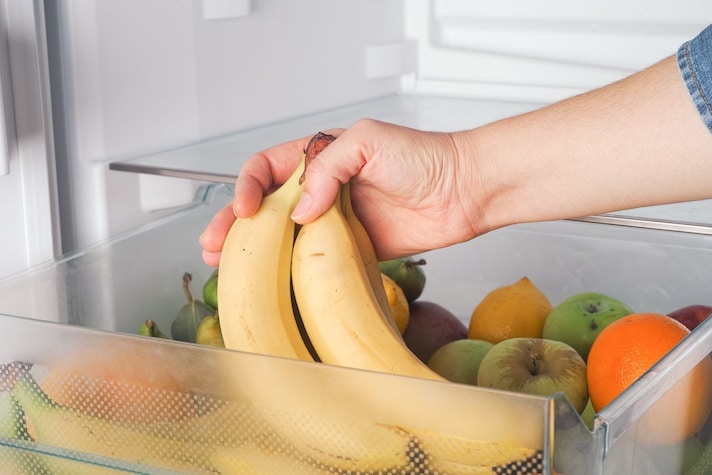
How to Store Bananas in The Fridge
Many people wonder if it's possible to store bananas in the refrigerator, as it's often said that cold isn't a friend of this tropical fruit. True or false? The truth is that the refrigerator can be a valuable ally in stopping bananas from over-ripening when they're already ripe, so storing unripe ones is not recommended. Furthermore, there are a few things to pay attention to: the peel tends to darken rapidly at low temperatures (which in the refrigerator usually range between 35°F/2°C and 46°F/8°C). This doesn't affect the color of the inside, which remains intact, but it does lose its freshness: it also makes the whole thing less appealing to the eye. For whole bananas, choose the compartment specifically dedicated to fruit and vegetables: once cut, however, it's best to transfer the banana to an airtight container and consume it within 24 hours.
Can They Be Frozen?
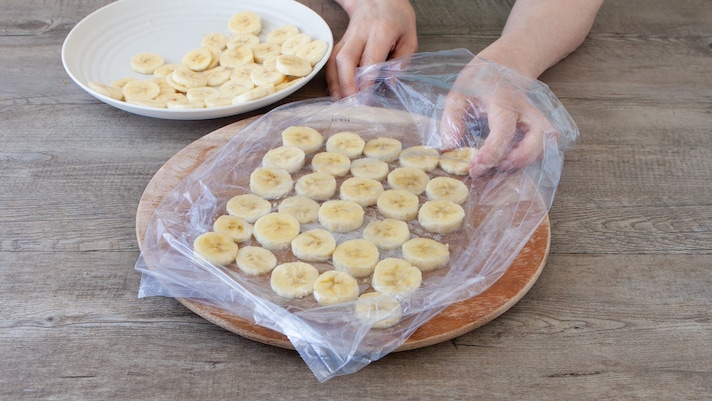
Most foods can be frozen, and bananas are no exception. The only real rule is to peel them first. Bananas cut into chunks and divided into individual bags, marked with the correct quantity and the date, are a decidedly space-saving solution compared to freezing them whole. To use them, you can thaw them at room temperature for a few minutes: the consistency will no longer be firm, but will tend to fall apart. What does this mean? That bananas are not suitable for eating alone as a snack or in a fruit salad, but they are perfect in baked desserts, like banana bread. Don't forget that several practical and easy smoothie or milkshake recipes start with frozen fruit. How long do they last? You can keep them for 3 to 6 months.
How to Keep Bananas From Turning Black
The more time passes, the more the banana blackens: it is one of those fruits that continue to ripen even after being detached from the plant that nourishes it. The banana turns black both on the peel and in the pulp: the reason is oxidation, a natural process that occurs due to exposure to air. There are essentially two precautions that can be taken: to darken the peel, the rules of storage at room temperature apply, avoiding nearby heat sources and direct light; while to prevent the pulp from turning brown, you can spray it with lemon, lime, or orange juice, since the citric acid and ascorbic acid (better known as vitamin C) slow the browning.
;Resize,width=767;)
