Reducing or replacing sugar in recipes has become an increasingly popular choice: common sucrose, in fact, is a product obtained through industrial refining processes that render it practically devoid of nutritional value. However, it must be taken into account that sugar in cooking is not only used as a sweetener for drinks, creams, or yogurt, but also as a true ingredient whose use in certain recipes is (almost) indispensable. For this reason, let's try to understand when it is possible to replace it and with what and when, instead, it is best to rely on it.
Why Replace Sugar (And When It Makes Sense to Do So)
There are various reasons for seeking an alternative to sugar. In most cases, it's a health-related choice, as granulated sugar is classified as free sugar (found in processed products, but also in natural ones, such as honey). According to the WHO, the World Health Organization, the amount of free sugars we can consume should not exceed 10% of our total needs (better still, 5%), but exceeding this amount is practically the order of the day: "Let's take the example of a person who consumes 2000 kcal a day, which would be the energy requirement of an adult leading a normal life. Knowing that 1 gram of sugar contains an average of 4 kcal, the grams of free sugars this person can consume are 50. And that's not a lot: consider that sugary drinks in cans contain 35 grams, a simple croissant 20 to 30 grams, and a teaspoon of sugar 5 grams. A glass of commercial fruit juice can contain 20 to 30 grams of sugar."
An excess of simple sugars is therefore linked to the risk of developing diseases such as obesity, type 2 diabetes, high blood pressure, ischemia, increased "bad" cholesterol, and hyperglycemia. In short, when white sugar is used exclusively as a sweetener, replacing it or using smaller quantities is a valid option. However, caution is needed when it also has specific technical functions, for example, when you want to obtain foamy masses in desserts by whipping it with eggs or to extend the shelf life of jams and preserves by acting as a natural preservative.
When talking about white sugar substitutes, it's useful to distinguish between natural sweeteners —the most famous is undoubtedly honey, but stevia also joins the "club"—and synthetic ones, used primarily industrially, such as the now-infamous aspartame. For home use, the first category is the most common solution, with products that are also readily available at supermarkets. Let's see which are the most popular.
1. Honey

Let's start with honey, the most popular and versatile alternative. It is an energy-giving food that possesses various beneficial properties, as it also contains small quantities of minerals, vitamins, and antioxidants. Depending on whether it is acacia, chestnut, or wildflower, it has different aromatic profiles. Compared to classic sugar, it has a slightly higher sweetening power: recipes generally indicate 70-80g of honey for every 100g of sugar. Furthermore, it is characterized by its fluid consistency, with the general advice of adjusting the other liquids present in the preparations.
2. Brown Sugar

Brown sugar is still sucrose, but less refined than white sugar, as it retains some of the natural molasses at varying levels, giving the grains a darker color and drier or moister texture depending on the type, whether raw or whole, such as muscovado. The substitution generally occurs in a 1:1 ratio, but with different color and flavor effects.
3. Molasses

Molasses is a byproduct of sugarcane or beet processing and is characterized by an intense flavor and a liquid, viscous, and thick consistency. In cooking, it is used in small quantities, replacing the 20-30% of sugar called for in recipes, or combined with other sweeteners: ideal in spiced desserts or rustic breads, because its addition does not go unnoticed.
4. Fructose

Fructose is a sugar naturally present in fruit and some vegetables and has a greater sweetening power than traditional sugar. This means that a smaller amount is needed to achieve the same sweetness: the recommended dose is 80 grams of fructose per 100 grams of sugar. It is available in powder form and is highly soluble.
5. Stevia

Among the best-known zero-calorie (and zero-carb) substitutes is stevia, which is obtained from the leaves of the plant of the same name and is used primarily in beverages such as tea, infusions, herbal teas, coffee, and milk. It comes in powder or lump form, just like white sugar. You must be very careful when using it, as its sweetening power is 200 to 300 times that of common sucrose and it has a taste similar to licorice.
6. Maple Syrup

More than just a garnish for delicious pancakes: this syrup, made from maple sap, is rich in iron, vitamins, and sucrose, and is lower in calories than traditional sugar. It has a runny consistency, while the flavor is delicate and reminiscent of honey (with the added benefit of being vegan-friendly). It's perfect for bundt cakes, desserts, and cereal and nut bars.
7. Coconut Sugar

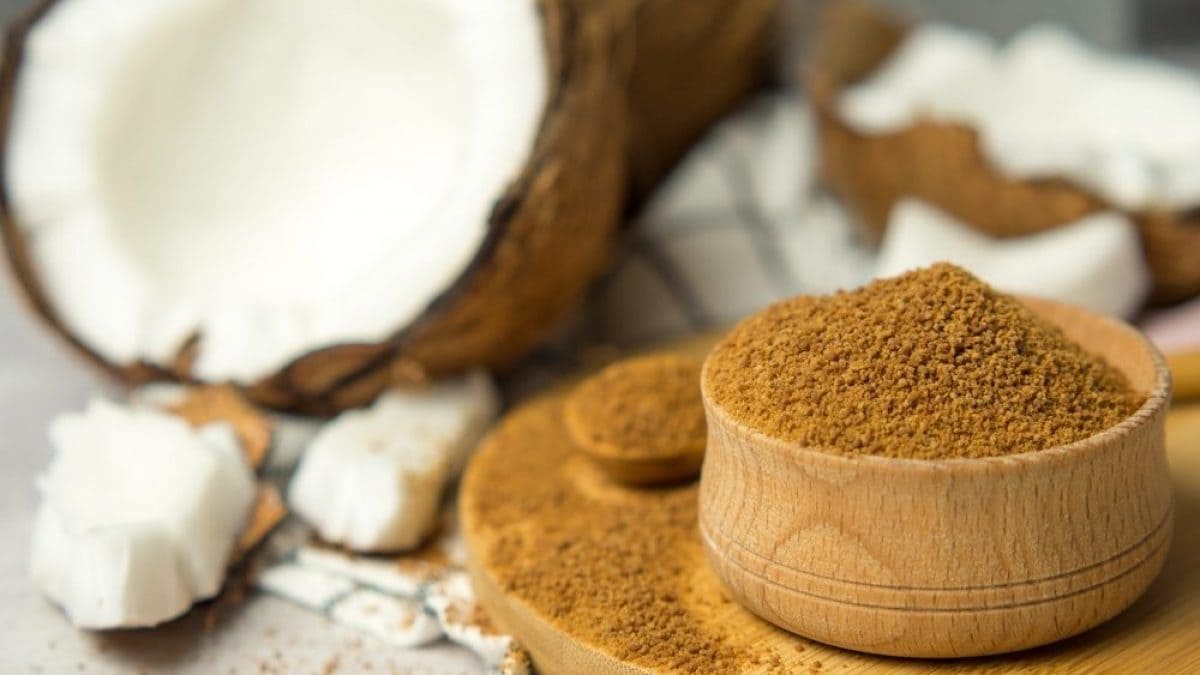
Coconut sugar is extracted from the sap of coconut palm flowers and in many ways resembles whole cane sugar: it has a fine grain, an amber color, and a faint hint of caramel. Despite its origin, it doesn't taste like coconut. The same amount can be used as granulated sugar. Among its unique characteristics is its very low glycemic index of 35.
How to Substitute Sugar in Recipes
From the list, it's clear that one substitute is not as good as another: they differ in consistency, color, and flavor, with details that are noticeable both when sugar is used in beverages and when it becomes an ingredient. Common sucrose, in fact, not only serves to sweeten, but also contributes to the structure of doughs, the formation of the crust, caramelization, and providing the right amount of moisture. From this point on, it's important to choose the right alternative for your dessert, given that different options don't all behave the same way when cooked. For example, when using honey or maple syrup, which are liquid, the mixture tends to be softer and more moist, while stevia can create problems with the dough, given that much less is needed, requiring recalculating the proportions with the other ingredients.
Mistakes to Avoid
As we've just seen, the biggest mistake to avoid is thinking that the alternatives are interchangeable. Secondly, it's wrong to believe that these options are automatically healthier than granulated sugar: honey itself, in fact, is a simple sugar, highly caloric, and should be consumed in moderation. The third point to keep in mind is that granulated sugar plays a fundamental role in some preparations, and eliminating it completely could even be harmful to your health: this is the case with preserves and jams, where common sucrose, in addition to aiding gelling, acts as a natural preservative, reducing the risk of mold and potentially dangerous microorganisms proliferating.
;Resize,width=767;)
