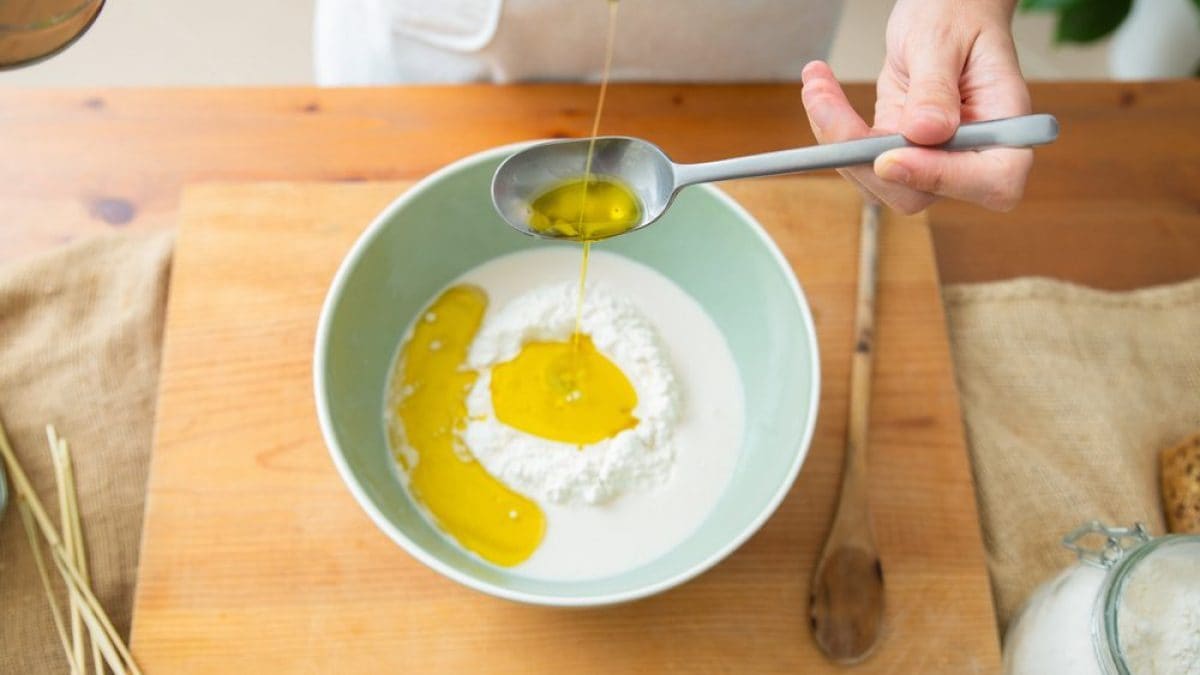
Replacing butter with oil in a recipe is a common practice, especially for vegetarians or vegans, if you want to reduce saturated fat intake, or if you don't have butter and need to make a dessert. This conversion is very easy to do, considering that 80 grams of oil corresponds to 100 grams of butter: to convert, simply subtract 20% of the amount of butter indicated in the recipe. Let's take a closer look at when you can replace oil with butter in sweet and savory dishes, and how to best do it.
How to Convert Butter And Oil
Generally, 80 grams of oil are considered to correspond to 100 grams of butter. Therefore, to perform the conversion, simply subtract 20% of the amount of butter indicated in the recipe. Example: If a recipe calls for 150 grams of butter, you will simply use 120 grams of oil (150g – 20% = 120g).
Why this ratio? For several reasons: butter is denser than oil, so a smaller amount of oil can replace a larger amount of butter; also, butter contains a certain amount of water, while oil is pure fat. Naturally, if you need to use butter instead of oil, you need to do the reverse, that is, add 20%.

How to Replace Oil With Butter
There are a few small things to keep in mind for a successful conversion: oil makes the dough more liquid than butter, so you may need to add a small amount of flour or other dry ingredients to achieve the desired consistency. To replace large amounts of butter, however, it's advisable to also add a small amount of water (about 20% of the weight of the replaced butter) to balance the liquid component. Also remember that oil may have a lower smoke point than butter (depending on the type of oil you use, but also on the type of butter), so you must be careful during the cooking phase not to exceed the indicated temperature to avoid burning the oil.
When Is It Possible to Replace Butter With Oil and Viceversa?
Replacing butter with oil is a process that can be done in many recipes, but it's important to choose the right ones to avoid compromising the final result. Recipes where this solution works perfectly are so-called soft doughs: muffins, cupcakes, cakes —especially chocolate ones, where oil gives a denser and moister consistency— cookies, and brownies. Recipes where this operation is more problematic are those with puff pastry, which requires the use of butter to achieve the right consistency and flakiness; tarts, for which butter is preferable as it gives the pastry greater crumbliness; and some creams, such as custard, require the use of butter to achieve the right consistency and flavor.
Which oil should you choose? Extra virgin olive oil is definitely the best option overall, but remember that, given its intense flavor, it can affect the final taste of the dish. For desserts and delicate dishes, it's best to use oils with a more neutral flavor, such as seed oil.
How to Replace Oil With Butter in Savory Dishes
Oil is generally used in savory dishes, but there are recipes that call for butter: fried cutlet, mashed potatoes, and risotto, to name a few. Even sauces like Hollandaise sauce require butter, and in this case, since it's part of the original recipe, we suggest following the instructions to the letter. The opposite may happen, and you may not have oil available and need to substitute it with butter. Reversing the substitution, that is, using butter in place of oil in savory recipes, can add a richer flavor and a different texture to your dishes: butter makes the mixture denser and more crumbly. In which recipes can you do this? Butter is perfect for sautéing onions, carrots, and other vegetables, giving a richer flavor to the sauce. It can be used to prepare fresh pasta, such as ravioli or tortellini, to gratinate baked dishes, or to prepare sauces like garlic sauce or butter sauce.

When To Use Both
The combination of butter and oil in cooking, particularly in European cuisine, is a technique that can significantly enrich the flavor and texture of dishes, although it also, of course, increases the calorie content. Several traditional Italian recipes call for this combination: butter provides a softer, more enveloping texture, while oil adds a crunchy note. Classic risotto alla Milanese calls for both butter for the final creaming and oil for the soffritto (sautéed vegetables). This is especially true when paired with ossobuco, which calls for a gremolata at the end—an addition of butter, garlic, and aromatic herbs.

Many fresh pasta recipes, such as ravioli or tortellini, call for both butter and oil: butter is used to roll out the pasta, while oil can be added to the filling or to season cooked pasta. When browning meat, you can use oil to create a crust and then add butter for a slower, more aromatic cooking. You can also use the butter and oil mixture to create a richly flavored stew, using the browning process.
;Resize,width=767;)
