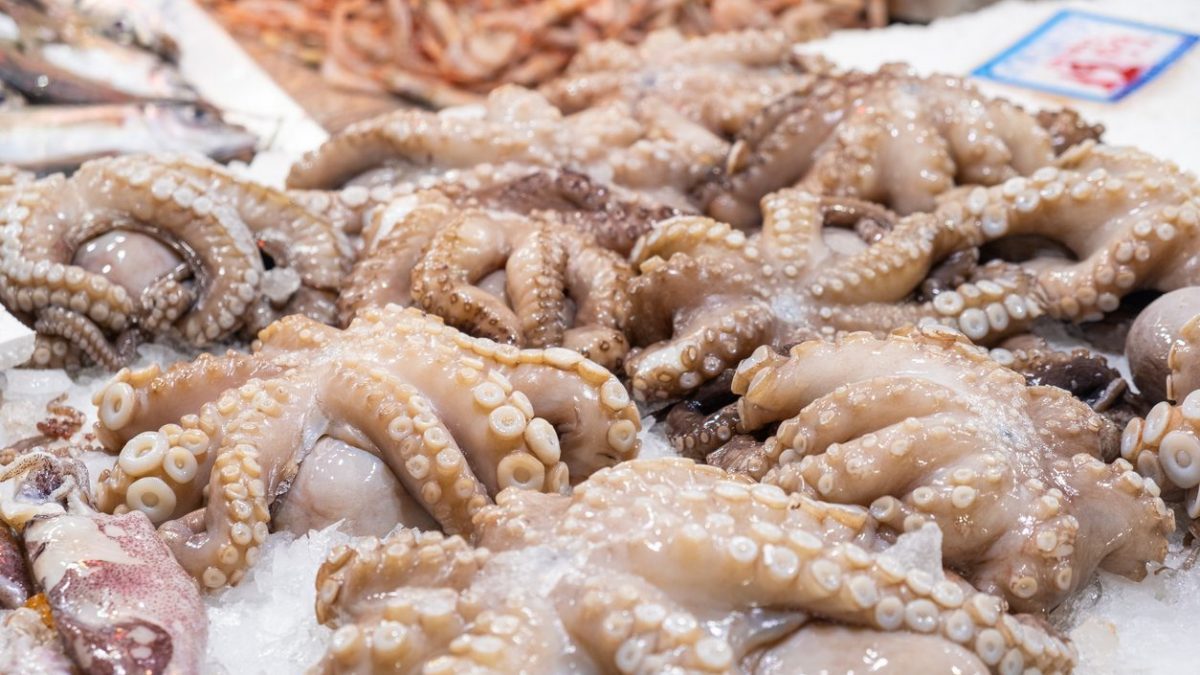
It's not uncommon to find yourself at the fish counter and not know if you're about to make the wrong purchase: you're afraid of buying an inferior product, spending too much, or even falling victim to food fraud. Knowing the differences between fresh and thawed octopus is important for feeling more confident before buying, and also for being able to ask the right questions when in doubt. Choosing one or the other not only allows you to spend the right amount, but also helps you understand the unique characteristics of both, so you can use them best in the kitchen. For example, thawed octopus must be consumed within 24 hours and cannot be refrozen for food safety reasons until cooked. Fresh octopus, on the other hand, often needs to spend some time in the freezer before being cooked to allow the fibers to break down, resulting in a softer texture once brought back to room temperature, otherwise the flesh risks becoming tough, rubbery, and inedible.
What The Law Says About Thawed Fish
In reality, buying fish at a seafood counter should also come with clear information, although the labeling system works differently from Europe. Seafood sold in supermarkets, fish markets, and restaurants is regulated mainly by the FDA, NOAA Fisheries, and state authorities, and labels must provide important details about the product. Consumers should look for information such as:
- Species identity, usually listed with the common market name (for example, “Atlantic salmon” or “Pacific cod”), while the scientific name is not generally required on retail labels.
- Country of origin, indicating where the seafood was harvested or produced, according to U.S. labeling rules such as Country of Origin Labeling (COOL) requirements for certain products.
- Production method, when applicable, such as wild-caught or farm-raised seafood, which helps consumers understand how the product was obtained.
For certain seafood products, U.S. regulations also require transparency about handling. If seafood has been previously frozen and is sold thawed, retailers often indicate this with wording such as “previously frozen” or “thawed,” so customers can understand the product’s condition. Before buying fish, shrimp, or shellfish, it is always worth checking that the label is complete and that the seller can provide clear information about the product’s origin and handling. If details are missing or unclear, asking questions or choosing another retailer is the safest approach.

How to Recognize Fresh Octopus From Thawed One By Sight
Make sure the species is Octopus vulgaris, commonly known as the common octopus or rock octopus. This species is widely distributed across the world, including the Atlantic Ocean, Mediterranean Sea, and other temperate coastal waters. In the United States, related populations of common octopus are found mainly along the Atlantic coast, Gulf of Mexico, and Caribbean waters, while other commercially important octopus species are harvested in the Pacific Ocean, particularly off the West Coast. High-quality octopus available on the U.S. market often comes from both domestic fisheries and imports, especially from regions with long-established octopus fisheries such as the Mediterranean, Mexico, and other Atlantic and Pacific producing areas.
The octopus is a cephalopod mollusk with an oval body from which eight arms (improperly called tentacles) emerge, each with a double row of suckers: this important detail prevents it from being confused with the musky octopus, which is equally delicious but smaller and less expensive. Fresh octopus is very brightly colored, with a series of shades ranging from reddish to brownish, useful in its natural habitat for camouflage and hiding in crevices, and its skin is shiny, often covered with a slimy coating of mucus. Thawed octopus, however, loses its vibrancy due to the low temperatures, with paler and more uniform hues ranging from pink to light gray. When displayed on the counter, thawed octopus tends to release more liquid than fresh octopus, but this is not an easy sign to spot.
How to Recognize Them by Touch
For hygiene reasons, you'll rarely be able to touch the fish, but if you're handling it at the fishmonger's, pay particular attention to the tentacles: when the mollusk is lifted, the fresh octopus lets its arms fall downwards without any resistance, stretching them to their full extent, and the suckers appear well-adhered. Furthermore, you may find octopuses still alive at fishmongers in seaside towns, where local varieties are caught every day to be sold that day: in this case, even a light touch is enough to make the tentacles retract. Conversely, in thawed octopus, you'll notice the arms are slightly firmer and curled towards the ends, with the suckers more turgid and detached.
False Myths and Practical Advice
Fresh octopus and thawed octopus are not better than one another. In this case, the latter performs better in the kitchen. The reason? Many chefs and experts recommend keeping octopus in the freezer to make the meat more tender: the act of violently hitting the fresh octopus against the rocks several times is part of an ancient tradition, with almost folkloristic references, but nowadays the freezing technique for 24-48 hours is considered preferable. If you have bought fresh octopus, once frozen, let it thaw in the refrigerator and then move on to cooking: the secret is to first dip the tentacles three or four times to make them curl, and, when boiling, the octopus is slowly cooled in its own water. Always avoid the cork, however: popular belief is that placing it in the pan can make the octopus more tender, but there is no scientific evidence to support this.

Sustainable Consumption
We conclude with a note on sustainability: the octopus is an increasingly rare species, and fish stocks are suffering from fishing pressure. Demand, however, remains extremely high, so much so that new farming methods have begun to be considered, with animal rights groups (and others) reacting against the potential for intensive aquaculture of these highly intelligent cephalopod molluscs. The advice is to focus on reduced consumption and purchasing as sustainably as possible, particularly by respecting the biological rest periods associated with the reproductive season, which in the Atlantic and the Pacific sees its main peaks in late winter through spring and summer. Furthermore, octopus fishing is among the most likely to be practiced using methods that are harmful to the environment and marine species (such as trawling nets) or illegal, with the use of unauthorized traps: it is no coincidence, therefore, that in recent years there has been increasing demand for protection for this animal's survival.

