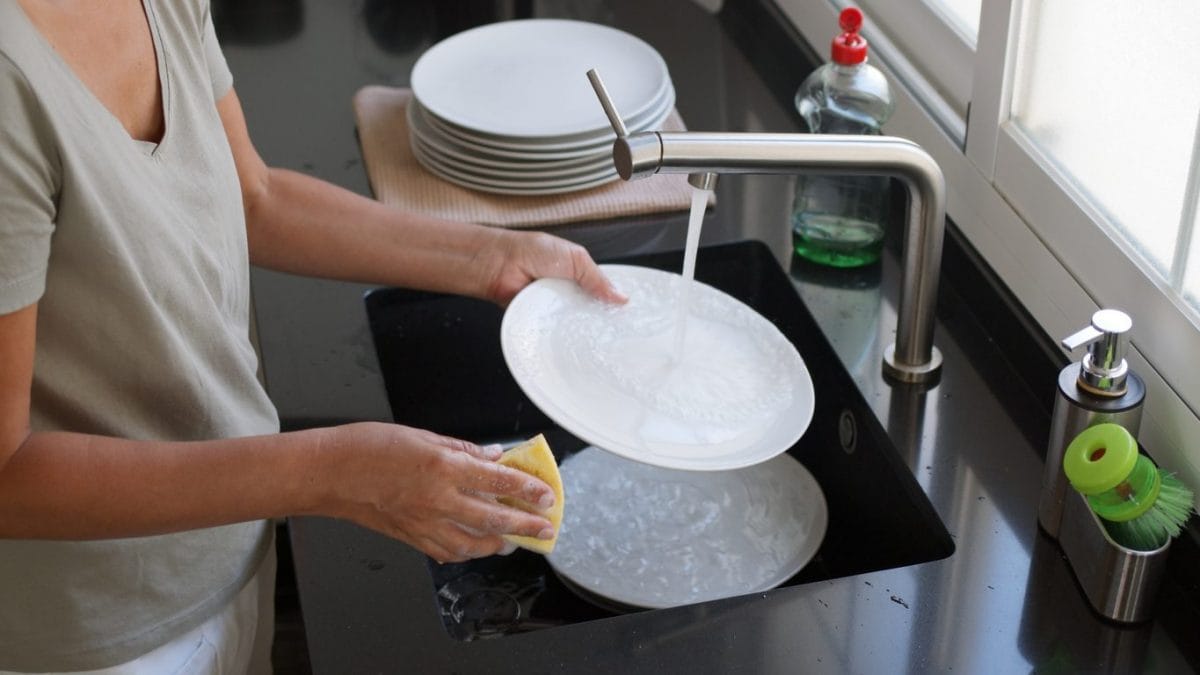
We know that the dishwasher is the most convenient and economical way to clean dirty dishes. But, unfortunately, sometimes we have to wash them by hand, for example when we're dealing with particularly delicate materials or if—obviously—we don't have a dishwasher in our kitchen. In any case, washing dishes isn't a particularly complicated task: however, there are some rules and useful tips for thoroughly cleaning our dishes.
1. Water Temperature
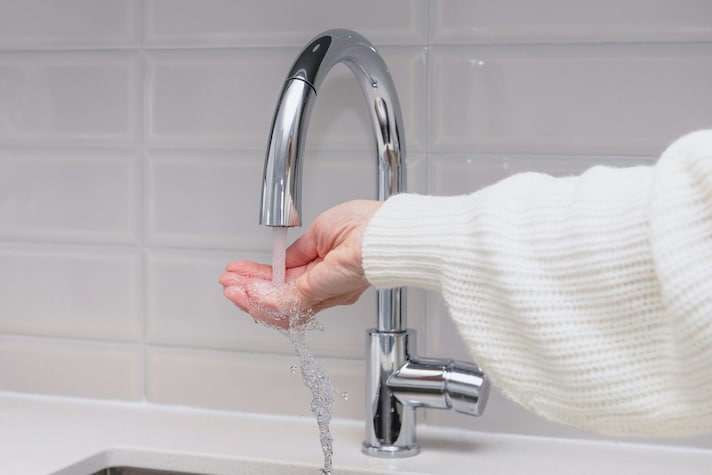
As trivial as it may seem, the temperature of the water you use to wash dishes is actually not to be underestimated: ideally, use warm water (not boiling, mind you), but at least 115°F/45°C. And there's no need to use a thermometer, as there's a quick and simple way to check if the water is at the right temperature: fill the basin with hot water, dip your hands in, and if it feels uncomfortable, it means the temperature is right. In fact, skin generally can't tolerate temperatures above 115°F/45°C for too long: for this reason, we recommend wearing gloves while washing dishes.
But why use hot water? Because heat helps remove grease and some food residue more easily. Not only that, hot water also helps them dry faster when placed on the dish rack.
2. Let The Dishes Soak
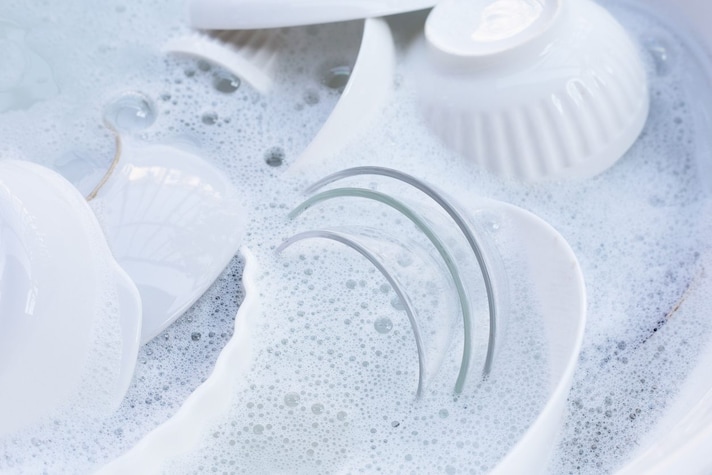
How many times have you found yourself scrubbing vigorously because some food residue has become caked on the pan? To prevent this from happening, we recommend soaking the dishes in the sink with water for a few minutes before washing them: you'll see how easily they‘ll clean and you'll save a lot of water.
3. Cleaning The Sink
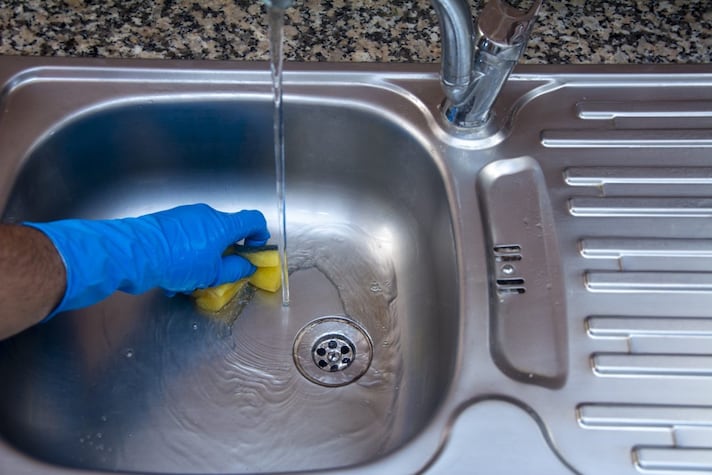
You may already be in the habit of cleaning the sink after washing your dishes, but did you know you should also clean it before every wash? This is because, by doing so, you'll remove any traces of food residue and grease before placing your dishes in, preventing them from coming into contact with other bacteria before being washed.
4. Disinfect the Drainboard and Shelves
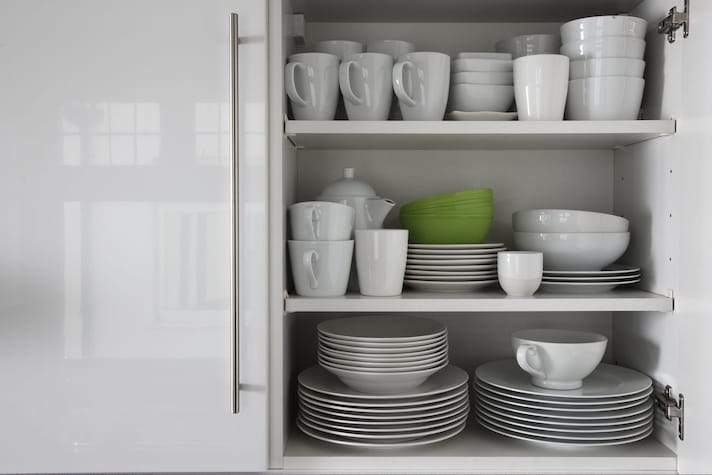
Would you ever put a freshly laundered T-shirt on a dirty, filthy counter? If not (and we know it isn't), why would you do the opposite with your clean dishes? Dishes need a clean, disinfected surface, whether it's a dish rack or a shelf. So before you start washing, make sure you thoroughly clean the various surfaces.
5. Don't Waste Too Much Water
In this case, it's not a rule, but simply common sense to avoid consuming too much water. First of all, it's recommended to fill the sink or a bowl with water and detergent and not rinse them under running water one at a time; once the suds disappear, don't change the water, as the detergent will still be present and will still do its job. Finally, to prevent the water from quickly clouding, try to remove food residues with paper towels before placing them in the sink.
6. Dish Drainer Vs. Dish Towel
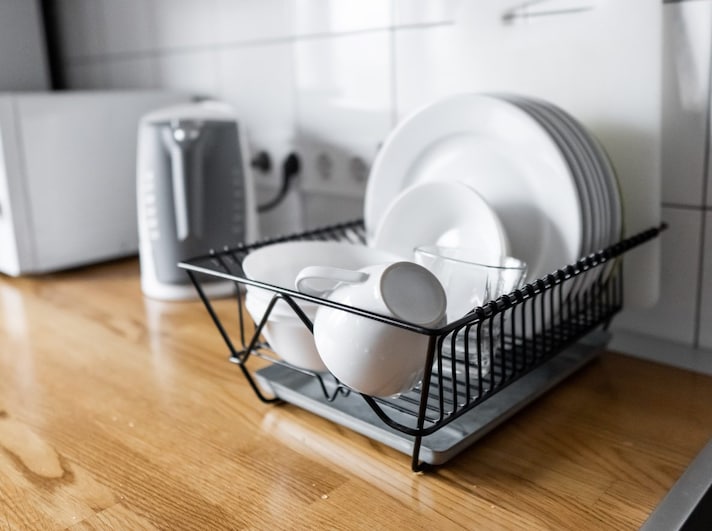
Unfortunately, there's no single answer; it depends on several factors. Generally speaking, letting dishes dry naturally is always the best option: this prevents them from coming into contact with external materials, such as dishcloths or hands. However, there's one aspect to consider: the available space: not everyone is fortunate enough to have a super- spacious kitchen where they can arrange dishes adequately spaced from each other. The risk, therefore, is that the dishes won't dry perfectly, encouraging the proliferation of bacteria.
If you don't have this space, nor the time, you can easily dry your dishes with a dishcloth. However, it's important to consider how clean the dishcloth is: wiping your dishes with a dirty cloth will ruin the cleanup you've just done. Therefore, it's advisable to let it air dry thoroughly after each use and change it regularly.
7. Clean and Change the Sponge Frequently
Let's now move on to a topic that's already been discussed at length: we all know by now that dish sponges need to be changed frequently. Above all, it's a good idea to wash them with hot water after each use and let them dry thoroughly: humidity can increase the risk of bacterial growth, especially when they come into contact with food residue and detergents. The result? We risk transferring all those bacteria to the dishes, increasing the risk of contamination.
;Resize,width=767;)
