
If we can enjoy yogurt as a snack or for breakfast today, it's all thanks to a fly. Learning never stops, a saying that's generally true but even more true in the field of scientific research. And a few years ago, in 2019 to be precise, the research community published a study that rewrites, at least in part, the history of human nutrition, specifically that of dairy products, cheese, and yogurt. The study, published in Current Biology, illustrates how milk enzymes —microorganisms that digest lactose and allow us to create dairy products—arose from a chance encounter between a fly and a bucket of milk approximately 5,500 years ago.
According to this study, if we can consume yogurt today and produce cheese, it's all thanks to this completely random discovery that Neolithic man stumbled upon and to their ingenuity, thanks to which they pioneered one of the most enduring and decisive techniques in the history of human nutrition. But how did a simple fly trigger an entire fermentation process? Let's take a closer look at this fascinating historical curiosity.
How an Insect Changed the History of Milk
The research takes as its starting point the era known as the Neolithic, a historical period in which humans increasingly abandoned the nomadic lifestyle and replaced it with a sedentary lifestyle, cultivating the land and raising animals. In this era, between the present-day Middle East and Southwest Asia, a new relationship with food took shape: more stable, more closely observed, more transformed, where the first crops of wheat and cereals appeared and where pastoralism became increasingly important, as livestock provided a constant supply of fresh meat and milk.
It was precisely during this period that the first milk processing through fermentation began and it is precisely here that the researchers' hypothesis comes into play: according to their studies, in fact, everything started by chance from an insect, probably a fly or a gnat, that fell into a container of freshly milked milk.
Where does the peculiarity lie? In the theory that the insect, by pure chance, transported an ancestor of Kluyveromyces lactis, a microorganism today known for its role in the production of fresh cheese, yogurt, and kefir. Under normal conditions, K. lactis would not have been able to survive in milk, but in contact with a second yeast already present in the raw liquid, K. marxianus, it would have triggered an unexpected evolutionary process.
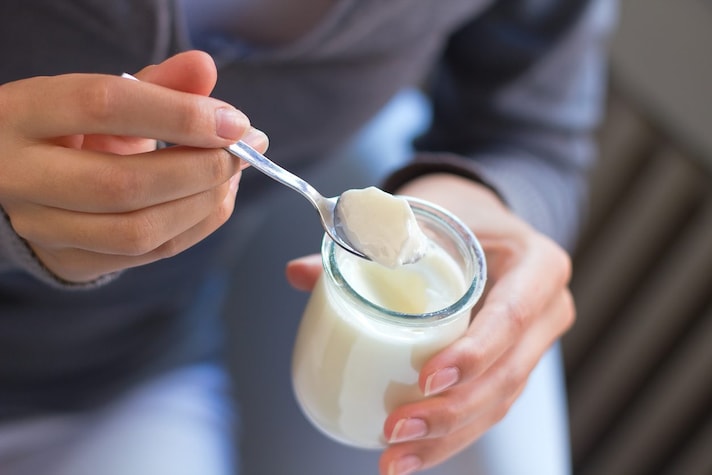
From this union between two different strains of bacteria, milk was transformed into something entirely new: prehistoric yogurt, created from milk through a process that must have seemed magical at the time, delicious to the palate and better preserved than fresh milk. Furthermore, when it "contaminated" a new container of milk, the magic happened again.
Thus fermentation, discovered as a chance event, became a controlled tool: breeders began to select the most stable and productive microbial cultures, progressively developing the foundations of cheesemaking technology and giving life to the history of lactic fermentations, noble molds and slow maturations which today represent the backbone of the production of yogurt, butter, fresh and mature cheeses throughout the world.
It is difficult to establish precisely which geographical area or culture first systematized the process: the episode suggested by the research creates an imaginary common origin, a coincidence that very likely occurred several times, independently, at different times and places in the most populated lands of the time, the aforementioned areas of the so-called Fertile Crescent. History tells us that, subsequently, yogurt spread beyond the lands where it was born, thanks to cultural contacts and the migrations of the peoples who already used it, who consequently also learned the fermentation techniques to create it and to make cheeses. It soon became a popular food among the Phoenicians, Greeks, Egyptians and Romans, and at the same time continued to spread also in the East, for example in India and among the Arabs: traces of it can even be found in the tales of One Thousand and One Nights.
;Resize,width=767;)
