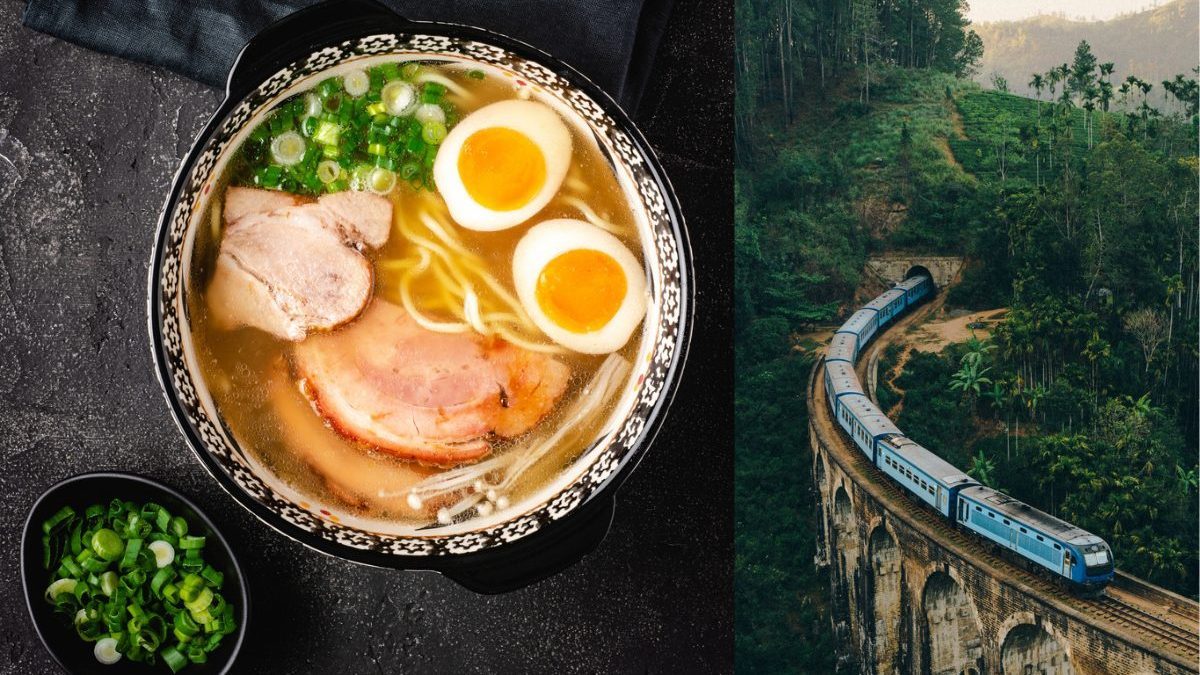
In Japan, there's a train powered by ramen broth, and if you look around, you'll even find trucks powered by ramen broth. But what's going on? A Japanese company turns leftover broth into biofuel, combining it with tempura oil. It's a nice menu, no doubt about it. It still can't meet the needs of large trucks, but the train runs like a charm: the Takachiho Amaterasu Railway carries groups of 60 passengers on a 30-minute round trip along one of the most scenic routes in all of Japan. It's not a 20-car trailer, it's an open-top train, but it's still a significant step forward in renewable, low-cost energy.
The Spectacular Story That Led to The Creation of Biofuel From Ramen
Dashi broth is delicious, and ramen is one of the best-selling and most popular dishes in Japan. However, in Japan, they have a small problem: there's far too much broth in the bowls compared to the noodles and other toppings, which leads Japanese people to leave large quantities of liquid on their plates. This is something that a restaurateur in Fukuoka, specializing in tonkotsu ramen (a very fatty variety made from pork bones), is not happy about. Speaking to Masumi Nishida, president of Nishida Logistics, which later developed the biofuel, he complains about his customers' "lack of appetite" and how much this affects the restaurant's finances. Ramen broth cannot be thrown down the sink; in Japan, it's considered special waste and is treated like used oil, forcing restaurateurs to hire companies to handle its disposal, which obviously comes at a cost.
Nishida Logistics, a transport company, has complained about fuel prices. At the suggestion of this restaurateur, the president decided to invest in research and attempted to produce biodiesel from the restaurant's waste. The ramen broth is mixed with biofuel derived from the oil used to fry the tempura, and after 10 years of work, Nishida Logistics now has around 170 trucks (half of its fleet) that travel throughout Miyazaki Prefecture at no cost and with no environmental impact. Since last August, the Takachiho Amaterasu Railway has requested permission to use biofuel on its railways, and so far, the switch from ordinary diesel has not caused any problems, according to Japan Today. The new biodiesel produces less smoke, allowing passengers to better enjoy the natural mountain scenery. What's more, the train exhaust even releases that delightful aroma of ramen and fried rice that delights Takachiho Amaterasu's customers.
;Resize,width=767;)
