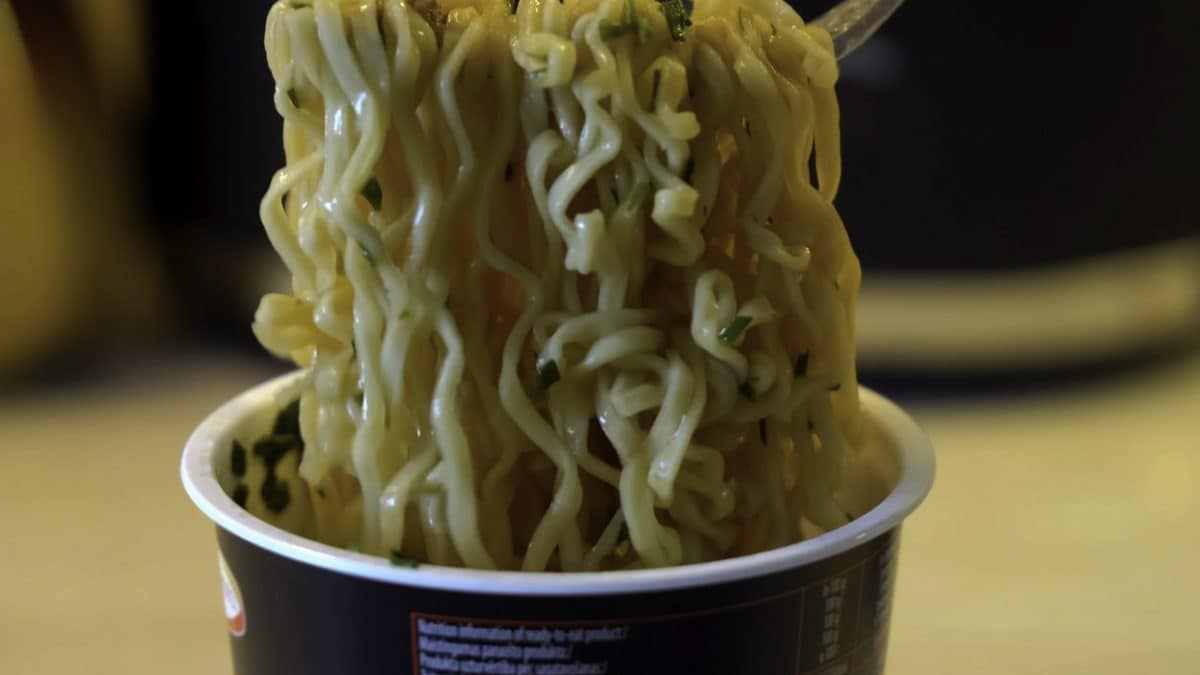
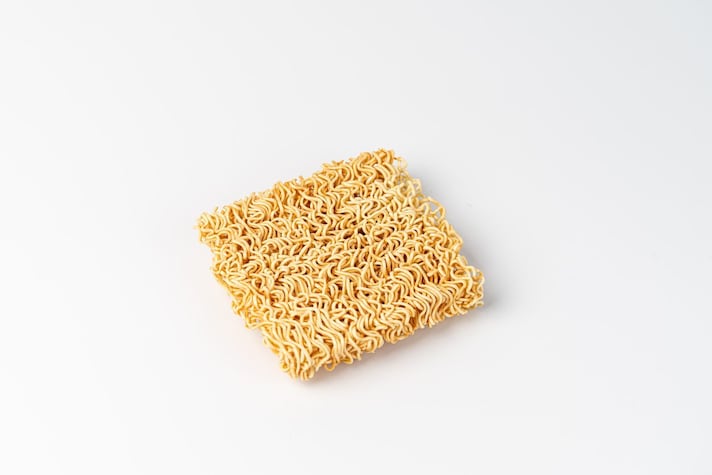
If there's a scent that smells like salvation after a long day, it's instant ramen. Many people, especially students or those who don't have much time to cook for themselves, have succumbed to this oriental specialty. There's nothing quite like instant ramen, which you eat simply by pouring boiling water into the bowl it comes in. Zero stress, no dirty dishes, and food ready in three minutes.
In our country, although it's not a widely regarded product, it's highly prized by young students who, between university sessions, pull it out of the pantry, perhaps even in the middle of the night. We're curious to know, however, if you've ever wondered where this product comes from and why it's become such a global icon that two museums have even been dedicated to it. Don't worry, we'll clear up any doubts you may have.
A Quick Meal Created to Combat Post-War Poverty
His name is Momofuku Andō, and he's the man who invented instant ramen. Comparable to figures like KFC's Colonel Sanders, Andō was a gastronomic pioneer with a true stroke of genius. Born in 1910 in Taiwan, when the country was still under Japanese rule, he was a clothing merchant with absolutely nothing to do with gastronomy, but he moved to Osaka for business. Japan emerged from the Second World War in dire straits: devastated on the battlefield by the atomic bombs dropped on Hiroshima and Nagasaki, and devastated economically. Countless people lined up on the streets, hungry and hoping for a hot meal. Those scenes made a lasting impression on Momofuku Andō, and right around that time, his company went bankrupt, he was sentenced to two years in prison for tax evasion, and he had to start over from scratch at the age of 48.
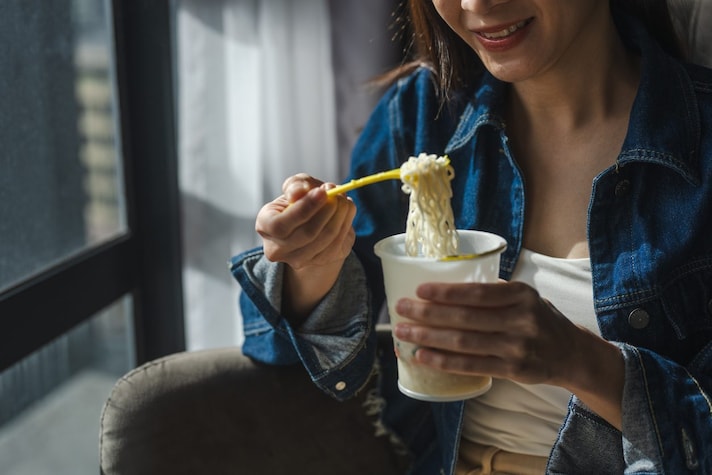
Remembering those endless lines of hungry people, the man locked himself in a shed for several weeks with the intention of creating a ramen that could be made only with hot water. Months and months of work followed, until, noticing his wife cooking tempura, he realized that rapid frying in boiling oil dehydrated the batter, making it crispy and preservable. He then applied the same method to noodles using a technique called "flash frying." This removed moisture from the noodles, giving them a porous structure that could be rehydrated with hot water. On August 25, 1958, Momofuku Andō launched chicken ramen on the market for the first time: the first instant noodle product.
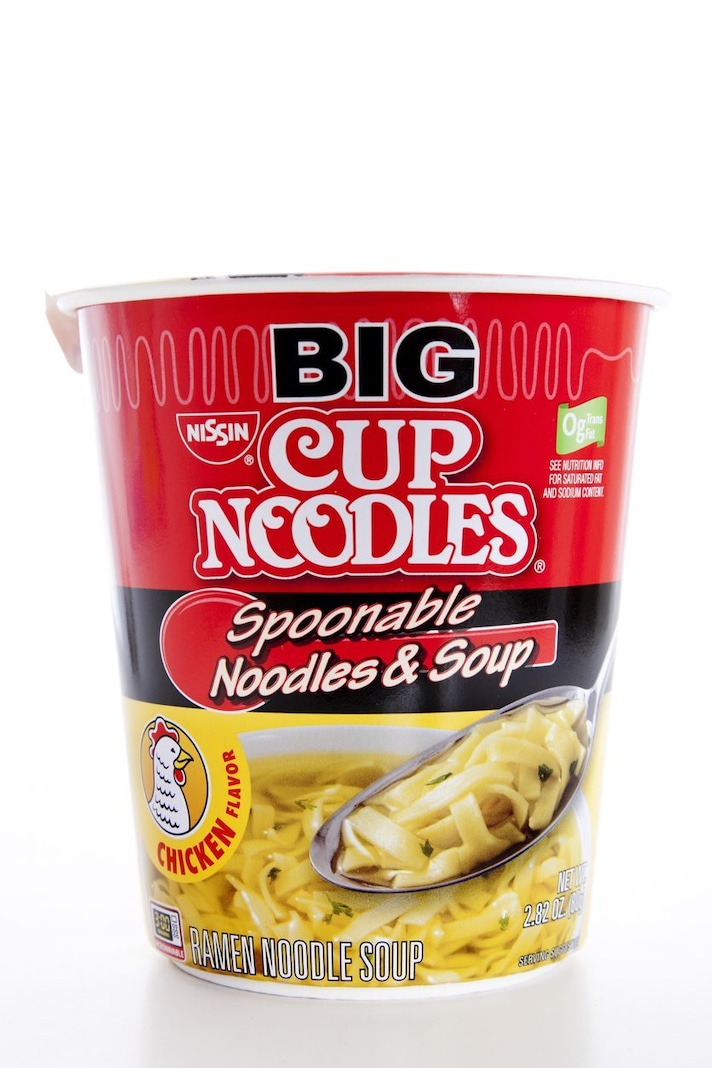
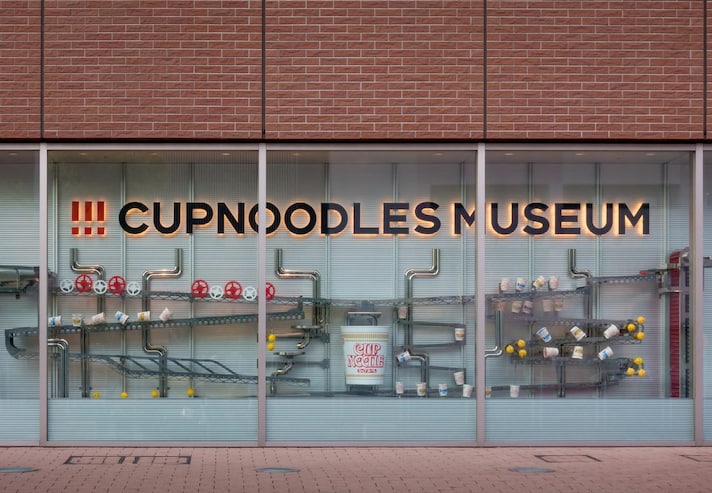
The real revolution, however, occurred in 1966 when, during a trip to the United States, Andō noticed that Americans were accustomed to eating noodles in a sort of plastic cup. In 1971, he officially launched Cup Noodles, which have become a global icon today, but were a true innovation at the time: a single container that served as packaging, cooking vessel, and eating plate. It was a tremendous success that quickly spread worldwide. In 2023, according to data from the World Instant Noodles Association, 120 billion servings of instant ramen were consumed worldwide, with China leading the way (42 billion servings sold), followed by Indonesia, India, and Vietnam. Today, Nissin (the Cup Noodles company) is a billion-dollar corporation that has become so famous that it has opened two museums in Japan, in Yokohama and Osaka, and attracts millions of visitors from around the world.
A Practical and Economical Product, But Not Very Nutritious
We said it at the beginning of our story: the truth is that a can of instant ramen can save us from a sudden hunger pang, but it's not nutritious at all. Sure, we come home after a busy day of work or study and realize we need to stock up on supplies at the supermarket because there's nothing in the kitchen but instant ramen. Several experts and nutritionists have pointed out that this product is very low in fiber and protein, two essential nutrients for a feeling of satiety. Eating just one can of noodles is unlikely to satisfy you. Too much salt is another problem: a single serving contains 1.25 grams, and we shouldn't exceed 2.4 grams daily. Experts say that too much salt can lead to headaches, poor concentration, water retention, and high blood pressure, and in the long run, it could increase the risk of cardiovascular, metabolic, and kidney diseases.
That said, should Momofuku Andō's creation be rejected? The answer is much closer to yes than no. Essentially, as modern and "cute" as it may be, there are several ready-made dishes that are quick to prepare but more nutritious than this one. The final piece of advice is to buy it and keep it in the pantry, but to use it especially in "desperate" situations, when the kitchen has nothing else to offer.
;Resize,width=767;)
