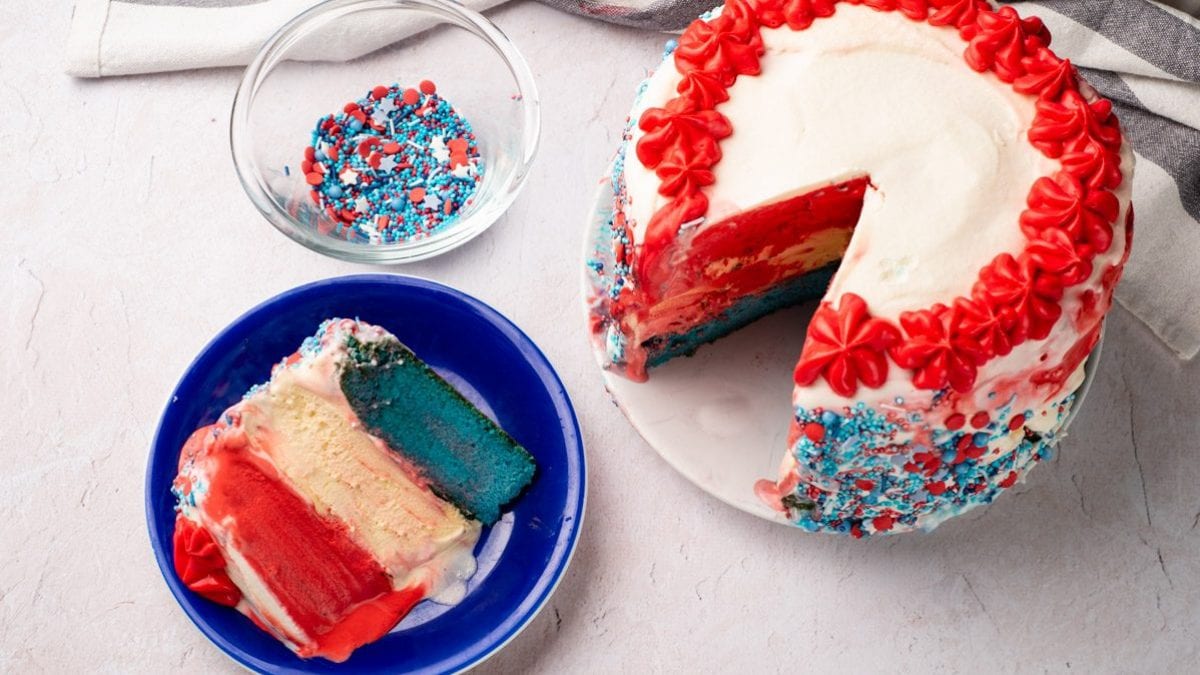
Few desserts evoke the immediate, joyful nostalgia of an ice cream cake. It is the undisputed king of summer birthday parties, office celebrations, and nostalgic weekend treats. But if you stop mid-bite and really examine that frozen slice on your paper plate, an existential culinary question bubbles up: Where is the actual cake?
Depending on who you ask, the term "ice cream cake" either promises a glorious combination of traditional baked sponge and frozen dairy, or it means a structured block of pure soft-serve held together by chocolate crunchies and whipped frosting. The food world is deeply divided on this definition, and the truth depends entirely on which brand you grew up eating.
The Fast-Food Icon: Pure Ice Cream, Zero Sponge
If your golden standard of ice cream cake comes from commercial giants like Carvel, Dairy Queen, or the grocery store freezer aisle, we have a reality check for you: You have likely never eaten actual cake in an ice cream cake.
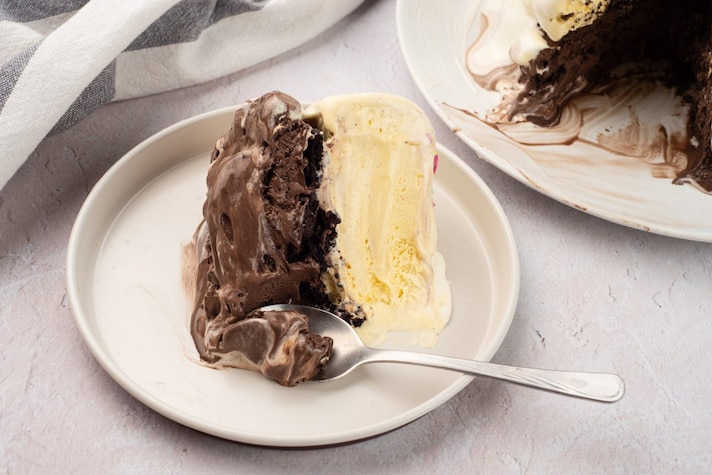
For decades, the standard blueprint popularized by Carvel (the minds behind the iconic Fudgie the Whale) completely bypasses the oven. Instead, these treats are architectural marvels made entirely of frozen dairy and clever texturizers. A standard slice breaks down into two distinct layers of soft-serve ice cream—usually vanilla on top and chocolate on the bottom.
The illusion of "cake" comes from the legendary middle layer: a proprietary blend of crumbled chocolate cookie bits (often referred to as "crunchies") coated in a chocolate fudge shell that prevents them from getting soggy. Wrapped in a stabilized, whipped frosting that won't melt instantly at room temperature, it mimics the shape and slicing experience of a traditional cake without a single crumb of baked flour.
The Bakery Standard: When Real Cake Enters the Chat
On the other side of the freezer aisle stand the purists. Brands like Baskin-Robbins, Cold Stone Creamery, and high-end local bakeries argue that for a dessert to call itself a cake, it must actually be baked.
In these premium versions, the dessert is a literal hybrid. Bakers lay down a base of genuine, baked sponge cake—such as a rich devil's food or a classic yellow cake—and top it with a thick layer of premium, dense ice cream. Some upscale iterations even alternate multiple layers of cake and ice cream for a dramatic, towering cross-section.
The Cold, Hard Science of the Perfect Slice
Why did the fast-food giants abandon real cake in the first place? It all comes down to food science and texture. When you freeze a standard, butter-based birthday cake down to sub-zero temperatures, the fats and starches lock up. The result is a dense, rock-hard brick that is incredibly difficult to slice through and loses its light, fluffy mouthfeel. To bridge this gap, modern ice cream cake styles lean into two distinct camps:
- The Crunchie Approach: By using chocolate cookie crumbs and fudge instead of sponge, the dessert maintains a pleasant, crispy texture contrast that cuts smoothly even when straight out of the deep freeze.
- The Modified Sponge Approach: If a bakery does use real cake, they typically rely on oil-based recipes, chiffon cakes, or sponge cakes soaked in simple syrup. Oil doesn’t freeze into a solid block the way butter does, allowing the cake layer to remain relatively soft and chewable alongside the ice cream.
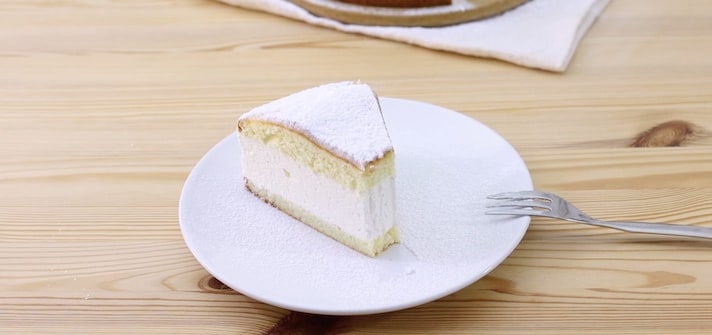
Ultimately, whether you lean toward the pure, fudgy nostalgia of a Carvel crunchie layer or demand the structural integrity of a real baked sponge, there is no wrong way to celebrate. Just make sure you give it ten minutes on the counter to thaw before you try to blow out the candles.
;Resize,width=767;)
