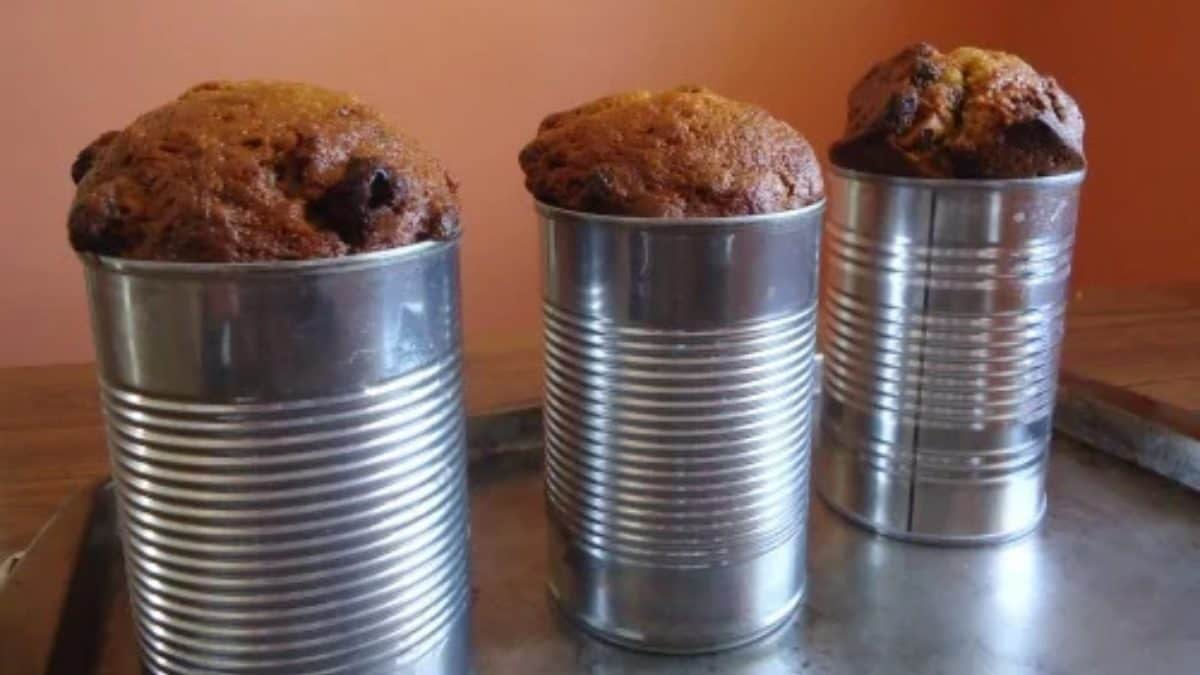
From rustic cylindrical loaves of Boston brown bread to trendy mini layer cakes baked in repurposed tomato tins, baking inside empty food cans is a popular viral aesthetic on social media. Vintage cookbooks from mid-century America often even explicitly called for baking quick breads directly inside clean coffee tins or soup cans. However, modern food manufacturing has changed drastically over the past few decades.
While upcycling an empty tomato can into a utensil holder or countertop caddy is completely safe, putting modern commercial food cans inside a hot oven is not recommended by food safety experts and toxicologists.
Before you pour cake batter into an empty tin, understanding what happens to modern packaging at baking temperatures is essential.
Plastic and Epoxy Linings
The biggest reason you should never bake in a modern tin can is that most food cans are no longer just bare metal. Almost all commercial food cans sold today—including tomato cans, soup tins, and bean cans—are lined on the inside with an ultra-thin protective polymer barrier (typically epoxy resins, acrylics, polyester, or vinyl).
This inner coating prevents acidic foods like tomatoes and fruits from reacting with the steel or tinplate, stopping metallic off-flavors and can corrosion during shelf storage. These chemical linings are engineered to withstand commercial steam sterilization during canning (usually around 240°F to 250°F). They are not engineered to withstand the dry heat of a standard baking oven (325°F to 425°F). When exposed to high dry heat, these thin synthetic coatings can break down, melt, blister, or vaporize. This allows chemicals—such as BPA, BPS alternatives, or plastic polymers—to leach directly into your moist batter.

Exterior Inks, Adhesives, and Metal Solder
The interior lining is not the only safety concern when a food can enters a hot oven. The decorative printing, logos, and protective varnishes applied to metal tins are not food-grade or heat-stable. At oven temperatures, these inks can smoke, scorch, and emit foul chemical fumes inside your kitchen.
Even if you peel away paper labels, industrial label adhesives remain baked into the microscopic grooves of the metal. Heating these adhesives releases chemical odors and residues. In some imported or budget tins, side seams may be sealed using metal solders or alloys that should never be brought to high baking temperatures.
Why Was It Safe in Vintage Cookbooks?
If baking in cans is dangerous, why do vintage recipes regularly call for baking in coffee tins or Campbell's soup cans? Decades ago, cans were manufactured from heavy-gauge, unlined tinplate steel without internal synthetic plastic resins. In addition, classic recipes like traditional New England Boston brown bread were usually steamed on the stovetop inside a closed pot of water rather than dry-baked in an oven.
Because steam temperatures cannot exceed the boiling point of water (212°F), the metal never reached the extreme temperatures of a modern oven rack. Applying those vintage methods to modern plastic-lined cans poses an entirely different chemical risk.

Safe Alternatives for That Cylindrical Bakery Look
If you love the distinctive tall, circular presentation of can-baked cakes and breads, swap out repurposed food tins for food-safe, oven-approved bakeware:
- Panettone Paper Molds: Inexpensive, food-grade paper baking cylinders designed to withstand oven heat up to 425°F. They hold their shape perfectly and peel away cleanly.
- Mini Stainless Steel Baking Rings: Heavy-gauge, unlined culinary pastry rings set on a parchment-lined baking sheet allow you to bake tall, individual portions with crisp edges.
- Oven-Safe Ramekins or Oven-Safe Glass Jars: High-temp ceramic ramekins or wide-mouth canning jars explicitly marked oven-safe (such as specific borosilicate molds) deliver the individual single-serve look without toxic breakdown.
- Certified Unlined Steel Bakeware: Look for dedicated mini tube pans or vintage-style tin-plated steel molds that specify "uncoated and oven-safe."
Chef's Pro Tip
If you want the charm of tin-can presentation for a party or dessert table, bake your mini cakes inside safe panettone paper molds or standard muffin tins first. Once the cakes are completely baked and cooled, gently drop them into thoroughly cleaned, label-free tomato tins lined with decorative parchment paper for serving. You get all the rustic visual appeal with zero chemical risk.

