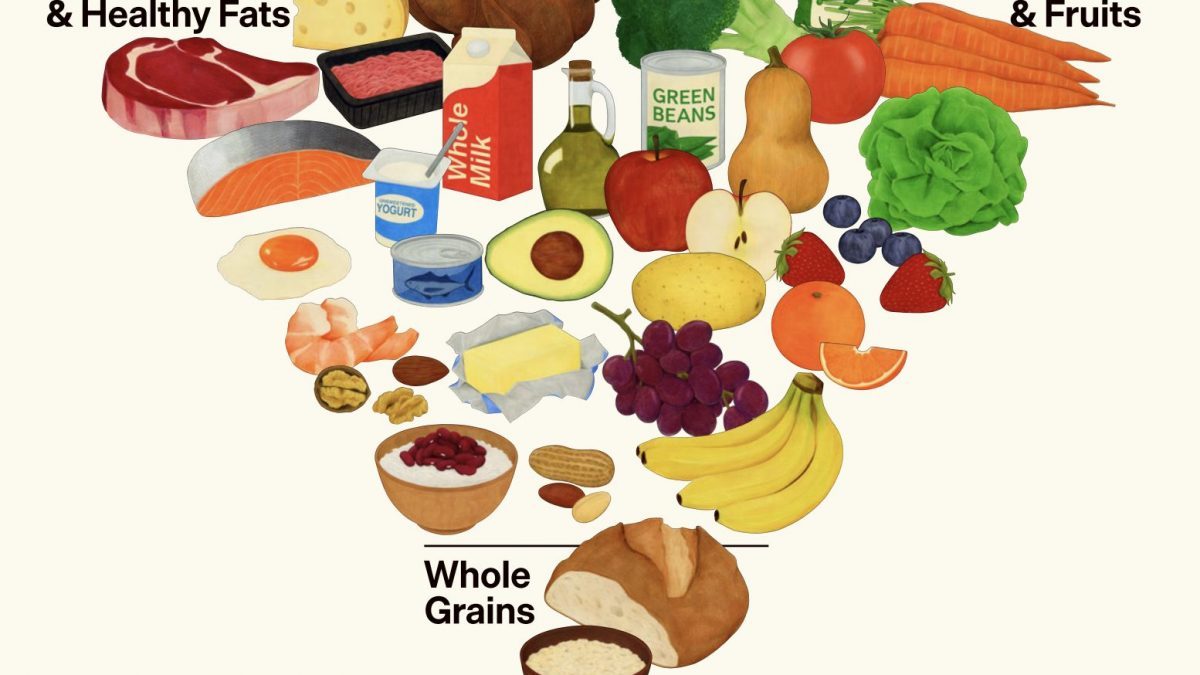
Under the motto "Eat real food," the Trump administration unveiled its new Dietary Guidelines on Wednesday, January 7th. These guidelines, at least graphically, appear to upend the food pyramid and place greater emphasis on red meat, aged cheese, and whole milk. But is this really the case, or does a closer look reveal that the inversion is merely apparent?
Even just reading the words of Secretary of Health and Human Services Robert F. Kennedy Jr., it's clear that something isn't right. "American families," he declared, "must prioritize diets based on whole, nutritious foods: protein, dairy, vegetables, fruits, healthy fats, and whole grains. Combined with a drastic reduction in highly processed foods loaded with refined carbohydrates, added sugars, excess sodium, unhealthy fats, and chemical additives, this approach can change the health trajectory for many Americans."
We raised these concerns with a trusted expert, Dr. Simone Gabrielli, who helped us clarify the situation, explaining what changes the new Guidelines actually introduced and how they compare to the original model. Let's look at everything in detail.
What's The New American Pyramid?
The new US dietary guidelines have been released, but, if read carefully, they don't differ radically from European nutritional recommendations. The critical point is that the text and image convey two completely different messages. The inverted pyramid circulating on social media provides a very simple recommendation: to freely consume meat, eggs, cheese, butter, and animal fats, even every day.
But is this really the case? The answer is no. The text states different things, and the situation is "much less revolutionary" than it's portrayed. Let's start with the context, which is crucial to understanding the meaning of these recommendations. "In the United States, over 70% of adults are overweight or obese, with a significant increased risk of type 2 diabetes, cardiovascular disease, and some forms of cancer," Gabrielli explains. "One of the main reasons is a diet historically rich in ultra-processed and sugary foods, which promote chronic caloric excess."
In such a situation, therefore, the main objective of the new guidelines is to convince the population to eat fewer industrial products and more simple foods, cooked using real basic ingredients.
Among the main and most debated changes is the increase in protein intake, which is recommended at around 1.2-1.6 grams per kilogram of body weight. For comparison, the European guidelines suggest an average of around 0.83/kg, with increases in specific situations, such as the elderly or athletes. "The message isn't ‘eat more meat': the American guidelines strongly emphasize the importance of distributing protein across meals and varying sources, including both animal sources such as eggs, poultry, seafood, and even red meat, and plant sources such as legumes, nuts, and seeds," our expert points out.

Steps Forward
The text also contains some interesting and partly shared elements: a strong call for the consumption of real food, little or not at all processed, and a clear indication to reduce sugars and refined carbohydrates, sugary and sweetened drinks, highly processed foods rich in salt, and alcohol.
Another example of the gap between image and content concerns whole grains: the pyramid might suggest they should be consumed in minimal or marginal quantities, but the text explicitly recommends two to four servings per day. Carbohydrates aren't eliminated at all: priority is given to whole grains, which are rich in fiber, and a reduction in refined grains, such as bread and white flour products, is recommended. "Not because refined grains are ‘bad' in themselves, but because choosing whole grains helps better meet fiber needs. The real distinction is between free sugars and complex carbohydrates, not between carbohydrates or no carbohydrates," Gabrielli points out.
Regarding fruits and vegetables, three servings of vegetables and two servings of fruit per day are recommended, exactly as per the European guidelines. We also recommend consuming full-fat dairy products without added sugar, approximately three servings per day in a 2,000-kcal diet. Fats include those found in foods such as eggs, dairy products, meat, nuts, olives, and avocado.
"For cooking, olive oil is given prominence, but butter and animal fats are also permitted. The key point, however, is that saturated fats should not exceed 10% of daily calories, so foods like red meat and animal fats should still be consumed in moderation," continues the expert.

The Limits of The "Inverted" Pyramid
As we were saying, the problem lies in the gap between text and image. "In fact, as it's designed, the inverted pyramid seems more like a provocative communication tool than an educational tool," the nutritionist tells us. The discrepancy between infographics and content has fueled confusion, sensational headlines, and extreme interpretations, giving the impression of a revolution that, in reality, isn't there.
Based on the guidelines, there's no reason to place grains in the range of foods to be limited. On the contrary, red meat, higher-fat cheeses, and sources of animal fat should be included in that area, because they are the foods that contribute most to the intake of saturated fat, which the guidelines themselves recommend not exceeding.
If we look at the actual content of the document, the approach isn't that different from what we're used to. The real difference concerns protein, and here too, the context must be kept in mind: a population with a serious problem of excess fat mass. Increasing protein intake in a rational way can help increase satiety, stabilize blood sugar levels, reduce total caloric intake, and preserve muscle mass. "It's a strategy that can make sense for obese or at-risk individuals, if properly contextualized, and has nothing to do with extreme diets or rigid approaches," Gabrielli continues.
More than a paradigm shift, it is an adaptation of the recommendations to a critical healthcare context, told, however, with graphics that made much more noise than substance.
In conclusion, the idea that "the new pyramid overturns everything" is simply misleading. The image circulating does not faithfully represent what is written in the guidelines, indications designed for a population, the American one, with very serious health problems.
;Resize,width=767;)
