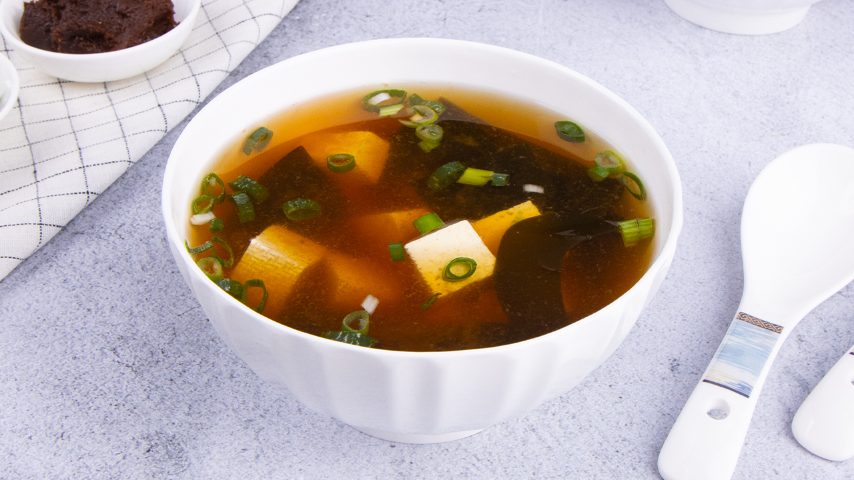

Japanese miso soup is a warm, comforting, and deeply flavorful dish made with kombu seaweed, tofu, ginger, spring onion, and miso paste. Light yet rich in umami, it’s perfect as a starter, side dish, or simple nourishing meal.
This recipe is easy to prepare and brings classic Japanese-inspired flavors to the table with just a few ingredients.
Why Everyone Will Love This Recipe
This miso soup is delicate, savory, and satisfying:
- Rich umami flavor from kombu and miso paste.
- Light but comforting with soft tofu and warm broth.
- Simple ingredients that create deep flavor.
- Quick enough for everyday meals once the kombu is soaked.
- Easy to customize with vegetables, noodles, or mushrooms.
What Is Miso Soup?
Miso soup is one of the most iconic dishes in Japanese cuisine, traditionally served as part of breakfast, lunch, or dinner. It is usually made with dashi broth and miso paste, then finished with ingredients such as tofu, seaweed, and spring onions.
Miso itself is a fermented soybean paste that has been used in Japan for centuries. Its flavor can range from mild and sweet to deep and salty depending on the type used. Kombu, a type of edible kelp, is often used to create a naturally savory broth rich in umami.
This version adds ginger and spring onion for extra freshness and aroma, creating a light but flavorful soup.
Cooking Tips
- Soak the kombu before cooking because this helps release its savory flavor into the broth.
- Avoid boiling the miso paste directly because high heat can dull its flavor and affect its delicate fermented aroma. Dissolve the miso in a small bowl with warm broth before adding it back to the pot so it blends smoothly without lumps.
- Cut the tofu into even cubes so it warms gently and keeps its shape in the soup. Add tofu near the end of cooking because it only needs a few minutes to heat through.
- Use fresh ginger sparingly because it adds brightness but can overpower the delicate miso flavor if too much is added.
- Taste before adding extra salt because miso paste is already naturally salty.
- Serve the soup immediately after adding the miso for the freshest flavor and best aroma.
Frequently Asked Questions
What Type of Miso Paste Should I Use?
White miso is mild and slightly sweet, making it a good choice for a delicate soup. Red miso is stronger, saltier, and deeper in flavor. You can also use a mix of both for balance.
Can I Boil Miso Soup After Adding the Miso Paste?
It’s best not to boil the soup once the miso has been added. Boiling can reduce the aroma and delicate flavor of the fermented paste, so add it off the heat or at very low heat.
Can I Make Miso Soup Without Kombu?
Yes, but kombu gives the broth its classic umami base. If you don’t have kombu, you can use vegetable broth, mushroom broth, or a small amount of instant dashi.
What Kind of Tofu Works Best?
Firm or medium-firm tofu works well because it holds its shape in the soup. Silken tofu can also be used if you prefer a softer, more delicate texture.
Can I Add Vegetables to Miso Soup?
Absolutely. Mushrooms, spinach, bok choy, carrots, wakame, or daikon all work beautifully. Add vegetables according to their cooking time so they stay tender but not overcooked.
Is Miso Soup Vegetarian?
This version can be vegetarian if the miso paste and broth ingredients are plant-based. Traditional dashi sometimes contains bonito flakes, so check the ingredients if needed.
Can I Make Miso Soup Ahead of Time?
You can prepare the broth ahead of time, but it’s best to add the miso paste and tofu just before serving. This keeps the flavor fresh and the tofu delicate.
Why Is My Miso Soup Cloudy?
Miso naturally makes the soup slightly cloudy because it is a fermented paste. This is normal and part of its traditional appearance.
How to Store Miso Soup
Store leftover soup in an airtight container in the refrigerator for up to 2 days. Reheat gently without boiling.
How to Freeze Miso Soup
Freezing is not ideal once tofu and miso are added, as the texture and flavor may change. You can freeze the kombu broth separately for up to 1 month.
Ingredients
How to Make Japanese Miso Soup

Place the kombu seaweed in a bowl and cover it with water and let it soak for 30 minutes.
Place the kombu seaweed in a bowl and cover it with water and let it soak for 30 minutes.

After this time, drain it, keeping the water aside, then cut it with scissors into not too thick strips.
After this time, drain it, keeping the water aside, then cut it with scissors into not too thick strips.

Transfer the seaweed and soaking water to a pot, then top up with more water.
Transfer the seaweed and soaking water to a pot, then top up with more water.

Also add the ginger, previously peeled and finely grated.
Also add the ginger, previously peeled and finely grated.

Also add the spring onion cut into thin slices, excluding the final part of the greener stem, which will be used for the final decoration, then let it cook for 30 minutes.
Also add the spring onion cut into thin slices, excluding the final part of the greener stem, which will be used for the final decoration, then let it cook for 30 minutes.

Meanwhile, cut the tofu into cubes.
Meanwhile, cut the tofu into cubes.

After half an hour of cooking, add the tofu and let it simmer for another 3-4 minutes, then remove the pan from the heat.
After half an hour of cooking, add the tofu and let it simmer for another 3-4 minutes, then remove the pan from the heat.

Place a spoonful of miso paste in each individual bowl, then dilute it with a ladle of broth, stirring to dissolve it and avoid lumps forming.
Place a spoonful of miso paste in each individual bowl, then dilute it with a ladle of broth, stirring to dissolve it and avoid lumps forming.

At this point, pour in the rest of the soup, also taking some pieces of tofu and seaweed.
At this point, pour in the rest of the soup, also taking some pieces of tofu and seaweed.

Garnish with a few reserved spring onion slices. The miso soup is ready to be enjoyed, piping hot!
Garnish with a few reserved spring onion slices. The miso soup is ready to be enjoyed, piping hot!
;Resize,width=767;)

