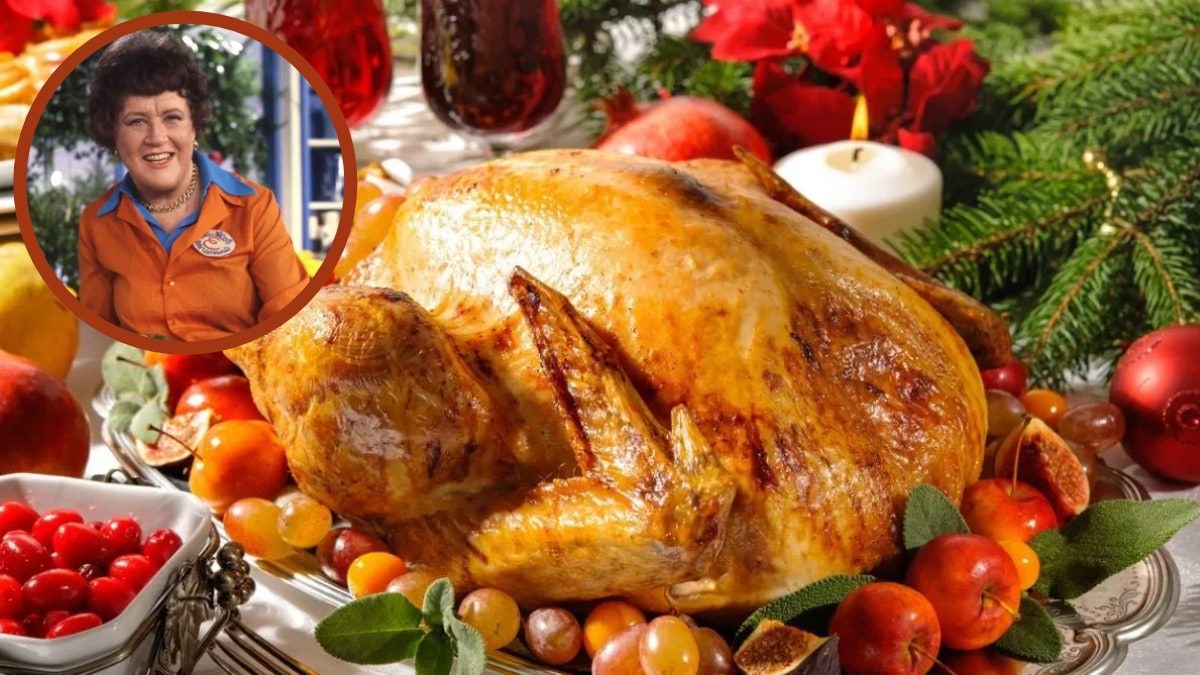
A beautifully browned, whole roasted turkey is the undisputed centerpiece of the American Thanksgiving table. However, from a strictly culinary perspective, roasting a massive bird whole is a deeply flawed cooking method.
The anatomy of a turkey makes even cooking nearly impossible. The lean breast meat is perfectly cooked and prone to drying out the moment it passes 165°F (74°C). Meanwhile, the dense, fat-rich dark meat of the legs and thighs requires temperatures closer to 175°F or 180°F to break down tough connective tissue and become tender. By the time the dark meat is finished roasting, the white meat is often chalky and overcooked.
Julia Child recognized this problem and, in true form, ignored tradition in favor of culinary common sense. Her solution, famously published in The Way to Cook, was dubbed the "re-assembled roast turkey"—a method so unorthodox it was later affectionately nicknamed the "Frankenturkey."
The "Frankenturkey" Method
Rather than wrestling an entire 15-pound bird into the oven and hoping for the best, Child completely deconstructed it before it ever saw heat. Using poultry shears, she removed the turkey's backbone, fully separated the legs and thighs from the crown, and roasted the pieces independently. She roasted the breast directly on top of a bed of stuffing, while the dark meat cooked in a separate roasting pan.
The controversy—and the absolute brilliance—of her method lay in the presentation. Knowing that her guests expected the theatrical spectacle of a whole bird being carved at the table, Child waited until the pieces were perfectly cooked, then meticulously arranged them back together on a large serving platter. She tucked roasted herbs and garnishes around the seams, successfully restoring the turkey to its original shape. As she cheerfully noted, nobody at the table ever knew the difference.

Why You Should Deconstruct Your Turkey
While re-assembling the bird like a puzzle is optional, adopting Child's deconstructed roasting method solves almost every common Thanksgiving turkey failure.
1. Perfect Temperature Control
When the breast and the legs are in separate pans, you are no longer compromising on temperature. You can pull the breast out of the oven the exact minute it reaches 165°F, allowing it to rest while the dark meat remains in the oven to finish tenderizing.
2. Drastically Faster Cooking Times
A whole, stuffed turkey can take four to five hours to roast, monopolizing oven space on the busiest cooking day of the year. By breaking the bird down into smaller, flatter pieces, heat circulates much more efficiently. A deconstructed turkey cooks in a fraction of the time, often finishing in under two hours.
3. Crispier Skin
When a turkey is left whole, the skin tucked between the thigh and the breast rarely gets enough radiant heat, remaining rubbery and pale. Separating the pieces exposes all of the skin directly to the hot oven air, ensuring every piece of the bird gets a crisp, golden-brown finish.
The Built-In Gravy Advantage
Child's method offers one final, massive advantage for the holiday table: a head start on gravy. By removing the backbone and wingtips before the bird goes into the oven, you instantly have the perfect ingredients to simmer a rich, deeply flavored homemade turkey stock on the stovetop. While the meat roasts, your stock reduces, meaning you are completely ready to build a flawless pan gravy the moment the turkey comes out of the oven.

