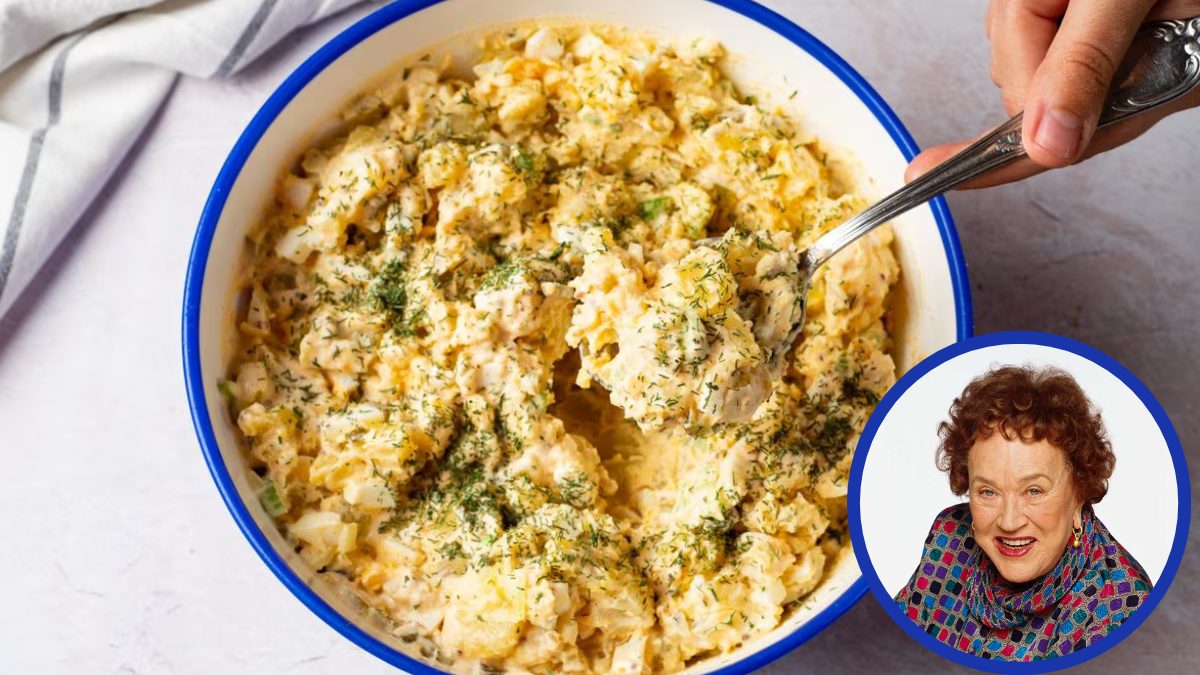
Potato salad is a mandatory pillar of summer gastronomy. It sits alongside burgers, barbecued ribs, and corn on the cob as an absolute requirement for any successful backyard gathering. Yet, despite its ubiquity, homemade potato salad is frequently a disappointment. We have all encountered the lackluster versions: a bowl of icy, completely tasteless potato blocks swimming aimlessly in a heavy, separate lake of cold mayonnaise.
Many home cooks assume the solution is simply adding more mayonnaise, more salt, or a heavier hand of bacon bits. But the legendary Julia Child understood that great cooking isn’t about masking structural flaws with extra toppings—it is about mastering technique. Her timeless, foolproof method for creating a perfectly seasoned, beautifully cohesive potato salad centers around a simple, zero-cost pantry ingredient that most people pour straight down the sink: starchy potato cooking water.
The Liquid Gold Secret
In a trick popularized in Julia and Jacques Cooking at Home—and fiercely championed by modern culinary icons like Ina Garten—Child’s method turns traditional potato salad assembly entirely on its head. Instead of draining your boiled potatoes, letting them cool completely in the fridge, and then tossing them with cold condiments, Julia introduces a crucial intermediary step. When you drain your perfectly simmered spuds, you must reserve roughly one-third cup of the cloudy, starchy cooking water. While the potatoes are still steaming hot, you place them into a wide bowl and drizzle them with a mixture of that hot potato water and a splash of cider vinegar (or white wine, if you are leaning toward a French style). You gently toss them and let them sit undisturbed for 10 to 20 minutes before any mayonnaise, celery, or herbs enter the equation.

Sponge Mechanics and Emulsification
Why does this brief, watery bath completely transform the dish? It comes down to basic botanical physics.
The "Open Pore" Principle
When a potato is freshly cooked and hot, its cellular structure is expanded, and its starch molecules are wide open and highly absorbent. If you let the potatoes cool completely, those starches lock up and solidify, forming an impenetrable barrier. By pouring the vinegar and starchy water over the spuds while they are warm, the potatoes act like a sponge, drawing the acid and seasoning directly into the center of the tuber. Instead of just coating the exterior, the flavor is structurally locked inside every single bite.
The Pasta Water Effect
Just like saving a ladle of pasta water is vital for binding a glossy Italian sauce to noodles, saving your potato water provides a powerful, natural binding agent. The water used to boil the spuds is highly saturated with loose starches. When you drizzle that starchy liquid over the potatoes, it forms a light, tacky film on the surface of the slices. Later, when you fold in your mayonnaise or sour cream, that starch acts like an organic adhesive. It emulsifies with the fats in the dressing, preventing the oil from separating and ensuring the creamy sauce grips the potatoes tightly rather than turning into a runny, watery puddle at the bottom of the bowl.

The Golden Rules of the Child Method
To achieve potato salad perfection at your next barbecue, keep Julia’s three core mandates in mind:
- Choose Waxy Varieties: Avoid starchy baking potatoes like Russets, which crumble into a granular mush when tossed. Stick to waxy varieties like Yukon Gold or Red Bliss, which hold their clean, sliced edges beautifully.
- Peel and Slice Before Boiling: To save your fingers from burns, peel and slice your potatoes into half-rounds before they go into the pot. Simmer them gently—never a violent, rolling boil—so they cook evenly without fracturing.
- Drizzle Warm, Dress Cold: Always apply the vinegar-and-potato-water mixture while the spuds are warm. However, make sure the potatoes have fully cooled to room temperature before adding the mayonnaise, or the heat will melt the egg fats in the mayo and cause it to break.
;Resize,width=767;)
