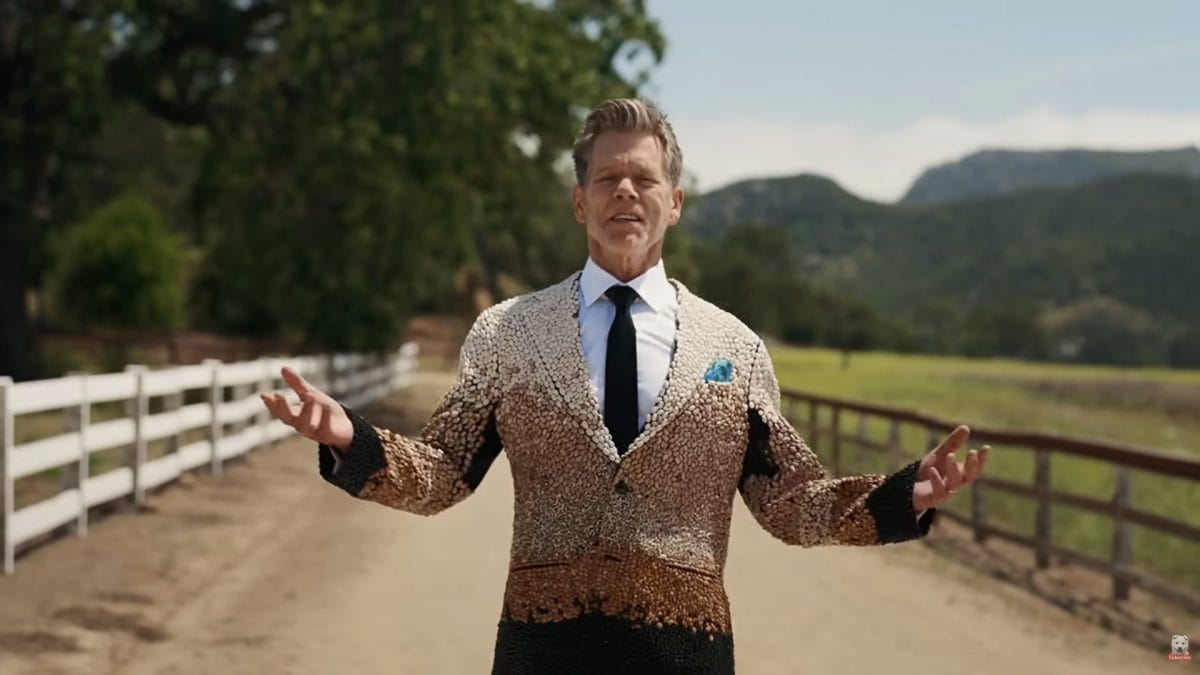
An acrobatic leap into the unknown in the iconic film Footloose made Kevin Bacon one of Hollywood‘s most famous and beloved stars. The American actor has starred in many other successful films over the course of his career, including Apollo 13, Mystic River, and A Few Good Men, but a major twist has come far from the spotlight. Bacon has decided to "change" his last name and become "Bean." But don't worry, no official documents have been altered: Kevin Bacon will only become "Bean" every Wednesday, on Beansday, an awareness campaign launched by the charity Humane World for Animals.
Kevin Bacon's Fight for Animal Welfare
The Footloose actor has been chosen to star in the commercial launched by the animal rights organization: the goal is to introduce a new weekly habit that is not only healthier, but also combats the effects of factory farming and, consequently, animal suffering. Scheduled to take place every Wednesday, the day will see Kevin Bacon take on the role of Kevin "Bean" to encourage a plant-based diet that replaces meat consumption.
"A simple change in what we eat every Wednesday can make a difference for animals," said Kevin Bacon. "I thought becoming Kevin Bean would be fun, and if it helps get people involved in this initiative, I'm all for it," the American actor continued. The Philadelphia native is, in fact, particularly passionate about animal welfare. Those who follow him on social media, for example, are surely familiar with his videos of him singing with his four-legged friends (horses, goats, cows, pigs), often accompanied by his two children, Travis and Sosie.
In addition to this cute and continuous sketch, Kevin Bacon lives on a 40-acre farm with many animals: according to him, this close relationship has led him to recognize them as individuals, thus reflecting on the food choices we make day after day: "Eating beans every Wednesday instead of meat can have a significant impact on their lives, but also on the environment and your wallet."
An Idea That Gives a Nod to The Environment
The international association also published data for 2024 regarding meat consumption: a staggering 97.6 billion land animals (excluding fish) were killed for food. But beyond causing suffering, these rates are also unsustainable from an environmental perspective. Global food systems are responsible for approximately one-third of all anthropogenic greenhouse gas emissions, and the production of animal-based foods in particular accounts for approximately 57% of these emissions. This is double that of plant-based foods.
;Resize,width=767;)
