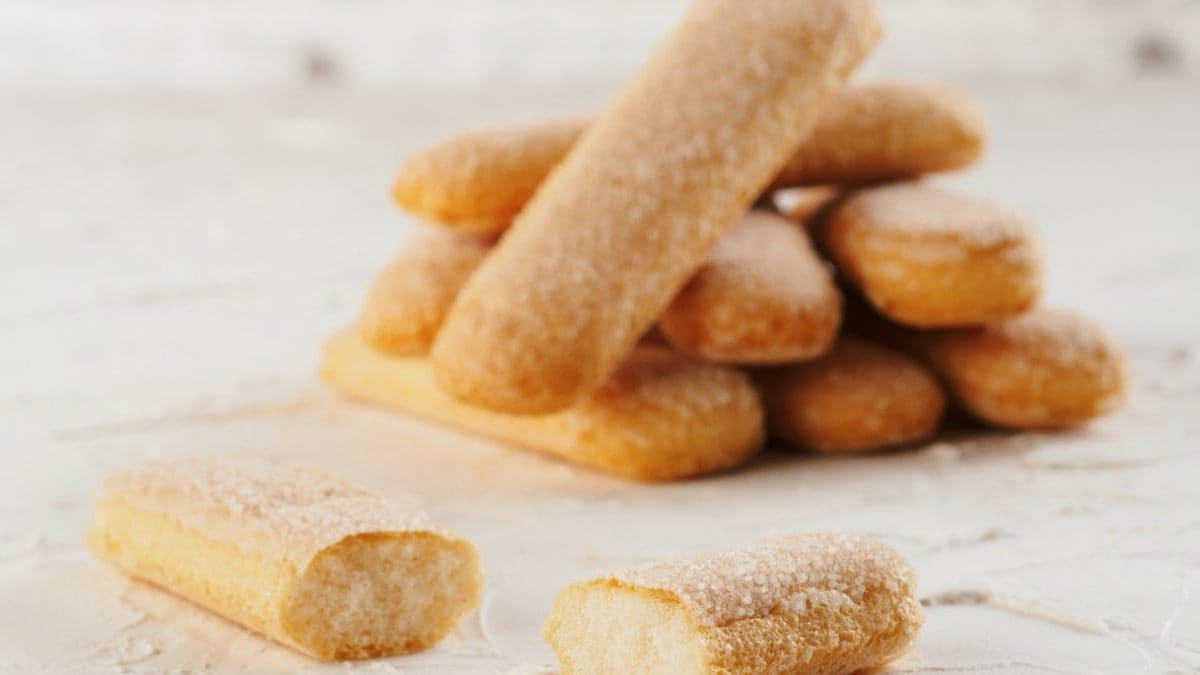
Ladyfingers are among the most iconic biscuits in Italian pastry making: long, light, and spongy, they're instantly recognizable for their refined simplicity. Born in an aristocratic context, they've spanned centuries and borders, becoming part of many local baking traditions. Today, they're essential for tiramisu, but they also appear in numerous other recipes. Let's discover the true history of ladyfingers, the biscuits that have graced courts, recipe books, and kitchens across Europe for over six centuries.
From Noble Origins to European Diffusion
Savoiardi biscuits originated in a very specific aristocratic context: the court of Savoy, at the end of the 14th century, in an area that now marks the border between Italy and France. One of the most fascinating versions tells that, during the visit of the young Charles of Luxembourg, the future emperor Charles IV, to the court of Chambéry, the chefs of Amadeus VI of Savoy presented an imposing castle-shaped dessert, constructed with light, spongy biscuits. A gesture that sounded almost like a wish, a symbolic tribute intended to seal the ties between Savoy and the Empire and, perhaps, to anticipate the future rise of the dynasty.
More widely accepted by historians and gastronomic sources is the reconstruction that places the birth of savoiardi towards the end of the 14th century, at the court of Amadeus VI. According to this version, the biscuits were created for an official visit by Charles VI of France: they were intended to be light yet elegant, simple yet spectacular. Thus was born a tapered, dry, and soft dessert, free of butter or milk, perfect for accompanying sweet wines and infusions without overpowering them, but rather enhancing their aromatic profile.
The name Savoyard was chosen to pay direct homage to the dynasty that inspired its creation. From that first appearance, the biscuit began a rapid and lasting diffusion: from noble tables to bourgeois kitchens, and even to monasteries where it was reproduced with simpler ingredients but faithful to the original recipe.
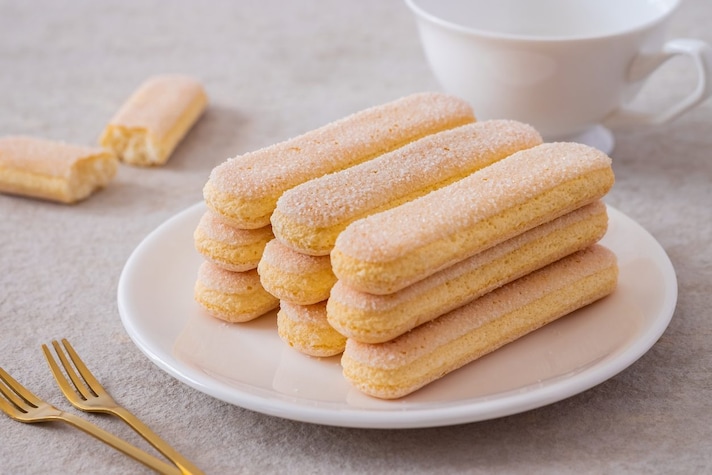
The Savoyards' success continued well beyond the confines of the court. In 1873, Alexandre Dumas —a celebrated novelist, author of The Count of Monte Cristo, and a passionate gastronome—mentioned them in his Grand Dictionnaire de Cuisine, placing them alongside the more elaborate gâteau de Savoie to emphasize how, from the same aristocratic tradition, two distinct preparations had arisen: one richer and more sumptuous, the other simpler and lighter, designed for everyday use. A sign of their now consolidated presence in European recipe books.
Over time, this noble preparation has transformed into a collective heritage, taking root in the confectionery traditions of various Italian regions and taking on different names, shapes and uses, while maintaining that balance between lightness and structure that still makes it unique today.
One Biscuits, Many Identities
From the court of Savoy, ladyfingers spread throughout the territories under their control, adapting to local traditions and taking on different shapes, names, and consistencies. In Piedmont, where the recipe originated, they have remained closest to the classic version: light, dry, crumbly to the point of breaking between the fingers, perfect for dunking or for desserts that require an airy but stable base. In Liguria, where they are called caporali, the biscuits are slightly firmer: less crumbly than the Piedmontese ones, they have a more compact structure, better suited to everyday breakfasts than to pastry preparations.
In Molise, the variant known as prestofatti is distinguished by an even denser consistency: these are simple biscuits, designed to last and accompany hot drinks, with a less spongy texture and a fuller bite. In Sardinia, however, the ladyfingers have transformed into pistoccus or Fonni biscuits, more rustic and irregular in shape. Here, softness prevails: the interior is moister, the surface less crunchy, and the end result is a biscuit that tends to melt in the mouth, perfect on its own or lightly dunked in milk.
In Sicily, having arrived during the Savoy domination of the early 18th century, ladyfingers have taken on numerous names and shapes depending on the area. In the province of Trapani, they are called saviarda, while in the Enna area, they are known as firrincuozzu. In both cases, these are particularly soft versions, often sweeter and less dry than the original: sometimes their consistency resembles that of a small sponge cake, elastic and delicate, suitable both on their own or as a base for creams and liqueurs in traditional desserts.
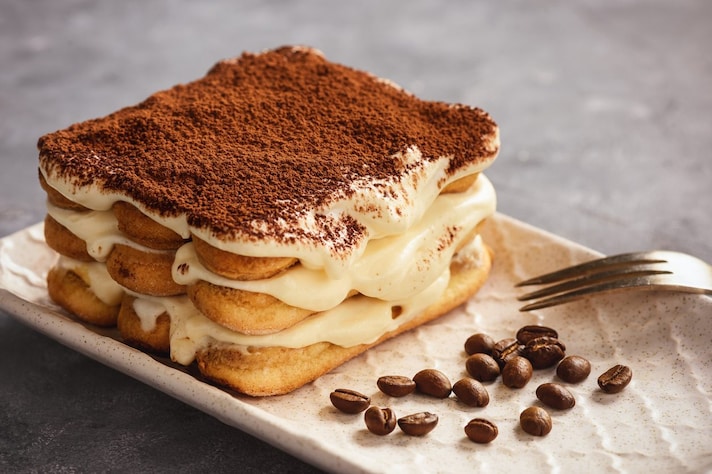
Why Ladyfingers Are Different From Other Biscuits
What sets them apart from other dunking biscuits is their structure. On the outside, they are slightly crunchy, thanks to the dusting of powdered sugar that forms a thin crust during baking. On the inside, however, they retain a dry yet soft texture, thanks to the high air content incorporated during the beating of the eggs. The traditional recipe does not call for fat or yeast: it all depends on the technique. The egg whites are beaten until stiff and gently incorporated into the yolks and flour, so as not to compromise the volume of the dough. This lightness makes them perfect for desserts: they are, in fact, able to absorb coffee, alcoholic syrups, or syrups without becoming soft, maintaining their shape and contributing to the structure of the final dessert.
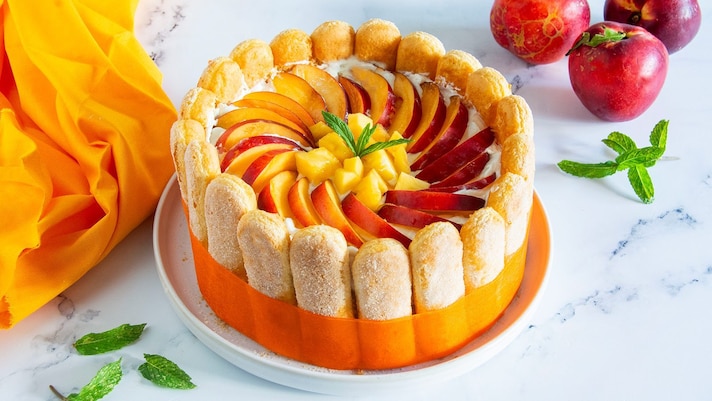
The Connection Between Ladyfingers, Tiramisu and Other Desserts
Although they have ancient origins, ladyfingers have found renewed popularity thanks to tiramisu, the famous mascarpone dessert born in Northern Italy in the second half of the twentieth century. First popularized in Veneto and Friuli Venezia Giulia, tiramisu helped bring these biscuits back into the spotlight, making them a must-have in every Italian pastry shop. Their ability to absorb coffee and maintain a soft texture is the basis of the dessert's balanced structure. Without ladyfingers, tiramisu would lose an important part of its identity, both in the classic version and in those revisited with fruit, chocolate, or liqueurs.
But ladyfingers don't stop there: in zuppa inglese, a layered dessert of Renaissance origin, they are often used in place of sponge cake, with excellent results, as is the charlotte, a French tradition, where they are arranged vertically to line cylindrical molds to hold cold creams and mousses. In some countries, such as England or the United States, ladyfingers are used in numerous trifles and desserts served in a glass, combined with cream, fruit, or jellies.
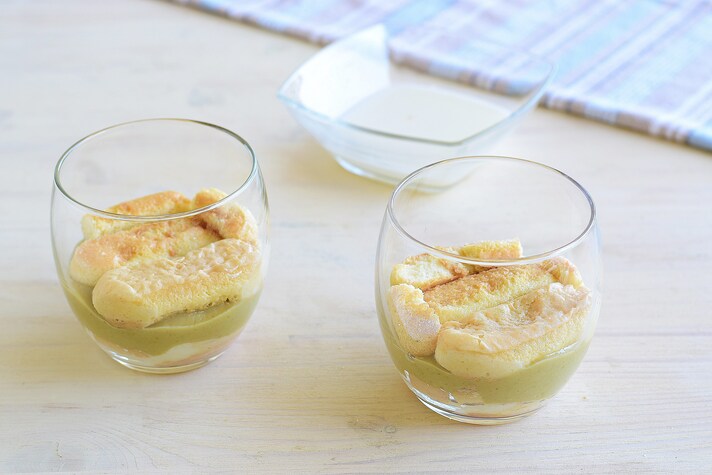
Even in contemporary pastry making, ladyfingers are finding new life in modern preparations: some chefs transform them into light crumbles, use them as a base for semifreddo, or reinterpret them with alternative flours, spiced flavors, or natural colorings. There are also industrial versions designed specifically for freezing, used in restaurants and catering, where perfect results are required under any conditions. Whether soaked in coffee or hidden under a drizzle of cream, ladyfingers remain a reliable favorite: soft, discreet, yet ready to make a difference in every spoonful.
;Resize,width=767;)
