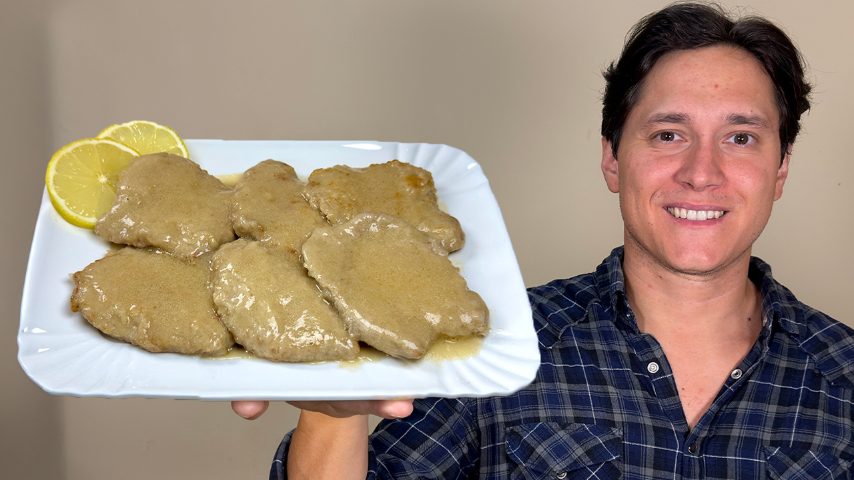
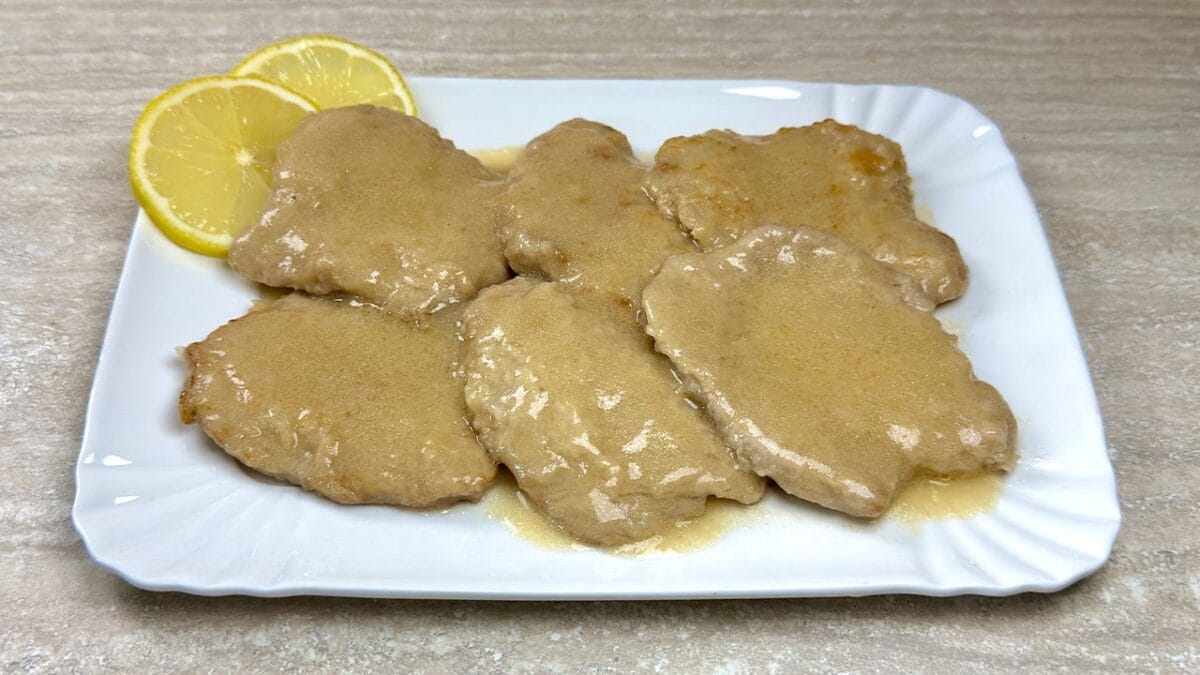
The secret to incredibly tender veal isn't a long cooking time. In fact, it's quite the opposite. Thin slices, a quick sear, and a silky sauce are all it takes to turn a simple cut of meat into something special.
These lemon veal scaloppine are a classic Italian favorite, featuring delicate veal cutlets lightly coated in flour, quickly browned in clarified butter, and finished in a bright, creamy lemon sauce. Every bite is tender and flavorful, with just enough citrus to balance the richness of the butter.
Best of all, this elegant dish comes together in about 20 minutes. It's perfect for a weeknight dinner when something delicious is needed fast, but it also looks impressive enough to serve to guests.
What Are Lemon Veal Scaloppine?
Scaloppine al limone is a traditional Italian preparation featuring thin slices of meat, usually veal, quickly cooked in a skillet and finished with a lemon-flavored sauce.
The word scaloppine refers to small, thin slices of meat. They're typically pounded to an even thickness, lightly floured, and cooked quickly to preserve their tenderness.
Italian scaloppine come in several variations, including versions with white wine, mushrooms, or Marsala. Lemon veal scaloppine are especially appreciated for their fresh, bright flavor.
Unlike heavier meat dishes that require slow cooking, this recipe relies on a fast cooking technique and a simple pan sauce. The result is delicate, buttery, and wonderfully comforting.
Why Everyone Will Love This Recipe
There's a reason Italian veal scaloppine have remained so popular. They're simple, quick, and packed with flavor, despite requiring only a handful of ingredients.
The veal is sliced thinly so it cooks in minutes, helping it stay delicate rather than tough. A light dusting of flour creates a subtle golden coating and contributes to the sauce's smooth consistency.
Then comes the lemon butter sauce. Made directly in the skillet with fresh lemon juice, vegetable broth, and the flavorful cooking juices, it turns beautifully glossy without heavy cream.
And because the recipe uses just one skillet, cleanup is refreshingly easy.
Tips for Making the Best Lemon Veal Scaloppine
- Keep the veal thin and even. Slices about ⅛–3/16 inch (3–5 mm) thick cook quickly and evenly. If necessary, gently pound them between two sheets of parchment paper.
- Use clarified butter. It tolerates higher cooking temperatures than regular butter, allowing the veal to develop a light golden color without burning the fat as easily.
- Don't overcrowd the skillet. Cook the veal in batches if necessary. Overlapping slices trap steam and prevent proper browning.
- Add the veal back only at the end. Once the lemon sauce is ready, return the cutlets to the pan for approximately one minute. Prolonged cooking can make thin veal slices tough.
Frequently Asked Questions
What Cut of Veal Is Best for Scaloppine?
Veal topside, also called veal top round, is an excellent choice. It's relatively lean and can be sliced into thin, even cutlets. Veal leg cuts are commonly used for this Italian preparation.
How Do You Keep Veal Scaloppine Tender?
The key is to slice the meat thinly, pound it evenly if necessary, and cook it quickly. Avoid prolonged simmering, which can cause delicate veal cutlets to become dry and chewy.
Why Do You Coat Veal Scaloppine in Flour?
A light flour coating helps the cutlets develop a delicate golden exterior and contributes to the consistency of the pan sauce. Shake off any excess flour to prevent a heavy or gummy coating.
Can You Make Lemon Veal Scaloppine Without Wine?
Absolutely. This recipe uses vegetable broth instead of wine, allowing the fresh lemon flavor to stand out. The broth also helps create a smooth, savory sauce.
Can You Use Regular Butter Instead of Clarified Butter?
Yes, but regular butter burns more easily because it contains milk solids. If substituting, use moderate heat and watch the pan carefully. Clarified butter is preferable for the quick searing method used here.
What Goes Well With Lemon Veal Scaloppine?
These tender veal cutlets pair beautifully with roasted potatoes, mashed potatoes, steamed asparagus, sautéed spinach, or a simple green salad. Crusty bread is also excellent for soaking up the lemon butter sauce.
How to Store
Lemon veal scaloppine are best enjoyed immediately after cooking, when the meat is tender and the sauce is smooth.
If you have leftovers, transfer them to an airtight container with the sauce and refrigerate promptly for up to 3 days.
To reheat, place the veal and sauce in a skillet over low heat with a splash of vegetable broth. Cover and warm gently until heated through, avoiding prolonged cooking that could toughen the meat. For food safety, reheat leftovers to 165°F (74°C).
How to Freeze
Lemon veal scaloppine can be frozen, although the texture is best when freshly prepared.
Allow the cooked veal and sauce to cool promptly, then transfer them together to a freezer-safe airtight container. Freeze for up to 2 months for the best quality.
Thaw overnight in the refrigerator before reheating gently in a covered skillet with a little broth. The lemon butter sauce may separate slightly after freezing, but gentle stirring can help bring it back together.
Ingredients
How to make Lemon Veal Scaloppine

Begin by cutting the veal topside into thin slices, approximately ⅛–3/16 inch (3–5 mm) thick. If the slices are uneven, place them between two sheets of parchment paper and gently pound them with a meat mallet until they reach a uniform thickness. This step helps the veal cook evenly and remain tender.
Begin by cutting the veal topside into thin slices, approximately ⅛–3/16 inch (3–5 mm) thick. If the slices are uneven, place them between two sheets of parchment paper and gently pound them with a meat mallet until they reach a uniform thickness. This step helps the veal cook evenly and remain tender.

Spread some all-purpose flour on a shallow plate. Coat each veal slice lightly on both sides, pressing gently so the flour adheres to the surface. Shake off any excess, leaving only a thin, even coating.
Spread some all-purpose flour on a shallow plate. Coat each veal slice lightly on both sides, pressing gently so the flour adheres to the surface. Shake off any excess, leaving only a thin, even coating.

Place a large skillet over medium-high heat and add the clarified butter. Allow it to heat until hot but not smoking.
Place a large skillet over medium-high heat and add the clarified butter. Allow it to heat until hot but not smoking.

Arrange the floured veal slices in the skillet in a single layer, making sure they don't overlap. If necessary, work in batches to avoid overcrowding the pan.
Arrange the floured veal slices in the skillet in a single layer, making sure they don't overlap. If necessary, work in batches to avoid overcrowding the pan.

Sear the scaloppine for approximately 1 minute per side, allowing them to develop a delicate golden exterior. Avoid moving them around too much while they cook. Transfer the veal to a plate and set aside. At this stage, the meat will finish cooking when returned to the sauce.
Sear the scaloppine for approximately 1 minute per side, allowing them to develop a delicate golden exterior. Avoid moving them around too much while they cook. Transfer the veal to a plate and set aside. At this stage, the meat will finish cooking when returned to the sauce.

Meanwhile, squeeze the lemons to obtain approximately ¼ cup plus 2 teaspoons (70 ml) of juice. Strain the juice through a fine-mesh sieve if necessary to remove seeds and excess pulp.
Meanwhile, squeeze the lemons to obtain approximately ¼ cup plus 2 teaspoons (70 ml) of juice. Strain the juice through a fine-mesh sieve if necessary to remove seeds and excess pulp.

Using the same skillet, add 1 teaspoon of all-purpose flour to the remaining butter and cooking juices. Stir continuously for a few seconds, allowing the flour to absorb the fat and form the base of the sauce.
Using the same skillet, add 1 teaspoon of all-purpose flour to the remaining butter and cooking juices. Stir continuously for a few seconds, allowing the flour to absorb the fat and form the base of the sauce.

Slowly pour in the fresh lemon juice and vegetable broth, stirring constantly to prevent lumps. Scrape the bottom of the skillet with a wooden spoon or heatproof spatula to release the flavorful browned bits left behind by the veal.
Slowly pour in the fresh lemon juice and vegetable broth, stirring constantly to prevent lumps. Scrape the bottom of the skillet with a wooden spoon or heatproof spatula to release the flavorful browned bits left behind by the veal.

Increase the heat slightly and allow the sauce to simmer briefly, stirring occasionally, until it begins to reduce and develop a smooth, lightly creamy consistency. Season with a pinch of salt.
Increase the heat slightly and allow the sauce to simmer briefly, stirring occasionally, until it begins to reduce and develop a smooth, lightly creamy consistency. Season with a pinch of salt.
If the sauce contains lumps or dark bits of burnt flour, carefully pour it through a fine-mesh sieve into a clean bowl, then return it to the skillet.

If the sauce contains lumps or dark bits of burnt flour, carefully pour it through a fine-mesh sieve into a clean bowl, then return it to the skillet.
Once the lemon sauce is glossy and slightly thickened, return the veal scaloppine to the pan, arranging them in a single layer whenever possible.

Once the lemon sauce is glossy and slightly thickened, return the veal scaloppine to the pan, arranging them in a single layer whenever possible.
Season with salt and freshly ground black pepper, then gently turn the slices to coat both sides in the sauce. Let them cook for approximately 1 additional minute, or until cooked through, adjusting the time according to their thickness.

Season with salt and freshly ground black pepper, then gently turn the slices to coat both sides in the sauce. Let them cook for approximately 1 additional minute, or until cooked through, adjusting the time according to their thickness.
If the sauce becomes too thick, add a small splash of hot vegetable broth and stir gently until it reaches the desired consistency. It should be silky and fluid enough to coat the veal without becoming heavy.

If the sauce becomes too thick, add a small splash of hot vegetable broth and stir gently until it reaches the desired consistency. It should be silky and fluid enough to coat the veal without becoming heavy.
Transfer the lemon veal scaloppine to a serving platter and spoon the warm sauce generously over the top. Serve immediately, while the meat is tender and the lemon butter sauce is beautifully glossy.


