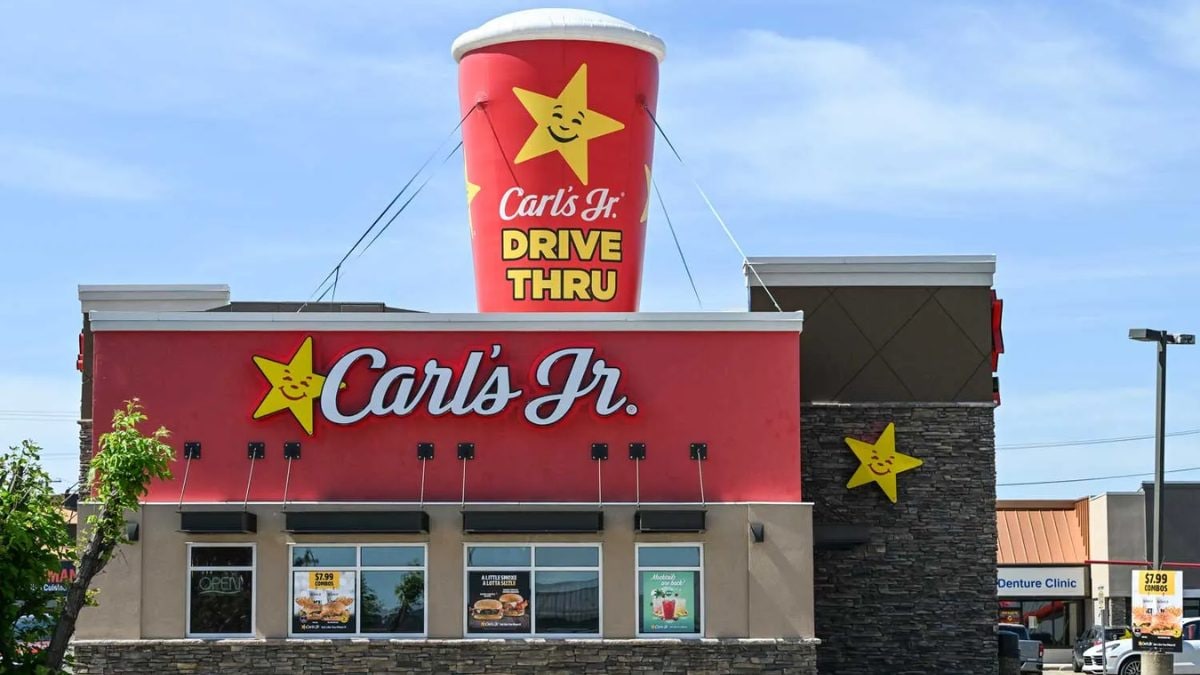
The economic pressures squeezing the fast-food industry have claimed one of its largest regional operators. In a major blow to the California fast-casual landscape, a massive franchise operator behind dozens of Carl’s Jr. locations is completely dismantling its portfolio, pushing underperforming stores toward permanent closure while liquidating the rest under bankruptcy protection.
Sun Gir Inc., the lead debtor operating under the prominent Friendly Franchisees Corporation (FFC) umbrella, has officially moved forward with plans to exit the Carl's Jr. system entirely. Founded and controlled by seasoned franchisee Harshad Dharod, the La Palma, California-based group is set to permanently close 10 "burdensome" locations and put its remaining 49 restaurants up for sale following a recent Chapter 11 bankruptcy filing. The sweeping move directly jeopardizes the jobs of roughly 1,000 fast-food workers spread across Southern and Northern California.
Deconstructing the Financial Bleeding
While the 59 restaurants collectively generate a massive $6 million in monthly revenue, court dockets reveal they have been bleeding money at an unsustainable rate, racking up net losses of more than $600,000 per month in 2026 alone.
In detailed bankruptcy filings, Dharod explicitly pointed to a perfect storm of macroeconomic factors that triggered the operational collapse:
- The Wage Mandate: The franchisee cited California’s historic $20-per-hour fast-food minimum wage law as a major catalyst for distress. Tellingly, the corporation’s internal financial breakdowns tracking steep operational losses began on April 1, 2024—the exact day the state's minimum wage mandate legally took effect.
- Inflation and Traffic: Outside of labor, the stores grappled with skyrocketing food distribution costs, heightened localized competition, and a noticeable drop in consumer foot traffic as inflation-weary diners cut back on drive-thru spending.
- Corporate Friction: In a blunt assessment, Dharod also blamed the financial tailspin on what he described as a severe lack of brand innovation, operational support, and marketing direction from Carl’s Jr. corporate headquarters.
"The underperforming restaurants are burdensome," Sun Gir Inc. stated in its federal court petition, explaining that maintaining the failing properties imposes severe financial losses "without providing sufficient economic benefit." One single location in Arcadia, California, reportedly bled more than $400,000 over a two-year operating window.
The Separation Strategy: Shuttering vs. Selling
To preserve whatever value remains in the estate, the bankruptcy court has approved a dual-track liquidation process managed by National Franchise Sales (NFS), a prominent brokerage firm specializing in fast-food asset recovery.
The 10 Burdensome Closures
The franchisee has requested court permission to immediately reject commercial leases on 10 underperforming storefronts that failed to attract baseline buyer interest. Nine of the marked properties sit in highly competitive Southern California submarkets—including Tarzana, Arcadia, Covina, Reseda, and Granada Hills—while one Northern California location is slated to exit Santa Rosa.
The 49 Portfolio Sales
The remaining 49 operating restaurants are being marketed to the public as a highly synchronized, multi-unit geographic cluster. Brokerage advisors have noted that prospective buyers have already emerged. Because fast-food managers and crew members typically remain in place during corporate handovers, these 49 stores could theoretically continue operating as Carl's Jr. locations completely uninterrupted, pending formal bankruptcy auction outcomes and corporate franchise approvals.
Corporate CKE Distances Itself
As news of the mass liquidation spread, Carl's Jr. parent company, CKE Restaurants, moved quickly to reassure the public and protect the equity of its broader brand, which commands more than 1,000 domestic locations. Corporate spokespeople emphasize that the systemwide star icon isn't going anywhere, framing the Chapter 11 restructuring as a highly localized, isolated event.
“This situation is specific to this individual franchisee's financial and business circumstances,” a Carl's Jr. corporate representative clarified in an official statement. “This has no impact on the operations of any other Carl's Jr. locations and we remain committed to delivering quality experiences for our guests.”
While the corporate office tries to insulate the brand, retail analysts view the FFC liquidation as a stark warning sign for the wider fast-food sector, proving that even legacy burger giants aren't immune to the shifting economic realities of the modern West Coast market.
;Resize,width=767;)
