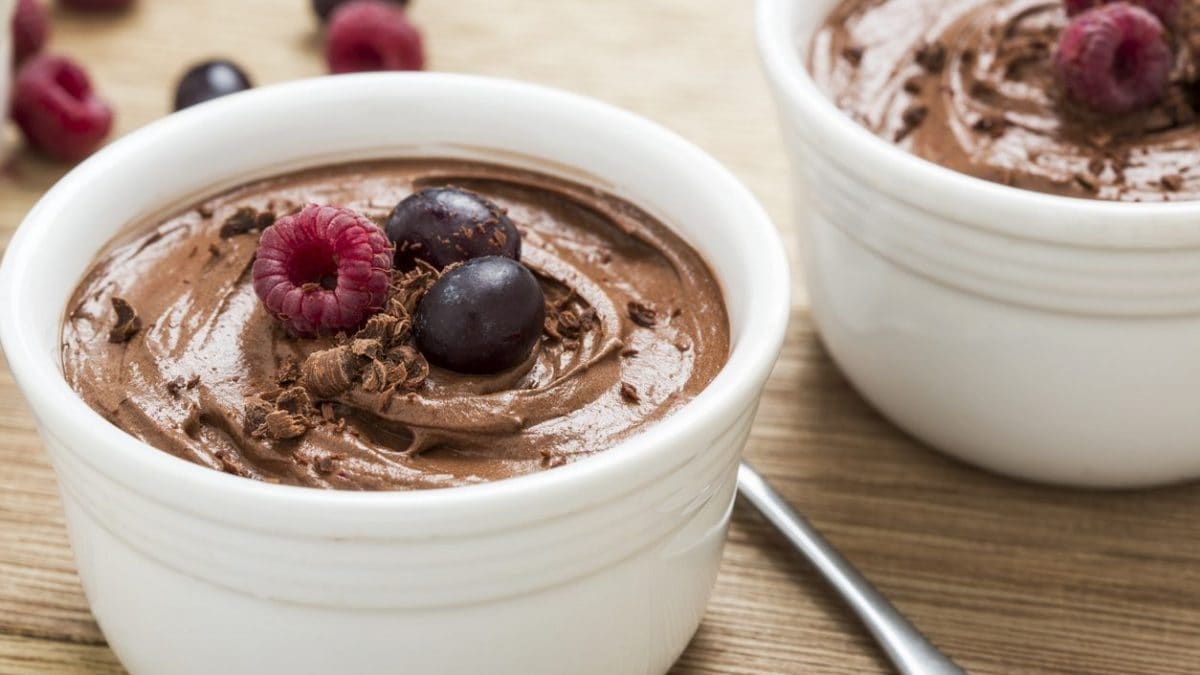
Desserts are synonymous with indulgence. And what's more indulgent than a mousse or a pudding? Both are universally popular desserts that share a certain convenience: they can be made in advance, requiring a few hours of refrigeration before being served and enjoyed. Although they may seem similar, these two increasingly popular preparations, even in home baking, have differences that primarily concern the choice of ingredients and the cooking method. Different preparation methods are used to achieve their distinctive consistency: mousse is airier, while pudding is firmer. When discussing these types of spoon desserts, it's impossible not to mention Bavarian cream, which is part of the pudding family and differs from mousses essentially for three interrelated factors: the custard base, the addition of semi-whipped cream, and the mandatory use of edible gelatin as a stabilizer, resulting in a firm dessert that still feels soft when spooned. Let's take a closer look at the difference between mousse and pudding to eliminate any possible doubts.
1. Ingredients
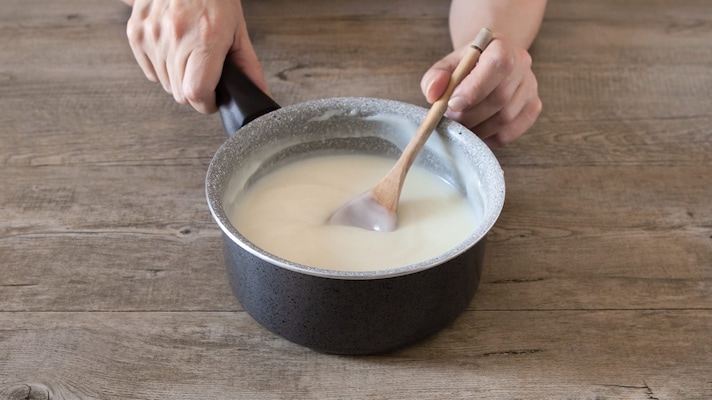
Mousses and puddings have a significant number of ingredients in common, but with small differences that prove fundamental in making them two completely different recipes. In the former, one usually starts with an Italian meringue (egg whites whipped with a syrup of water and sugar) or a pâte à bombe (egg yolks whipped with a syrup of water and sugar) to which semi-whipped cream is then added. In puddings, on the other hand, one starts with a mixture of milk, eggs and sugar followed by a thickener of your choice, for example, isinglass, cornstarch, potato starch or agar-agar. Both are then flavoured with the flavours of your choice: such as the great classics chocolate and vanilla, or the more summery ones yogurt or fruit. It's worth remembering that there are also savory recipes, especially for mousses, with cured meats and cheeses.
2. Cooking
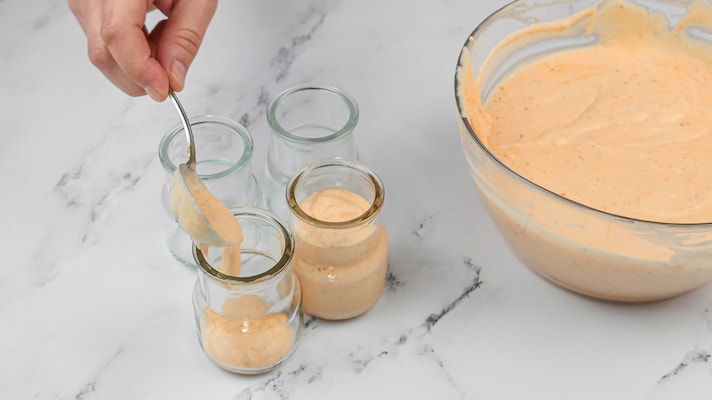
This is probably the most obvious difference, noticeable even to those who have never tried making these desserts. In mousse, the ingredients, once assembled, are placed directly in the refrigerator to chill for the necessary time. In pudding, there is an additional step: cooking, which can take place in a bain-marie on the stove or in the oven, or in a thick-bottomed saucepan, combining the various ingredients and stirring them until they reach a creamy consistency. Finally, it is placed in the refrigerator to firm up.
3. Preparations
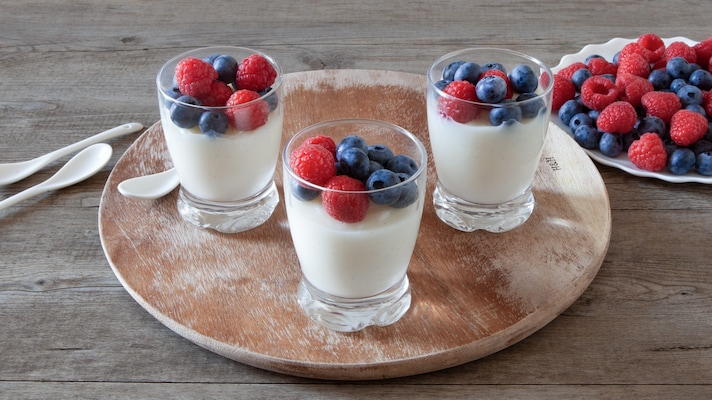
We use the word in the plural and not the singular because there is not just one recipe for both mousses and puddings, but rather various preparations. The steps for a very easy chocolate mousse, for example, are like those we propose in our version: melt the chocolate in a little hot liquid cream, let it cool, and then add first the whipped cream, followed by the beaten egg whites. Let everything rest for a couple of hours in the refrigerator. Using chocolate mousse as a reference, this can also be made without eggs, using only whipped cream and melted chocolate, or without cream, melting the chocolate in a bain-marie or in a saucepan.
As for the pudding, the preparation methods also vary. You can make it like vanilla pudding: bring the milk flavored with the vanilla bean almost to a boil and then pour it into a bowl where you've previously beaten the egg yolks with the sugar and added the cornstarch. Mix everything well and return it to the saucepan to thicken it. Otherwise, there's a very simple method, which also avoids the use of eggs and is similar to that of freeze-dried products from the supermarket: in a saucepan, combine the liquids (milk) and the powders (cocoa, flour) and stir until everything coagulates well. For an even darker note, dip in some chopped chocolate. Looking at these steps, there's no doubt that mousse and pudding are two different desserts.
4. Consistency
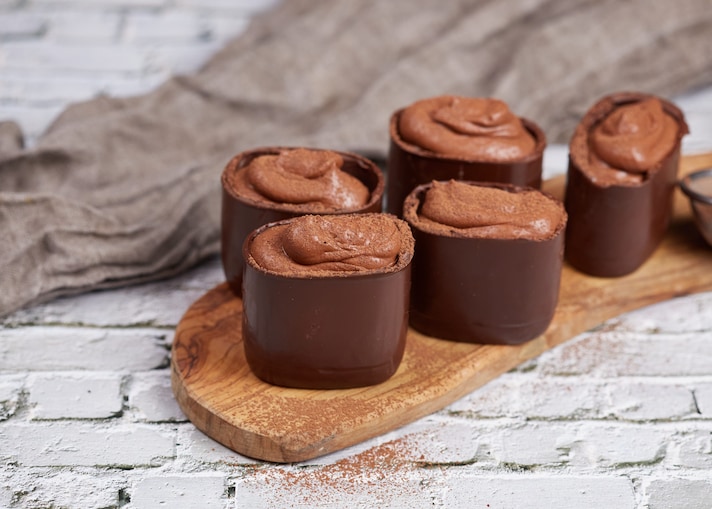
The use of similar ingredients combined with distinct processes gives the two desserts completely different consistencies. Egg whites, yolks, or cream, which are whipped without being cooked, give mousses an airy consistency —in fact, it's no coincidence that their name in French means foam. Mousses are, by definition, frothy masses that melt in the mouth when tasted. It's worth noting that those made with Italian meringue are lighter than those made with pâte à bombe, and some use animal or vegetable gelatin to provide greater stability without compromising their softness. In contrast, pudding is firm and compact, with a well-defined structure thanks to the use of a thickener: when the spoon sinks in, it finds a solid, yet elastic dessert that doesn't crumble.
5. Origins
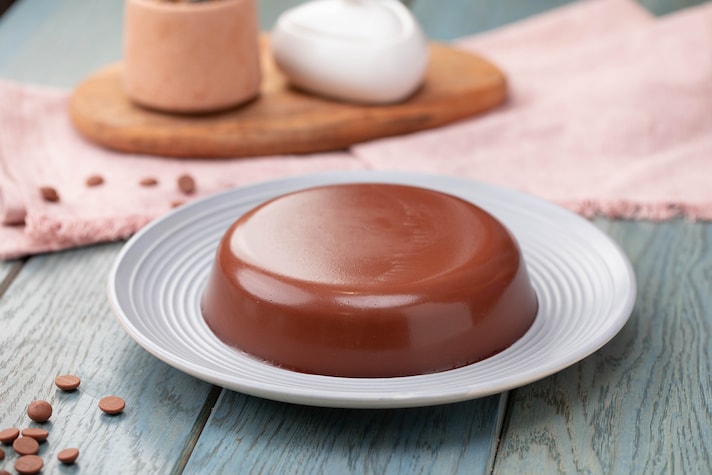
Mousses and puddings began to gain popularity as desserts in the 18th century, when French pastry making ruled the roost. Yet, even in this case, their origins differ. The recipe for chocolate mousse is said to have first appeared in a book by the French gastronome Menon in 1755. An archaic, savory version of pudding, however, comes directly from the Ancient Romans: an egg-based mixture used as a tonic by soldiers, while the word boudin dates back to the Middle Ages and derives from the Latin botellinus, which refers to sausage, as well as to casing or intestine, probably indicating doughs cooked in the casing. Interesting fact: the pudding family also includes, among others, flan, crème caramel, and Piedmontese bonet, to conclude the delicious treat we began with.

